Quantum computing thread

tphuang

General
Staff member
Super Moderator
VIP Professional
Registered Member
A few points:
  1. I didn't say everyone is ignoring it, I said everyone in the field is aware it is going to be a possibly multiple decades before it can succeed to replace or supplement normal computers.
  2. The physicists that I specially follow include: Lu Chao-yang, he is a genius researcher, an authority on quantum computers and communications and directly works under Pan Jianwei.
  3. Who is using quantum computers except as a gimmick? To note: this doesn't include quantum communications, sensing, and quantum proof-cryptography
Again, take a look at the applications. Right now, it is basically only being used in drug discovery and fintech sector. And company involved have already created drugs that got paid.

So whatever it’s state of general application is, it clearly can already be used in drug discovery.
 

sunnymaxi

Colonel
Registered Member
This may be one of the biggest breakthrough in recent times.

Chinese Physicists Just Solved Quantum Computing’s Hardest Challenge - Protecting Qubits From Environmental Noise. Pan Jianwei, often called "the father of quantum" and his team used their Zuchongzhi 2 quantum processor to create a 'quantum Lego block' that simply refuses to fall apart, even when shaken by noise or errors.

This is the first ever experimental realisation of non equilibrium higher order topological phases, a huge deal because it points to quantum bits that don’t break down, solving one of the biggest problems in quantum computing. And they did it on a 66 qubit programmable quantum chip, using just a 6x6 section to simulate and detect these ultra stable corner states, something that doesn’t naturally exist in nature.

If this scales, we’re talking practical, fault tolerant quantum computers that can power next level AI, drug discovery, and massive scientific simulations.

Please, Log in or Register to view URLs content!
 

jli88

Junior Member
Registered Member
This may be one of the biggest breakthrough in recent times.

Chinese Physicists Just Solved Quantum Computing’s Hardest Challenge - Protecting Qubits From Environmental Noise. Pan Jianwei, often called "the father of quantum" and his team used their Zuchongzhi 2 quantum processor to create a 'quantum Lego block' that simply refuses to fall apart, even when shaken by noise or errors.

This is the first ever experimental realisation of non equilibrium higher order topological phases, a huge deal because it points to quantum bits that don’t break down, solving one of the biggest problems in quantum computing. And they did it on a 66 qubit programmable quantum chip, using just a 6x6 section to simulate and detect these ultra stable corner states, something that doesn’t naturally exist in nature.

If this scales, we’re talking practical, fault tolerant quantum computers that can power next level AI, drug discovery, and massive scientific simulations.

Please, Log in or Register to view URLs content!

Lu Chaoyang himself is an important member of the team, and he has explicitly said that this is just a stepping stone, real application is long way off.

Here's the actual paper if you want to confirm:
Please, Log in or Register to view URLs content!


Again, take a look at the applications. Right now, it is basically only being used in drug discovery and fintech sector. And company involved have already created drugs that got paid.

So whatever it’s state of general application is, it clearly can already be used in drug discovery.
Here's a review article of quantum computer usage in drug discovery.

Please, Log in or Register to view URLs content!

Quoting

"quantum computers are still far from being used as daily tools in the pharmaceutical industry"

Any claimed application in drug discovery today is just gimmick to gather headlines and funding.
 

tphuang

General
Staff member
Super Moderator
VIP Professional
Registered Member
Lu Chaoyang himself is an important member of the team, and he has explicitly said that this is just a stepping stone, real application is long way off.

Here's the actual paper if you want to confirm:
Please, Log in or Register to view URLs content!


Here's a review article of quantum computer usage in drug discovery.

Please, Log in or Register to view URLs content!

Quoting

"quantum computers are still far from being used as daily tools in the pharmaceutical industry"

Any claimed application in drug discovery today is just gimmick to gather headlines and funding.
And I don't expect an article for April 2024 to be fully up to date with industry moves. Keep in mind that as of 2024, Quantum computing didn't do that much, but that really picked up in 2025.

And given that AI itself is not actually used as a "daily tool" in Pharma industry, but is only tried out by some players at the moment, one would imagine it would taken even more adventurous companies to try out Quantum computing AIDD.

It takes time for any industry to change. Only when something is demonstrated to work, will the masses more. That's why Biomap created their own JV Biogend to do AI drug development. If everyone is using their leading AI model, do you think they will be making their own JV to demonstrate that they can bring drug into development. Any new technology requires brave people to spend time to test out. But clearly, there are people already trying out Quantum computing based AI drug discovery as evident by QBoson's cloud usage chart. If it was not being used, then why did 1/3 of all queries into that cloud happened in the past quarter? If people are not finding something useful, then they would not bother using it more.
 

subotai1

Junior Member
Registered Member
Reality is that most of the quantum advancement its being kept quiet. Think about it. As an example, you make a breakthrough cracking certain kinds of cryptography. Do you want to tell everyone about it or exploit it? Same for other applications.

The companies that are leading this like Alphabet, Capgemini, Pasqal, Xanadu, are split between technology advancement and application of it to solve business problems. They are not being public about success or failures. There is too much at stake.
 

PopularScience

Senior Member
Registered Member
Reality is that most of the quantum advancement its being kept quiet. Think about it. As an example, you make a breakthrough cracking certain kinds of cryptography. Do you want to tell everyone about it or exploit it? Same for other applications.

The companies that are leading this like Alphabet, Capgemini, Pasqal, Xanadu, are split between technology advancement and application of it to solve business problems. They are not being public about success or failures. There is too much at stake.
The leading is Google which published a lot of papers.
 

tphuang

General
Staff member
Super Moderator
VIP Professional
Registered Member
i don't know if it's all that quiet anymore. The amount of news coming out of China's QC sector in the past few months is actually quite impressive. Keep in mind that humanoid robot is the new hot sector these days out of China, but it's actually still several years from being ready for the full time. That hasn't stopped people from buying them and trying them out. So, it shouldn't surprise anyone that people are already trying out QC in drug discovery and fintech sectors. You can only make these leaps from collaboration with end users.
 

tokenanalyst

Lieutenant General
Registered Member

Bochou Quantum has secured tens of millions of yuan in angel round funding to accelerate the industrialization of its core quantum computing technologies.​


Shanghai Bochou Quantum Technology Co., Ltd. (Bochou Quantum) has secured tens of millions of RMB in an angel round led by Eastern Fortune Capital, CAS Star, and Furong Investment. The funds will be used to build a low-noise cleanroom, establish a software-hardware engineering system, and accelerate the industrialization of core quantum computing technologies.

Founded by researchers from Fudan University’s Neutral Atom Quantum Computing Laboratory, Bochou Quantum specializes in atomic quantum computing with strong expertise in experimental techniques and technological innovation. The team aims to develop modular, scalable systems for fault-tolerant quantum computing through "software-hardware synergy," focusing on non-destructive measurements, engineering breakthroughs, and real-world applications.

Key achievements include:​
  • A theoretically optimal quantum solver for NP problems (O(N) complexity).​
  • A quantum machine learning model outperforming classical methods in time series prediction, highlighting the role of entanglement.​
  • A novel quantum kernel expansion algorithm and efficient compilation technology for simulating many-body systems, advancing applications in quantum chemistry, materials science, and dynamics.​
Bochou Quantum’s long-term goal is to transform quantum computing from theoretical potential into practical, industrial-grade solutions.

Please, Log in or Register to view URLs content!
 

tokenanalyst

Lieutenant General
Registered Member

China Jiliang University announced two new achievements in quantum sensing, providing a new technological path for microwave detection.​


China Jiliang University has announced two groundbreaking advances in quantum sensing, published in ACS Photonics a top-tier optics journal. Both achievements were led by the university as the primary institution, highlighting China’s growing innovation in quantum precision measurement.

Robust Quantum Spectrum Analysis for FM Microwaves:
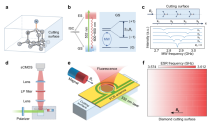
Led by Dr. Fei-Fei Zhou (first and corresponding author) with Prof. Xin-Qing Wang as co-corresponding author, the team developed a novel quantum spectrum analyzer using {111}-oriented industrial-grade diamond. By leveraging precision machining and eliminating complex magnetic field calibration, this method enables ultra-wideband detection with high robustness under strong magnetic fields. The technique successfully achieved real-time spatial imaging of frequency-modulated (FM) microwave signals, offering a low-cost, practical solution for applications in communication systems, RF chip testing, and electromagnetic compatibility.
1764861136863.png

High-Resolution Microwave Field Imaging Using hBN:
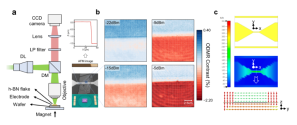
Also led by Dr. Fei-Fei Zhou (first corresponding author), the team collaborated with researchers from Southern University of Science and Technology and Nanyang Technological University. They pioneered the use of hexagonal boron nitride (hBN) a 2D van der Waals material — embedded with boron vacancy centers to achieve non-invasive, high-resolution optical imaging of microwave fields in real time. By combining ion implantation and wide-field electron spin resonance imaging, they enabled in-situ visualization of electromagnetic distributions in microwave devices like antennas and filters.
1764861161049.png

These breakthroughs open new paths for quantum-enabled testing, fault diagnosis, and performance optimization in next-generation 5G/6G communication systems and radar technologies. The work underscores China Jiliang University’s rising leadership in quantum sensing innovation.

Please, Log in or Register to view URLs content!
 
Top