It's primarily used for land targets and of course much better peacetime deterrence. The new gun is extremely long ranged, even more than the 155mm ags intended for Zumwalts. However it can't reach the ridiculous 70rpm firing rate of the 130mm gun on 055, so less anti-air capabilities.I'm struggling to see the rationale for a new 155mm Naval Gun for use against land or naval targets.
So I suspect the primary reason is for better short-medium range air-defence, at very low cost.
---
We have command-guided Pantsir missiles with no seekers, so they could do something similar with 155mm artillery shells.
And I see the Mk45 can do 20 rounds per minute and the Burkes carry 680 rounds.
So they could fire a lot of rounds at very low cost.

You are using an out of date browser. It may not display this or other websites correctly.
You should upgrade or use an alternative browser.
You should upgrade or use an alternative browser.
It's primarily used for land targets and of course much better peacetime deterrence. The new gun is extremely long ranged, even more than the 155mm ags intended for Zumwalts.
That doesn't make sense.
China doesn't get into wars, unlike the USA which goes to war all the time.
What realistic wartime scenarios do you envision the Chinese Navy providing naval gunfire support against land targets?
There are better options available than tying up a warship, so this would be a secondary mission at best.
However it can't reach the ridiculous 70rpm firing rate of the 130mm gun on 055, so less anti-air capabilities.
It's not about firing rate. It's about the 155mm artillery round having more range and volume, so it can fit in a guidance system.
And if the 155mm rounds are guided, is there a need for 70rpm?
With a 2 minute engagement window, that would imply 140 rounds

However it can't reach the ridiculous 70rpm firing rate of the 130mm gun on 055
Ok, this gets my attention. Do you have the source for that Rate of Fire claim? I'd love to check on it.

I'm struggling to see the rationale for a new 155mm Naval Gun for use against land or naval targets.
So I suspect the primary reason is for better short-medium range air-defence, at very low cost.
---
One issue with this idea is that no navy worldwide pursues a calibre larger than 127 mm/5 inch with such a rationale as the primary (!) reason.
Its also worth noting, at least from what I am told, that most services in fact prefer something below 5 inch for AA work, the 76 mm Strales regularly getting emphasised as being very capable because of the sweet spot in RoF and ammo size. The closest Chinese analogue being further refinement of the 100 mm gun family I guess.
End of the day, while I wouldnt dismiss AA capability, I am not sure its a driving motivation. But your guess is as good as mine.

One issue with this idea is that no navy worldwide pursues a calibre larger than 127 mm/5 inch with such a rationale as the primary (!) reason.
Its also worth noting, at least from what I am told, that most services in fact prefer something below 5 inch for AA work, the 76 mm Strales regularly getting emphasised as being very capable because of the sweet spot in RoF and ammo size. The closest Chinese analogue being further refinement of the 100 mm gun family I guess.
End of the day, while I wouldnt dismiss AA capability, I am not sure its a driving motivation. But your guess is as good as mine.
Isn't BAE repurposing their (navy) 155mm hypervelocity projectile for the (army) AA use case?
Yes, but again, BAE developed HVP explicitly as a multi role ammunition that can meet a range of applications, AA just being one of those. And AA does remain a notional pitch until someone actually adapts it. Also remember HVP came out of a 5 inch original design. Companies will always jump at any even faintly promising requirement. Most of these more exotic ideas though will never get filled for all sorts of more pragmatic reasons.

lcloo
Major
Although technically all current large calibre guns have dual roles capability in anti-surface and anti-air purpose, the slow rates of firing for 127mm/130mm and 155mm make them less effective against fast anti-ship missile vs the short range air defense missiles that cover the targets that are beyond the effective range of 57mm/76mm rounds.
Cost of the air defense missiles vs gun rounds are not important compared to the cost of loosing a ship's operational capability if it is hit by an antiship missile. Rather, the effectiveness of protecting the ship at what affordable cost should be prioritized.
Therefore, the 155mm gun sighted in Dalian would be mainly used for hitting surface targets, though not losing anti-air capability (which is far less effective vs air defense missiles).
PLAN have their own thinking on how and when they are going to use this 155mm calibre gun, otherwise they would not have develop it.
Hitting enemy's non-missile armed ships is very obvious choice for using guns, example commercial ships and navy auxiliary ships. Targeting shore targets on Taiwan, Penghu, Jinmen and other small islands in South China Sea is feasible with long range guided rounds, especially after eliminating all known shore based anti-ship missile, and also after gaining air superiority over the sky above the shore.
Targeting moving land targets like trucks, SP guns, mobile radars, mobile missile carriers etc. can be very precise with aid of drones, which bring type 076 into the scenario. A 30km range normal round or an extended 50-100km+ range round can be fired from a ship sailing close by the shores of Mainland China, where the ship is protected by its own as well as land base air defense weapons. So, yes, hitting Taiwan island shore defense by 155mm gun is not only feasible but also very effective.
Cost of the air defense missiles vs gun rounds are not important compared to the cost of loosing a ship's operational capability if it is hit by an antiship missile. Rather, the effectiveness of protecting the ship at what affordable cost should be prioritized.
Therefore, the 155mm gun sighted in Dalian would be mainly used for hitting surface targets, though not losing anti-air capability (which is far less effective vs air defense missiles).
PLAN have their own thinking on how and when they are going to use this 155mm calibre gun, otherwise they would not have develop it.
Hitting enemy's non-missile armed ships is very obvious choice for using guns, example commercial ships and navy auxiliary ships. Targeting shore targets on Taiwan, Penghu, Jinmen and other small islands in South China Sea is feasible with long range guided rounds, especially after eliminating all known shore based anti-ship missile, and also after gaining air superiority over the sky above the shore.
Targeting moving land targets like trucks, SP guns, mobile radars, mobile missile carriers etc. can be very precise with aid of drones, which bring type 076 into the scenario. A 30km range normal round or an extended 50-100km+ range round can be fired from a ship sailing close by the shores of Mainland China, where the ship is protected by its own as well as land base air defense weapons. So, yes, hitting Taiwan island shore defense by 155mm gun is not only feasible but also very effective.
Last edited:
Although technically all current large calibre guns have dual roles capability in anti-surface and anti-air purpose, the slow rates of firing for 127mm/130mm and 155mm make them less effective against fast anti-ship missile vs the short range air defense missiles that cover the targets that are beyond the effective range of 57mm/76mm rounds.
Cost of the air defense missiles vs gun rounds are not important compared to the cost of loosing a ship's operational capability if it is hit by an antiship missile. Rather, the effectiveness of protecting the ship at what affordable cost should be prioritized.
Therefore, the 155mm gun sighted in Dalian would be mainly used for hitting surface targets, though not losing anti-air capability (which is far less effective vs air defense missiles).
PLAN have their own thinking on how and when they are going to use this 155mm calibre gun, otherwise they would not have develop it.
Hitting enemy's non-missile armed ships is very obvious choice for using guns, example commercial ships and navy auxiliary ships. Targeting shore targets on Taiwan, Penghu, Jinmen and other small islands in South China Sea is feasible with long range guided rounds, especially after eliminating all known shore based anti-ship missile, and also after gaining air superiority over the sky above the shore.
Targeting moving land targets like trucks, SP guns, mobile radars, mobile missile carriers etc. can be very precise with aid of drones, which bring type 076 into the scenario. A 30km range normal round or an extended 50-100km+ range round can be fired from a ship sailing close by the shores of Mainland China, where the ship is protected by its own as well as land base air defense weapons. So, yes, hitting Taiwan island shore defense by 155mm gun is not only feasible but also very effective.
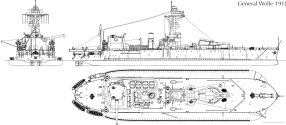
Monitors then. Welcome back, Lord Clive.
One issue with this idea is that no navy worldwide pursues a calibre larger than 127 mm/5 inch with such a rationale as the primary (!) reason.
Its also worth noting, at least from what I am told, that most services in fact prefer something below 5 inch for AA work, the 76 mm Strales regularly getting emphasised as being very capable because of the sweet spot in RoF and ammo size. The closest Chinese analogue being further refinement of the 100 mm gun family I guess.
End of the day, while I wouldnt dismiss AA capability, I am not sure its a driving motivation. But your guess is as good as mine.
What is the driving motivation then for 155mm?
Land attack with standard unguided 155mm artillery rounds seems like a very poor reason to develop a new, larger gun calibre.
And if you want to go with longer range and/or guided rounds, the cost balloons. So much so that they become much more expensive than glide bombs or low-cost cruise missiles which have much larger warheads.
---
The Italian 76mm makes sense, if you assume that the ammunition is a low-cost unguided round, so you want to fire as many as possible. We can see the Italians prefer to use the 76mm over a Gun CIWS.
But in the past 10 years or so, electronics miniaturisation means artillery rounds can now be guided and also see drastically reduced costs compared to previously.
I'm reminded of the Pantsir SAMs ($100K? Each). So perhaps you can take a 155mm round and add Pantsir RF guidance and/or IR-guidance.
If you assume a 2 minute engagement window, that should be an additional 20+ shots against incoming subsonic cruise missiles. Note that the HQ-10 only has 21 ready SAMs for SHORAD, so there is the possibility of running out. A 155mm round should have a lot more range than an HQ-10 and you can have a lot of 155mm rounds, both guided and unguided
So you could have the following air- defence zones:
a) To 2km. 30mm Gun CIWS. Ammo cost is negligible.
b) To 9km. HQ-10 SAMs. (RIM SAM cost $1 million each)
c) To 30km. 155mm guided. (Starting from $100K?)
So you can see that you want to launch a lot of low-cost 155mm guided rounds at long range, rather than use HQ-10 SAMs
Since a destroyer is going to have a main gun anyway, perhaps it is worth going with a larger calibre (which shouldn't take that much extra space/weight) which is more effective in short-medium range air defence. As a bonus, it will also be better at land attack as well.
---
Remember that it is only in the past 5-10 years that navies have taken air defence seriously.
Previously the US Navy was overwhelmingly dominant. Plus 10 years ago, I would say China-US relations were pragmatic/productive, so there wasn't the same drive for improved naval SHORAD.