From electronics point of view, if you have limited power supply, that limits how much can be used for your active RF going out and for the passive receivers. You can argue around it, but upgraded systems using newer technology also require more power for the most case (for both the active and passive stuff).
Passive antenna is just that - it's passive. It by itself doesn't emit(use energy) at all, it receives it, and the more power is around, the worse (noise isn't exactly advantage for receiving antennas).
Yes, RWR itself obviously needs power like any computer, but it's quite a low requirement(it's ultimately a frequency analyzer with very elaborate antennas). You're recently a bit overly focused with power everywhere. Power is part of this equation, but it most certainly isn't responsible for RWR missing things.
You're right in the active part(aka jamming), and american self-defense jamming solutions are explicitly moderate in their footprint. But here it is again not because of general lack of power (Gripen with way smaller engine powers way more ambitious Arexis just fine), but rather a legacy design and conscious choice: unlike F-16E/F(blk.60/62), they wanted commonality. Commonality bites back.
We know well enough, that it's possible to squeeze way more EW into F-16, if you actually want(F-16I Sufa, F-16E/F IEWS (predecessor of IVEWS btw). But it'll be a different airframe with more drag/volume/cooling capacity.
If they have to retain old antennas (which is very likely), a big reason would be newer antennas require too much power. And there is not enough incentive for companies to develop upgraded antennas that use the same footprint (in terms of space constraint, wiring, cooling & power)
For active system(in terms of scale overall design), you're half right. Half, because we're on 4th gen aircraft here - worst case scenario, you just add a pod and power it with RAT(ram air turbine) and/or batteries. Suboptimal, but solid.
Other points are hard to agree with - F-16 is single largest combat aircraft pool on the planet. By extension its EW is one of the juiciest parts of global aviation market available, and in US alone there are two systems(AN/APQ-254 and new AN/APQ-257 from Northrop Grummann) doing just that on top of (also updated) RWR (ALR-56M). "US alone", as apart and on top of basic/updated RWR(EW) setup from BAE systems, there are two competing Israeli ones from Elbit and Rafael, there's Danish PIDS (Terma), as well as new solution from Tubitak. Incentive isn't power or volume (F-16 has enough for RWR), incentive is money. 160 AN/APQ-254 on order will bring Raytheon over billion USD - those aren't cheap sets, and even ROCAF alone as a market is way more than that number.
But how it happened? Easy.
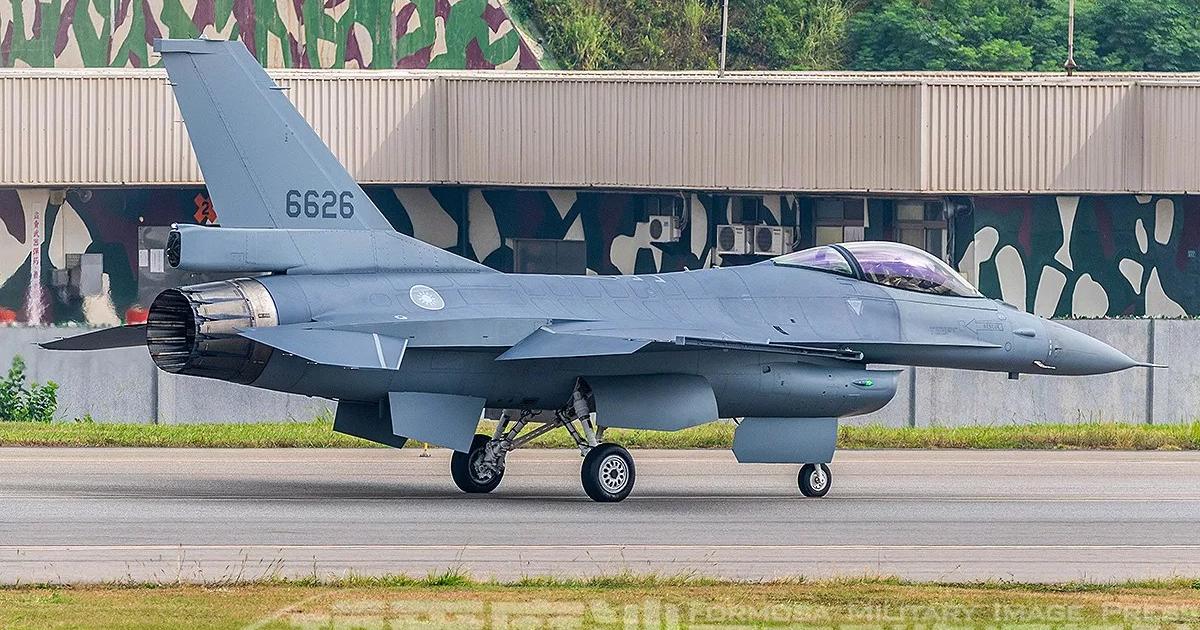
Pay close attention to EW beam on photos:
F-16V ROCAF:
Note both the old rear emitter and old ALR-56M configuration. I.e. upgrade at this stage is only refurbished airframe, radar and new mission computer. How do we know? Now, stage 2, newly delivered Slovak F-16:

Note that while active antenna is the same, ALR-56M configuration expanded (changed - new RWR antennas on the balance beam).
Final stage is as in the previous post photo of Bahraini F-16 with AN/ALQ-254 from last spring, where jammer antenna changed as well. As Taiwan was sort
desperatewilling tester for F-16V configuration, its defensive side just wasn't ready. But incentive is obviously there, and they're listed as customer.