My advice here would be to not parrot rumors unless you have very good reasons for believing them and can defend their veracity against criticism and hard scrutiny.No, it hasn’t deteriorated to that extent. But I do recommend not taking this rumor seriously. There’s nothing that proves the information is either credible or not.

You are using an out of date browser. It may not display this or other websites correctly.
You should upgrade or use an alternative browser.
You should upgrade or use an alternative browser.
PLA Air Force news, pics and videos
- Thread starter Jeff Head
- Start date

More specifically, I heard this offline from engineers at AVIC, and not just one of them. However, considering that their information may have come from the same original source, it may not be reliable.
Yang Wei’s alleged charges include long-term intentional disclosure of classified information.
If the allegation of his crimes are factual, then he should be shot. No amount of honor for being the chief designer of China's first 5th-gen fighter should shield him from taking responsibility for commiting the crimes of a traitor.
Don’t need to overcomplicate a matter of misconduct by graft.Sorry, I may not have expressed myself clearly earlier, which led to some misunderstanding.
What I meant is that, according to rumors, the formal or possible charge is long-term leakage of classified information. This may not necessarily be the real reason. If I had to speculate, the underlying reason could be that the current leadership is not fully satisfied with the previous military-industrial modernization model associated with Yang Wei, or that Yang Wei’s continued presence and influence may now be hindering the kind of modernization the current leadership wants to pursue.
People at that level generally have little possibility of leaking secrets to hostile forces. Secondly, a chief designer is closer to being a project leader rather than a top technical specialist. At that level, the role is more about planning, exploring, and adjusting the path toward military-industrial modernization.
Perhaps there is no single, definitive model or path to modernization. Even a relatively successful model is constantly evolving and changing. The leaders who explore such a path would themselves have uncertainties and concerns about the future at the time.
In any case, what is more worth paying attention to and reflecting on is: what kind of military-industrial modernization is actually “good”? And what does “good” mean for different stakeholders? The interests of enterprises, the military, the party, and other actors are neither mutually exclusive nor completely aligned.

Sorry, I may not have expressed myself clearly earlier, which led to some misunderstanding.
What I meant is that, according to rumors, the formal or possible charge is long-term leakage of classified information. This may not necessarily be the real reason. If I had to speculate, the underlying reason could be that the current leadership is not fully satisfied with the previous military-industrial modernization model associated with Yang Wei, or that Yang Wei’s continued presence and influence may now be hindering the kind of modernization the current leadership wants to pursue.
People at that level generally have little possibility of leaking secrets to hostile forces. Secondly, a chief designer is closer to being a project leader rather than a top technical specialist. At that level, the role is more about planning, exploring, and adjusting the path toward military-industrial modernization.
Perhaps there is no single, definitive model or path to modernization. Even a relatively successful model is constantly evolving and changing. The leaders who explore such a path would themselves have uncertainties and concerns about the future at the time.
In any case, what is more worth paying attention to and reflecting on is: what kind of military-industrial modernization is actually “good”? And what does “good” mean for different stakeholders? The interests of enterprises, the military, the party, and other actors are neither mutually exclusive nor completely aligned.
Dude, I think it would have been more helpful if you hadn't posted your original few posts to begin with, because it's just caused confusion around what your general intent and actual statement even was.

Best practice would be to wait until official disclosure. Doesn’t stop the usual bootlickers from a certain set of subreddits from creaming their pants though…
News reporting by CCTV-7, posted by @沉默的山羊 on Weibo.
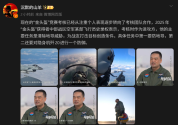
The current “Golden Helmet” competition has shifted its focus from individual performance to team collaboration. Shi Luquan, a pilot from an Air Force unit under the Central Theater Command and a 2025 Golden Helmet winner, stated that during the assessment, his primary task as part of the offensive side was to neutralize ground‑to‑air missile threats, thereby creating conditions for his comrades to strike the targets. In specific missions, the priorities were first to defend against ground‑to‑air missiles, and second to defend against the J‑20 stealth fighter.
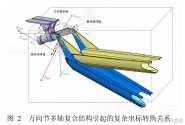
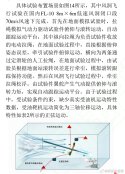
The receiver appears to be a drone? So this is for unmanned aircrafts?View attachment 172480View attachment 172481
Hard tube refueling system undergoing tests in the FL-10 wind tunnel

No, That's just a standin for receiver coordinate systemThe receiver appears to be a drone? So this is for unmanned aircrafts?