PLA AEW&C, SIGINT, EW and MPA thread

plawolf

Lieutenant General
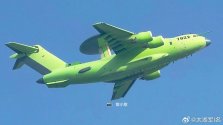
View attachment 176243
Very strange, compared to a KJ-500, the radar seems to be installed facing the wrong way. Now one of the arrays directly points into the vertical tail which is a very strange design choice to make.

I think the reversed facing might be a result of evolving tactics in the face of increasingly dangerous threat environments AWACS are now operating under, as well as potentially different intended primary mission profiles.

The original forward facing tri-array design made sense when BVRAAM engagement ranges barely stretched into triple digit KMs and stealth aircraft were still very rare. The forward facing array was also optimised to support primarily offensive air combat operations where your tac air combat packages are pushing into enemy territory and your AWACS’ want to keep up with them to provide continued support without risking being outrun too much that they could no longer effectively provide their support services.

A rearward facing array OTOH allows the AWACs to maintain optimal radar performance when approaching the engagement zone at an oblique angle instead of directly towards it. That gives it more time before it needs to perform a course correction to avoid getting too close, and also makes it quicker for the AWACS to turn tail and run if danger approaches. This sort of flying is most suitable for defensive minded operations where your tac air assets are trying to hold a line to prevent opfor from crossing.

Additionally, the rearward facing also allows for optimal radar performance when the AWACS is moving away from the engagement zone as fast as possible, whereas the 6 o’clock position would be the angle of both worst radar performance on a traditional front facing array, as well as the most common angle from which opfor VLO assets and missiles are most likely to approach from when trying to kill the AWACS.

My guess is that the PLA was seeing front facing tri-array AWACS getting killed far too often for their liking in mock combat exercises and wanted to directly address that issue.
 

Confusionism

Junior Member
Registered Member
I think the reversed facing might be a result of evolving tactics in the face of increasingly dangerous threat environments AWACS are now operating under, as well as potentially different intended primary mission profiles.

The original forward facing tri-array design made sense when BVRAAM engagement ranges barely stretched into triple digit KMs and stealth aircraft were still very rare. The forward facing array was also optimised to support primarily offensive air combat operations where your tac air combat packages are pushing into enemy territory and your AWACS’ want to keep up with them to provide continued support without risking being outrun too much that they could no longer effectively provide their support services.

A rearward facing array OTOH allows the AWACs to maintain optimal radar performance when approaching the engagement zone at an oblique angle instead of directly towards it. That gives it more time before it needs to perform a course correction to avoid getting too close, and also makes it quicker for the AWACS to turn tail and run if danger approaches. This sort of flying is most suitable for defensive minded operations where your tac air assets are trying to hold a line to prevent opfor from crossing.

Additionally, the rearward facing also allows for optimal radar performance when the AWACS is moving away from the engagement zone as fast as possible, whereas the 6 o’clock position would be the angle of both worst radar performance on a traditional front facing array, as well as the most common angle from which opfor VLO assets and missiles are most likely to approach from when trying to kill the AWACS.

My guess is that the PLA was seeing front facing tri-array AWACS getting killed far too often for their liking in mock combat exercises and wanted to directly address that issue.
Seriously, this kind of analysis is a classic case of drawing the target after firing the shot.
1782302716913.png
This theory is based on the assumption that the photo you see is genuine. But it is precisely this point that we need to verify.

It is illogical to point the direction with the strongest radar gain toward the rear. Consider 2 very basic scenarios:

1) when an AEW enters an area with potential but unknown threats, the target approaching head-on is moving the fastest, yet the radar is currently pointed in the direction with the lowest gain. In other words, the warning time for the most threatening target is the shortest.

2) When an AEW leaves an area—suppose it’s fleeing due to a threat—this means “you’ve already detected it/knowing which direction it’s coming from” and you did so using the side of the radar with lower-gain (since you’d flee in the 180° direction to minimize the threat’s approach speed). But the problem is this: since you were able to detect it even with the lowest gain, wouldn’t it seem illogical to switch to the side with the highest gain to track it while fleeing (since it would be getting closer and closer to you)?

Why not simply point the side with the highest gain toward it(the most threatening direction)—earlier on, so that you can detect it as early as possible?
 
Top