News on China's scientific and technological development.

anzha

Captain
Registered Member
Isomeric multi-hydrogen-bonding enables blue perovskite LEDs

Abstract:

Despite huge progress accomplished in perovskite light-emitting diodes (PeLEDs), the electroluminescence performance of blue PeLEDs lags far behind, constraining the widespread application of PeLED technology for vibrant full-colour displays . The wider bandgaps of blue emitters require higher working voltages of corresponding electroluminescent devices, intensifying the octahedral instability of perovskites with ionic nature. Here we report efficient and stable PeLEDs with saturated blue emissions by constructing hydrogen-bonding networks formed within perovskite and at the interface using isomeric molecules. The O-benzylhydroxylamine hydrochloride (OBCl) between the hole transport layer and the emitter acts as hydrogen-bonding donor, binding to the perovskite inorganic framework, which enhances the perovskite structural stability and decreases the hole energy barrier due to the large dipole moment. The isomeric N-benzylhydroxylamine hydrochloride (NBCl) added into the perovskite provides acceptor and donor sites for forming hydrogen bonding with the OB+ and the perovskite. The isomeric molecular hydrogen bonding reinforces the preferential orientation of perovskite films induced by OB+ interfacial molecules, improving the carrier mobility and further enhancing material stability. We demonstrate, as a result, blue PeLEDs with external quantum efficiencies of 16.8% at 463 nm and 22.0% at 468 nm, as well as significantly improved device stability, representing state-of-the-art performance among pure- and deep-blue PeLEDs.

Please, Log in or Register to view URLs content!
 

tokenanalyst

Lieutenant General
Registered Member

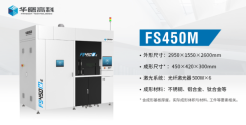
Farsoon Technologies releases a fully automated additive manufacturing solution for shoe molds, facilitating large-scale mass production.​


On June 12 at the 2026 Southeast Asia Footwear Additive Manufacturing Forum (Vietnam), Farsoon Technologies unveiled its new FS450M, a fully automated metal additive manufacturing system designed specifically for producing shoe molds. This launch aims to accelerate the industrialization of additive manufacturing in the footwear sector by addressing core challenges through safety, efficiency, and quality optimization.

The FS450M integrates hardware and software protections, including oxygen/pressure monitoring, anti-static structures, laser shielding, UPS power supplies, and a three-stage filtration system. It is further backed by the Huashu MES system for real-time data analysis; if safety thresholds are breached, alarms trigger immediately to prevent equipment failure and ensure operator safety.

1783365157994.png1783365187517.png
  • Cost Reduction & Efficiency Gains:The machine leverages several proprietary technologies to cut costs:
    • Bidirectional Variable-Speed Powder Spreading: Reduces printing time per layer by 64% (from 11s to 4s) and lowers powder consumption by 25%.​
    • SRS Low-Support Technology: Breaks traditional design limits, reducing defects and expanding product design possibilities.​
    • CAMS Continuous Manufacturing: Enables parallel printing, cooling, and cleaning processes while utilizing a one-to-four powder circulation system, cutting auxiliary device needs by 50% and labor costs by 70%.​
Featuring a larger build volume (450mm × 420mm × 300mm) and a powerful 500W × 6 fiber laser with full-width printing, the FS450M eliminates overlap marks. Its intelligent overlap line control automatically optimizes layer positioning, while an AI powder distribution detection system identifies defects (like warping or insufficient powder) with over 95% accuracy for automatic compensation. Designed as a modular system, the FS450M adapts to three production scenarios: non-automated, semi-automated, and fully automated. It offers closed-loop dust recycling for environmental safety and ensures high-quality consistency with full traceability, making it suitable for industries ranging from standard footwear manufacturing to aviation and medical applications.

Farsoon Technologies positions the FS450M as a pivotal step toward intelligent manufacturing in shoe molds, combining rigorous safety standards with aggressive cost-saving technologies to help partners transition toward fully automated, scalable production lines.

Please, Log in or Register to view URLs content!
 

Wrought

Captain
Registered Member
Historical piece on the difficulty of technology transfer. Foreigners weren't fools, and didn't hand over their secrets on silver platters.

A common Western account of China’s industrial rise rests on a simple claim. Beijing offered foreign companies access to its vast market, pushed them into joint ventures and forced them to transfer technology. Gullible multinationals, dazzled by the prospect of short-term profits, surrendered know-how that China then used to build national champions now competing with the West.
Please, Log in or Register to view URLs content!
, a professor at Tsinghua University, challenges that account. “Market-for-technology” did help China expand production, improve factory management, and enter global manufacturing networks. Yet in case after case, foreign partners kept a tight grip on product design, technical approval, and engineering changes, while explicit technology-development clauses in joint-venture contracts were narrowed, delayed, or blocked in practice.

However, this may have backfired in the long run by forcing the development of complete technological ecosystems domestically.

The examples are revealing. In the FAW–Toyota partnership, Chinese engineers complained that the drawings they received were “full of holes,” with information unnecessary for assembly literally cut out. At a Xi’an electronics and instrumentation company, a 300-person research team was dismantled, with researchers reassigned to production, after-sales service, and quality control. Fewer than 20 people remained in the technical team. At Dongfeng, R&D was kept away from mainstream production, severing the link between design and manufacturing. During early Santana production at SAIC Volkswagen, even a minor rear-door hinge problem identified by Chinese engineers was left unresolved until it was raised through diplomatic channels. This explains why indigenous innovators that emerged around 2005 often had to build far beyond their original businesses. BYD pushed deep into batteries and components. Huawei built everything from power systems to optical cables. To make new products, these firms first had to build much of the ecosystem themselves.

Please, Log in or Register to view URLs content!
 

sndef888

Captain
Registered Member
Historical piece on the difficulty of technology transfer. Foreigners weren't fools, and didn't hand over their secrets on silver platters.


However, this may have backfired in the long run by forcing the development of complete technological ecosystems domestically.


Please, Log in or Register to view URLs content!
Just look at the auto industry for example. All the old SOEs with foreign joint ventures made crap cars for years. Nobody wanted to buy a FAW Benteng or a Dongfeng Yixuan or a SAIC Roewe

The most successful car companies now are those that rose on their own like BYD, Geely, Chery
 

tphuang

General
Staff member
Super Moderator
VIP Professional
Registered Member
Please, Log in or Register to view URLs content!

More from Longsight on its product including the 90 GHz real time Oscilloscope. Can handle 100 Gbps optical interface for real time, non blocking data streaming to data centers. In EM space, its signal source and spectrum analyzer can handle 110 GHz band and 8.4 GHz bandwidth with 4 dB noise floor better than foreign competition.

Its product can be used in aerospace & satellite communication, MMW radars, EM environment and high order modulation & wifi chips.
 

siegecrossbow

Field Marshall
Staff member
Super Moderator
Renowned neurobiologist and former taekwondo captain Chih-Ying Su leaves US for China

Celebrated
Please, Log in or Register to view URLs content!
Chih-Ying Su, who specialises in research on the sense of smell using fruit flies and mosquitoes, has left her position as faculty vice-chair at the University of California San Diego to join the Shenzhen Academy of Medical Sciences (SMART).

The
Please, Log in or Register to view URLs content!
appointment as a full-time senior investigator was confirmed by SMART on July 2.
Professor Su’s lab focuses on how olfactory receptor neurons (ORNs) process odour information, as these neurons are the primary source of sensory input.

Her research findings have been published in leading journals in international neuroscience and biology, including Nature, Neuron, Nature Communications and PNAS.

Please, Log in or Register to view URLs content!
SCMP should dedicate a special subsection to news of scientists defecting to freedom from Magaland.
 
Top