Part II
Third, inequality is good. If all the leaders are equals, it will be difficult to get things done. A division of labor is necessary for purposes of efficiency, but if the division of labor is rigidly equal, with each leader in charge of an area and possessing de facto veto power over decisions affecting his or her area, it will be difficult to tackle vested interests that block reform and make decisions for the overall good.
So there is a need for a “first among equals” leader who has the ability to consider different perspectives and who has the moral if not formal authority to be decider-in-chief. I regret to report that I was not such a leader. Fortunately, our executive vice-dean instantiated that role. He was a good listener who could gently persuade other leaders to come around to his middle ground. And he had extensive experience with a large network of friends in the university who trusted him and respected his judgment, which helped with the implementation of our decisions.
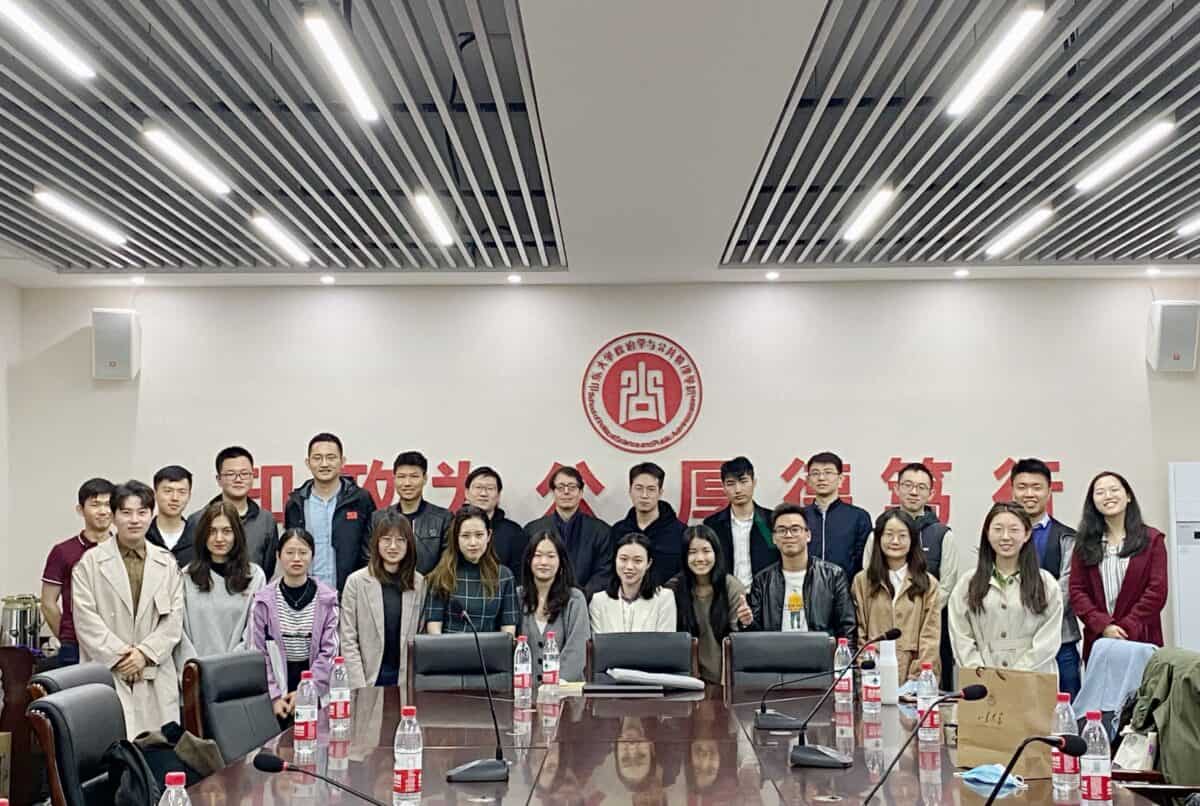

Daniel with students and faculty at Shandong University. Photos provided by Daniel A. Bell
Fourth, and most important, there is a need for free expression and critical viewpoints. A clear benefit of collective leadership is that diverse perspectives can inform the policy-making process. But it won’t work well if the top leader doesn’t take into account other perspectives and shuts down dissent. Thus, as the great Confucian thinker Xunzi put it, “the enlightened ruler is fond of having people collaborate with him, but the benighted ruler is fond of ruling alone.”
No human leader, no matter how great, can have a grasp of all matters of government in a modern, complex society such as China, and he or she is likely to have some mistaken views that need to be corrected. So other leaders have an obligation to criticize mistaken views, even (especially) if they come from the “first among equals.” Confucius himself was asked for one saying would destroy the state, and he responded “if a ruler is deficient and no one contradicts him.”
Third, inequality is good. If all the leaders are equals, it will be difficult to get things done. A division of labor is necessary for purposes of efficiency, but if the division of labor is rigidly equal, with each leader in charge of an area and possessing de facto veto power over decisions affecting his or her area, it will be difficult to tackle vested interests that block reform and make decisions for the overall good.
So there is a need for a “first among equals” leader who has the ability to consider different perspectives and who has the moral if not formal authority to be decider-in-chief. I regret to report that I was not such a leader. Fortunately, our executive vice-dean instantiated that role. He was a good listener who could gently persuade other leaders to come around to his middle ground. And he had extensive experience with a large network of friends in the university who trusted him and respected his judgment, which helped with the implementation of our decisions.
Daniel with students and faculty at Shandong University. Photos provided by Daniel A. Bell
Fourth, and most important, there is a need for free expression and critical viewpoints. A clear benefit of collective leadership is that diverse perspectives can inform the policy-making process. But it won’t work well if the top leader doesn’t take into account other perspectives and shuts down dissent. Thus, as the great Confucian thinker Xunzi put it, “the enlightened ruler is fond of having people collaborate with him, but the benighted ruler is fond of ruling alone.”
No human leader, no matter how great, can have a grasp of all matters of government in a modern, complex society such as China, and he or she is likely to have some mistaken views that need to be corrected. So other leaders have an obligation to criticize mistaken views, even (especially) if they come from the “first among equals.” Confucius himself was asked for one saying would destroy the state, and he responded “if a ruler is deficient and no one contradicts him.”
In my faculty, I’m pleased to report that our decider-in-chief was indeed a good listener who was willing to change his views in response to the criticisms of others. That’s why I’m confident about the future of our faculty.No human leader, no matter how great, can have a grasp of all matters of government in a modern, complex society such as China, and he or she is likely to have some mistaken views that need to be corrected.
Last edited: