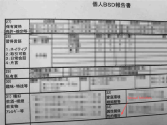
Information gathering by Japan Ground Self-Defense Force units includes items on "sexual preferences" and "relationships with the opposite sex," targeting Japanese university professors and others.
Japan Ground Self-Defense Force intelligence unit suspected of investigating "patriotism" and other topics collected from thousands of Professors; possibly violating civilian control.
It was revealed on the 22nd July, through interviews with former JGSDF veterans and related documents, that the "Local Intelligence Unit," the intelligence division of the Japan Ground Self-Defense Force's Central Intelligence Unit (located in Asaka Garrison, Tokyo), is systematically investigating and collecting information on the thoughts and beliefs of Japanese citizens, including vario university professors and NPO representatives, regarding "patriotism" and "sentiments towards the Japan Self Defense Forces." The unit's mission was set to be originally overseas intelligence gathering is being carried out on domestic intelligence gathering activities without clear legal basis, and the information collected may amount to thousands of people. The details of the activities are said to be unknown to politicians and bureaucrats, including the Minister of Defense, raising concerns that it may be a violation of civilian control. The Local Intelligence Unit was established in 2007 with the purpose of operating overseas, based on the lessons learned from the lack of local information during the JSDF's deployment to Iraq from 2003. It is based at Asaka Garrison and, according to sources, has about 50 to 60 members. However, in reality, the majority of the team members are collecting personal information of citizens within the country.
According to documents obtained by the Kumamoto Nichinichi Shimbun, the names and backgrounds of the university professors and others surveyed, as well as their "sentiments toward Japan," "sentiments toward the Self-Defense Forces," and "thoughts and beliefs," were compiled in detail in a report called "Personal Basic Source Data", and it is believed that at least several thousand copies are stored and shared within the Asaka Garrison. One former member testified, "We did not obtain consent from the subjects. The purpose of the activities and the legal basis were never explained within the unit." The collected information delved into the inner thoughts of individuals.
In the "patriotism" section of a report for a male representative of an NPO, specific actions were recorded, such as "arguing fiercely" when mistaken for a Chinese person overseas. Many of the subjects of the survey were experts well-versed in overseas affairs, and it appears that the local intelligence unit conducted ideological screening to determine whether these individuals were usable as sources of information. A male university professor who was the subject of the investigation told Kumamoto Nichinichi Shimbun in an interview, "I have been contacted by someone claiming to be a member of the Self-Defense Forces, but I never imagined that my personal information was being collected. I have absolutely no consent to the collection of my information."
View attachment 178692
The Ministry of Defense stated, "We are not aware of the collection of citizens' personal information that is the premise of the reporting. It will take time to verify the facts, but we intend to take some kind of action." Professor Sota Kimura, a scholar focusing on constitutional law in Tokyo Metropolitan University pointed out, "The purpose of using the collected information has not been specified, and there are doubts as to whether sensitive information is being managed appropriately. Investigating people's inner thoughts could lead to thought suppression. It is necessary to put control in place at the detection stage." (Yasushi Ueki, Satoshi Koyama, Maho Sakoda)
AI translation and proofread by me.