It sounds like that China is building the case of "Japan's WMD problem", similar to US building the case of NK's "nuclear problem". US also built cases of Sadam's WMD and Gaddafi's WMD. NK's nuclear weapon is real, the other two are far-fetched or outright lies but they all serve the same purpose of justifying various actions from sanction, containment to destruction. We can't predict how this card works out but it certainly can be played over and over whenever needed.Chinese nuclear experts believe Japan could build nuclear weapons in less than 3 years
Late US statesman Henry Kissinger’s dire warning about Tokyo aiming to become a nuclear power by 2028 is being re-examined by Beijing
View attachment 167013
One of Henry Kissinger’s final and most sobering predictions before his death was that Japan would eventually pursue nuclear weapons.
In a 2023 interview with The Economist, Kissinger warned that Japan was “heading towards becoming a nuclear power in five years”.
Chinese nuclear experts estimate that Japan has the political motivation but also the technical capacity to develop nuclear weapons in less than three years, echoing Kissinger’s warning that Japan harbours ambitions to revive its pre-war military stature when the opportunity arises.
Japanese Prime Minister Sanae Takaichi touched upon the red line of Japan’s three non-nuclear principles last month, seeking to create a legal opening.
Last week, a senior official from the Japanese prime minister’s office responsible for advising Takaichi on security policy told Asahi Shimbun that given the increasingly severe security environment around Japan, he believed “Japan should possess nuclear weapons”.
However, Japan’s Chief Cabinet Secretary Minoru Kihara reaffirmed on December 18 that the country’s decades-old pledge to never possess nuclear weapons by stating that its nuclear policy had not changed.
Despite this, most nuclear experts say Japan is in a state of “nuclear latency” – meaning that while it does not now deploy nuclear weapons, it could cross the threshold in a short time to produce deployable nuclear arms.
“The principles of nuclear weapons can be understood even by high school students. Countries like North Korea, India and Pakistan have managed to develop them,” a nuclear scientist from western China said.
“Technically speaking, Japan possesses sufficient industrial capacity to build even more advanced nuclear weapons than these countries in a short time. Moreover, Japan has stockpiled enough nuclear fuel under the pretext of civilian nuclear power.”
There is speculation that Japan already has two nuclear bombs, according to the expert, who asked not to be named due to the sensitivity of the topic.
“If they dare to pursue nuclear weapons, that number could grow to three or four. And nowadays, the yield of just one tactical nuclear weapon is 10 times that of the two bombs they once received,” he said.
“However, the price Japan would pay for developing nuclear weapons would be far greater than for North Korea, India or Pakistan, because Japan is a defeated nation.”
A Beijing-based nuclear expert noted the key difference between nuclear weapons and nuclear power: while power relied on a controlled reaction, weapons were uncontrolled.
“Japan has enough nuclear material, like plutonium, to build a weapon, and likely the technology for enriched uranium, though US approval could be a factor,” she said.
Kissinger’s prediction “is technically possible”, she added.
Another expert said that a main challenge for Japan was to develop suitable delivery vehicles. Obtaining highly enriched uranium could be difficult to carry out under the supervision of the International Atomic Energy Agency (IAEA). It would “need to be done covertly”, he said.
Japan has relevant technical reserves in terms of raw materials, manufacturing technology and delivery methods, according to openly available information.
It is also the only country in the world with a complete nuclear fuel cycle system but no nuclear weapons. According to data released by the Japan Atomic Energy Commission in August, Japan’s total separated plutonium amounted to about 44.4 tonnes, with 8.6 tonnes stored domestically and 35.8 tonnes held in Britain and France.
Although this plutonium is not weapons grade, Japan has sophisticated refining ability. Given that only about 8kg (17lbs) of plutonium is needed to make a nuclear bomb, the domestic stockpile alone is more than enough.
Due to Japan’s limited territory, it cannot conduct explosive tests in remote desert areas as China and the US have. However, modern nuclear weapons development can rely on more advanced and discreet “testing” methods.
The United States signed the Comprehensive Nuclear-Test-Ban Treaty in 1996, and although it has never been ratified by the US Congress, the country has not conducted nuclear explosive tests since then.
In May last year, the US conducted a subcritical test in Nevada, using explosives to compress nuclear material to the brink of a chain reaction to observe changes. Since no actual nuclear explosion occurred, the test drew little attention, and the collected data could be fed into supercomputers for research.
Japan is not lacking in computing resources either – its Fugaku supercomputer ranks high on the Top500 list. Using similar methods, Japan could conduct simulated explosion tests.
Japan’s Gekko XII laser facility in Osaka can compress fuel pellets with lasers for civilian nuclear fusion research – a process similar in principle to the secondary implosion stage of a hydrogen bomb explosion.
A warhead also needs a delivery platform. The Japan Aerospace Exploration Agency’s Epsilon rocket is designed as a solid-fuel rocket, which offers faster response times compared to liquid-fuel rockets that require pre-fuelling – characteristics typical of intercontinental ballistic missiles.
Although its improved Epsilon-S model has recently faced difficulties, the Epsilon can deliver a 1.2-tonne payload into low-Earth orbit. If a satellite were replaced with a nuclear warhead and guidance systems were modified, it could potentially be used for long-range nuclear strikes.
Japan is also improving its Type 12 cruise missile, equipped with a combined guidance system using GPS, terrain matching and terminal active radar. An updated version of the missile will have a range of about 1,000km (620 miles).
Japan has also bought US-made Tomahawk cruise missiles with a range of around 1,600km for ship-based deployment, which together would form a complementary long-range strike system.
On December 22, Chinese foreign ministry spokesman Lin Jian responded to recent remarks from Japanese officials about potentially acquiring nuclear weapons. He stated that China was alarmed by these comments, calling them a threat to regional peace and a direct challenge to the global nuclear non-proliferation system.
Lin urged Japan to honour its international and legal commitments and to immediately stop any move towards the wrong path of nuclear armament.
In his 2023 interview, Kissinger denied that Japan had any intention of being a permanent part of the global multilateral system. Many geopolitical analysts have interpreted this remark as suggesting that Japan may seek to revive its pre-war military ambitions when conditions become favourable.
As the only country to have suffered nuclear attacks, Japan is a member of the Treaty on the Non-Proliferation of Nuclear Weapons but has never signed the Treaty on the Prohibition of Nuclear Weapons, the comprehensive multilateral agreement to ban nuclear weapons entirely.
At present, the IAEA’s oversight of Japan’s nuclear materials, the Japanese government’s official commitment to the three non-nuclear principles and domestic public opinion remain key factors in maintaining the status quo.
THE WORLD AIN'T ALL SUNSHINE AND RAINBOWS - ROCKY BALBOA

You are using an out of date browser. It may not display this or other websites correctly.
You should upgrade or use an alternative browser.
You should upgrade or use an alternative browser.
Miscellaneous News
- Thread starter bd popeye
- Start date

supercat
Colonel
KMT Chairwoman Cheng Li-wen may visit China and meet Xi in 2026.
The imbecile doesn't think nuclear war is such a bad idea.
The imbecile doesn't think nuclear war is such a bad idea.

plawolf
Lieutenant General
It sounds like that China is building the case of "Japan's WMD problem", similar to US building the case of NK's "nuclear problem". US also built cases of Sadam's WMD and Gaddafi's WMD. NK's nuclear weapon is real, the other two are far-fetched or outright lies but they all serve the same purpose of justifying various actions from sanction, containment to destruction. We can't predict how this card works out but it certainly can be played over and over whenever needed.
Yep, China just effectively announced a 3 year count down.
It’s not an immediate ultimatum, but China doesn’t fuck around when it comes to top national security issues. So in 3 years max, you can bet the PLA will be ready for the modern updated version of Operation Downfall.
It should be noted that just because China has set an effective target date of 3 years from now, it doesn’t mean the PLA can’t go tomorrow. China already have the hard power military capability to precision strike any concrete Japanese push towards a nuclear bomb to prevent breakout, as well as the means to launch a full invasion of the Japanese home islands to ensure full eradication of the nuclear threat. But to do so now will be costly for China. These 3 additional years is meant to radically reduce that cost in blood and treasure to China to launch such a war.
The best part is Trump could still potentially be in charge at that point, so he can eat one last giant Taco for the road, or he could potentially seize this opportunity to suspend the constitution and cancel elections until the crisis is over, effectively making himself Emperor Trump. No doubt those considerations have been actively embraced in Chinese strategic planning.
This war isn’t inevitable, far from it. But when China sets itself such grand multi year plans, they don’t hold back and tend to utterly smash their targets. While many might scoff at the suggestion that China can take Japan today, I think far fewer would question it in 3 years time.
It’s kinda interesting to think we may actually have a potential timeframe for when China will push for the Taiwan question to finally be answered. And the first moves on that game plan might be to take Japan and reunite Korea under Kim, thereby maximising the chances of a peaceful reunification.
He invented the Oculas Rift which i can't say I am suprised he is like this because he revived VR for gamers and we all know what goes on in there.So is that how Palmer Luckey secured Peter Thiel's buy-in for no less than of rather ventures?
I obviously wouldn't know, but from the looks of it, Luckey might "appeal to a certain demographic" . . .
View attachment 167085
View attachment 167086

Focus on You is VR game about VR girlfriend.
I wonder if the Japanese realize just how MANY Chinese are just itching for a fight with hateful Japan and the hordes of Chinese(me included) are just waiting for some vengeance for family members killed WW2/personal familial suffering at their evil hands-I won't lie to you I own/mostly Japanese cars/some earlier electronics TV's etc -but like China I consider it a transactional/business deal(money for quality goods Iwant) -but I'll NEVER give them a single cent for charity-helping-Japan like in 2010 during the massive earthquake/tsunami-not one goddamn cent.And now as China has displaced Japan in so,so many consumer goods I am even magnitudes happier now spending my money in/on China.That guy is lucky no more, also he looks utterly without dignity like a typical anime cosplayer that is completely brainwashed into the idiot craze. Yes, China does not need freaks like this entering China on a whim, keep these war mongering bastards out for everyone’s sanity
I dont think Japan can do much any more except become a Chinese province at this rate. Once China cuts all critical resources to the nation, its game over for them and their is nothing the USA can do about due to its own problems and its leadership having taken complete leave of its senses
Last edited:
Israeli leadership concluded that creating more antisemitism was necessary to create unity among Jewish diaspora for the Israeli state. Personally I believe it's working. Older Jewish bankers are sending tons of monetary aid in blind panic, and younger Jewish boys are joining the IDF in patriotic droves.Today's philosophical musing:
I have similar family loses. I wonder if China will offer something like a pva for the Chinese diaspora, as I want to join, if that day ever comes. It is time to finally close the book on unfinished injustice, and make past wrongs right.I wonder if the Japanese realize just how MANY Chinese are just itching for a fight with hateful Japan and the hordes of Chinese(me included) are just waiting for some vengeance for family members killed WW2/personal familial suffering at their evil hands-I won't lie to you I own/mostly Japanese cars/some earlier electronics TV's etc -but like China I consider it a transactional/business deal(money for quality goods Iwant) -but I'll NEVER give them a single cent for charity-helping-Japan like in 2010 during the massive earthquake/tsunami-not one goddamn cent.And now as China has displaced Japan in so,so many consumer goods I am even magnitudes happier now spending my money in/on China.

Well Japan has, at the very least since 1962 (Showa 37), coveted and studied the manufacture of nuclear weapons and how they would be used in warfare. Given Japan’s current industrial capabilities, there is a strong likelihood that it could produce nuclear weapons within three years.Chinese nuclear experts believe Japan could build nuclear weapons in less than 3 years
Late US statesman Henry Kissinger’s dire warning about Tokyo aiming to become a nuclear power by 2028 is being re-examined by Beijing
View attachment 167013
One of Henry Kissinger’s final and most sobering predictions before his death was that Japan would eventually pursue nuclear weapons.
In a 2023 interview with The Economist, Kissinger warned that Japan was “heading towards becoming a nuclear power in five years”.
Chinese nuclear experts estimate that Japan has the political motivation but also the technical capacity to develop nuclear weapons in less than three years, echoing Kissinger’s warning that Japan harbours ambitions to revive its pre-war military stature when the opportunity arises.
Japanese Prime Minister Sanae Takaichi touched upon the red line of Japan’s three non-nuclear principles last month, seeking to create a legal opening.
Last week, a senior official from the Japanese prime minister’s office responsible for advising Takaichi on security policy told Asahi Shimbun that given the increasingly severe security environment around Japan, he believed “Japan should possess nuclear weapons”.
However, Japan’s Chief Cabinet Secretary Minoru Kihara reaffirmed on December 18 that the country’s decades-old pledge to never possess nuclear weapons by stating that its nuclear policy had not changed.
Despite this, most nuclear experts say Japan is in a state of “nuclear latency” – meaning that while it does not now deploy nuclear weapons, it could cross the threshold in a short time to produce deployable nuclear arms.
“The principles of nuclear weapons can be understood even by high school students. Countries like North Korea, India and Pakistan have managed to develop them,” a nuclear scientist from western China said.
“Technically speaking, Japan possesses sufficient industrial capacity to build even more advanced nuclear weapons than these countries in a short time. Moreover, Japan has stockpiled enough nuclear fuel under the pretext of civilian nuclear power.”
There is speculation that Japan already has two nuclear bombs, according to the expert, who asked not to be named due to the sensitivity of the topic.
“If they dare to pursue nuclear weapons, that number could grow to three or four. And nowadays, the yield of just one tactical nuclear weapon is 10 times that of the two bombs they once received,” he said.
“However, the price Japan would pay for developing nuclear weapons would be far greater than for North Korea, India or Pakistan, because Japan is a defeated nation.”
A Beijing-based nuclear expert noted the key difference between nuclear weapons and nuclear power: while power relied on a controlled reaction, weapons were uncontrolled.
“Japan has enough nuclear material, like plutonium, to build a weapon, and likely the technology for enriched uranium, though US approval could be a factor,” she said.
Kissinger’s prediction “is technically possible”, she added.
Another expert said that a main challenge for Japan was to develop suitable delivery vehicles. Obtaining highly enriched uranium could be difficult to carry out under the supervision of the International Atomic Energy Agency (IAEA). It would “need to be done covertly”, he said.
Japan has relevant technical reserves in terms of raw materials, manufacturing technology and delivery methods, according to openly available information.
It is also the only country in the world with a complete nuclear fuel cycle system but no nuclear weapons. According to data released by the Japan Atomic Energy Commission in August, Japan’s total separated plutonium amounted to about 44.4 tonnes, with 8.6 tonnes stored domestically and 35.8 tonnes held in Britain and France.
Although this plutonium is not weapons grade, Japan has sophisticated refining ability. Given that only about 8kg (17lbs) of plutonium is needed to make a nuclear bomb, the domestic stockpile alone is more than enough.
Due to Japan’s limited territory, it cannot conduct explosive tests in remote desert areas as China and the US have. However, modern nuclear weapons development can rely on more advanced and discreet “testing” methods.
The United States signed the Comprehensive Nuclear-Test-Ban Treaty in 1996, and although it has never been ratified by the US Congress, the country has not conducted nuclear explosive tests since then.
In May last year, the US conducted a subcritical test in Nevada, using explosives to compress nuclear material to the brink of a chain reaction to observe changes. Since no actual nuclear explosion occurred, the test drew little attention, and the collected data could be fed into supercomputers for research.
Japan is not lacking in computing resources either – its Fugaku supercomputer ranks high on the Top500 list. Using similar methods, Japan could conduct simulated explosion tests.
Japan’s Gekko XII laser facility in Osaka can compress fuel pellets with lasers for civilian nuclear fusion research – a process similar in principle to the secondary implosion stage of a hydrogen bomb explosion.
A warhead also needs a delivery platform. The Japan Aerospace Exploration Agency’s Epsilon rocket is designed as a solid-fuel rocket, which offers faster response times compared to liquid-fuel rockets that require pre-fuelling – characteristics typical of intercontinental ballistic missiles.
Although its improved Epsilon-S model has recently faced difficulties, the Epsilon can deliver a 1.2-tonne payload into low-Earth orbit. If a satellite were replaced with a nuclear warhead and guidance systems were modified, it could potentially be used for long-range nuclear strikes.
Japan is also improving its Type 12 cruise missile, equipped with a combined guidance system using GPS, terrain matching and terminal active radar. An updated version of the missile will have a range of about 1,000km (620 miles).
Japan has also bought US-made Tomahawk cruise missiles with a range of around 1,600km for ship-based deployment, which together would form a complementary long-range strike system.
On December 22, Chinese foreign ministry spokesman Lin Jian responded to recent remarks from Japanese officials about potentially acquiring nuclear weapons. He stated that China was alarmed by these comments, calling them a threat to regional peace and a direct challenge to the global nuclear non-proliferation system.
Lin urged Japan to honour its international and legal commitments and to immediately stop any move towards the wrong path of nuclear armament.
In his 2023 interview, Kissinger denied that Japan had any intention of being a permanent part of the global multilateral system. Many geopolitical analysts have interpreted this remark as suggesting that Japan may seek to revive its pre-war military ambitions when conditions become favourable.
As the only country to have suffered nuclear attacks, Japan is a member of the Treaty on the Non-Proliferation of Nuclear Weapons but has never signed the Treaty on the Prohibition of Nuclear Weapons, the comprehensive multilateral agreement to ban nuclear weapons entirely.
At present, the IAEA’s oversight of Japan’s nuclear materials, the Japanese government’s official commitment to the three non-nuclear principles and domestic public opinion remain key factors in maintaining the status quo.
THE WORLD AIN'T ALL SUNSHINE AND RAINBOWS - ROCKY BALBOA
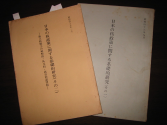
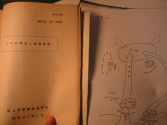
1.Fundamental Research on Japan’s Nuclear Policy
2.Supplementary material on the "tactics of Z-weapon"(code for nuclear weapon)
I mean do you have military experience because that would determine how useful you are given what happened to the Ukrainian foreign volunteers when the full war started? The Reddit legion were in for a big surprised. But I do wanna ask the members of this forum who fought in gwot (Iraq or Afghanistan etc) would they volunteer for the PLA if war with Taiwan starts and Japan intervenes? It’s not hard to image kamikaze charges being similar to suicide bombers, isis and al qeada uses.I have similar family loses. I wonder if China will offer something like a pva for the Chinese diaspora, as I want to join, if that day ever comes. It is time to finally close the book on unfinished injustice, and make past wrongs right.
I know China has enough trained,willing,able people to do the job of defending it-but during a crisis like another Sino-Japan war over Taiwan..well I want to help in ANY way and not get in the way-I'll handle the dirtiest jobs/shovel shit to help etc doesn't bother me at all as long as I am contributing to the overall Chinese effort against Japan.-at this moment realistically the Japs aren't overrunning my town/village so need need for me to pick up my hunting rifle/bowie knife etc but helping in any way is in my heart as I didn't expect the retired Jap generals,ambassadors to voice such evil hearts but then I'm not surprised.I mean do you have military experience because that would determine how useful you are given what happened to the Ukrainian foreign volunteers when the full war started? The Reddit legion were in for a big surprised. But I do wanna ask the members of this forum who fought in gwot (Iraq or Afghanistan etc) would they volunteer for the PLA if war with Taiwan starts and Japan intervenes? It’s not hard to image kamikaze charges being similar to suicide bombers, isis and al qeada uses.