Total clickbait headline. Read the actual article. What they're actually claiming is that a blackout nearly happened. Instead they figured it'll get more clicks to phrase it as "a near total blackout" happened.

You are using an out of date browser. It may not display this or other websites correctly.
You should upgrade or use an alternative browser.
You should upgrade or use an alternative browser.
Miscellaneous News
- Thread starter bd popeye
- Start date
Chinese nuclear experts believe Japan could build nuclear weapons in less than 3 years
Late US statesman Henry Kissinger’s dire warning about Tokyo aiming to become a nuclear power by 2028 is being re-examined by Beijing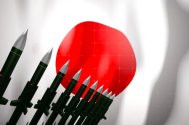
One of Henry Kissinger’s final and most sobering predictions before his death was that Japan would eventually pursue nuclear weapons.
In a 2023 interview with The Economist, Kissinger warned that Japan was “heading towards becoming a nuclear power in five years”.
Chinese nuclear experts estimate that Japan has the political motivation but also the technical capacity to develop nuclear weapons in less than three years, echoing Kissinger’s warning that Japan harbours ambitions to revive its pre-war military stature when the opportunity arises.
Japanese Prime Minister Sanae Takaichi touched upon the red line of Japan’s three non-nuclear principles last month, seeking to create a legal opening.
Last week, a senior official from the Japanese prime minister’s office responsible for advising Takaichi on security policy told Asahi Shimbun that given the increasingly severe security environment around Japan, he believed “Japan should possess nuclear weapons”.
However, Japan’s Chief Cabinet Secretary Minoru Kihara reaffirmed on December 18 that the country’s decades-old pledge to never possess nuclear weapons by stating that its nuclear policy had not changed.
Despite this, most nuclear experts say Japan is in a state of “nuclear latency” – meaning that while it does not now deploy nuclear weapons, it could cross the threshold in a short time to produce deployable nuclear arms.
“The principles of nuclear weapons can be understood even by high school students. Countries like North Korea, India and Pakistan have managed to develop them,” a nuclear scientist from western China said.
“Technically speaking, Japan possesses sufficient industrial capacity to build even more advanced nuclear weapons than these countries in a short time. Moreover, Japan has stockpiled enough nuclear fuel under the pretext of civilian nuclear power.”
There is speculation that Japan already has two nuclear bombs, according to the expert, who asked not to be named due to the sensitivity of the topic.
“If they dare to pursue nuclear weapons, that number could grow to three or four. And nowadays, the yield of just one tactical nuclear weapon is 10 times that of the two bombs they once received,” he said.
“However, the price Japan would pay for developing nuclear weapons would be far greater than for North Korea, India or Pakistan, because Japan is a defeated nation.”
A Beijing-based nuclear expert noted the key difference between nuclear weapons and nuclear power: while power relied on a controlled reaction, weapons were uncontrolled.
“Japan has enough nuclear material, like plutonium, to build a weapon, and likely the technology for enriched uranium, though US approval could be a factor,” she said.
Kissinger’s prediction “is technically possible”, she added.
Another expert said that a main challenge for Japan was to develop suitable delivery vehicles. Obtaining highly enriched uranium could be difficult to carry out under the supervision of the International Atomic Energy Agency (IAEA). It would “need to be done covertly”, he said.
Japan has relevant technical reserves in terms of raw materials, manufacturing technology and delivery methods, according to openly available information.
It is also the only country in the world with a complete nuclear fuel cycle system but no nuclear weapons. According to data released by the Japan Atomic Energy Commission in August, Japan’s total separated plutonium amounted to about 44.4 tonnes, with 8.6 tonnes stored domestically and 35.8 tonnes held in Britain and France.
Although this plutonium is not weapons grade, Japan has sophisticated refining ability. Given that only about 8kg (17lbs) of plutonium is needed to make a nuclear bomb, the domestic stockpile alone is more than enough.
Due to Japan’s limited territory, it cannot conduct explosive tests in remote desert areas as China and the US have. However, modern nuclear weapons development can rely on more advanced and discreet “testing” methods.
The United States signed the Comprehensive Nuclear-Test-Ban Treaty in 1996, and although it has never been ratified by the US Congress, the country has not conducted nuclear explosive tests since then.
In May last year, the US conducted a subcritical test in Nevada, using explosives to compress nuclear material to the brink of a chain reaction to observe changes. Since no actual nuclear explosion occurred, the test drew little attention, and the collected data could be fed into supercomputers for research.
Japan is not lacking in computing resources either – its Fugaku supercomputer ranks high on the Top500 list. Using similar methods, Japan could conduct simulated explosion tests.
Japan’s Gekko XII laser facility in Osaka can compress fuel pellets with lasers for civilian nuclear fusion research – a process similar in principle to the secondary implosion stage of a hydrogen bomb explosion.
A warhead also needs a delivery platform. The Japan Aerospace Exploration Agency’s Epsilon rocket is designed as a solid-fuel rocket, which offers faster response times compared to liquid-fuel rockets that require pre-fuelling – characteristics typical of intercontinental ballistic missiles.
Although its improved Epsilon-S model has recently faced difficulties, the Epsilon can deliver a 1.2-tonne payload into low-Earth orbit. If a satellite were replaced with a nuclear warhead and guidance systems were modified, it could potentially be used for long-range nuclear strikes.
Japan is also improving its Type 12 cruise missile, equipped with a combined guidance system using GPS, terrain matching and terminal active radar. An updated version of the missile will have a range of about 1,000km (620 miles).
Japan has also bought US-made Tomahawk cruise missiles with a range of around 1,600km for ship-based deployment, which together would form a complementary long-range strike system.
On December 22, Chinese foreign ministry spokesman Lin Jian responded to recent remarks from Japanese officials about potentially acquiring nuclear weapons. He stated that China was alarmed by these comments, calling them a threat to regional peace and a direct challenge to the global nuclear non-proliferation system.
Lin urged Japan to honour its international and legal commitments and to immediately stop any move towards the wrong path of nuclear armament.
In his 2023 interview, Kissinger denied that Japan had any intention of being a permanent part of the global multilateral system. Many geopolitical analysts have interpreted this remark as suggesting that Japan may seek to revive its pre-war military ambitions when conditions become favourable.
As the only country to have suffered nuclear attacks, Japan is a member of the Treaty on the Non-Proliferation of Nuclear Weapons but has never signed the Treaty on the Prohibition of Nuclear Weapons, the comprehensive multilateral agreement to ban nuclear weapons entirely.
At present, the IAEA’s oversight of Japan’s nuclear materials, the Japanese government’s official commitment to the three non-nuclear principles and domestic public opinion remain key factors in maintaining the status quo.
THE WORLD AIN'T ALL SUNSHINE AND RAINBOWS - ROCKY BALBOA
As the US has shown, owning nuclear weapons can't stop you from getting curb stomped in an economic, financial, trade, and tech war. And so it is clear that these are the tools China must use to completely destroy Japan.Chinese nuclear experts believe Japan could build nuclear weapons in less than 3 years
Late US statesman Henry Kissinger’s dire warning about Tokyo aiming to become a nuclear power by 2028 is being re-examined by Beijing
View attachment 167013
One of Henry Kissinger’s final and most sobering predictions before his death was that Japan would eventually pursue nuclear weapons.
In a 2023 interview with The Economist, Kissinger warned that Japan was “heading towards becoming a nuclear power in five years”.
Chinese nuclear experts estimate that Japan has the political motivation but also the technical capacity to develop nuclear weapons in less than three years, echoing Kissinger’s warning that Japan harbours ambitions to revive its pre-war military stature when the opportunity arises.
Japanese Prime Minister Sanae Takaichi touched upon the red line of Japan’s three non-nuclear principles last month, seeking to create a legal opening.
Last week, a senior official from the Japanese prime minister’s office responsible for advising Takaichi on security policy told Asahi Shimbun that given the increasingly severe security environment around Japan, he believed “Japan should possess nuclear weapons”.
However, Japan’s Chief Cabinet Secretary Minoru Kihara reaffirmed on December 18 that the country’s decades-old pledge to never possess nuclear weapons by stating that its nuclear policy had not changed.
Despite this, most nuclear experts say Japan is in a state of “nuclear latency” – meaning that while it does not now deploy nuclear weapons, it could cross the threshold in a short time to produce deployable nuclear arms.
“The principles of nuclear weapons can be understood even by high school students. Countries like North Korea, India and Pakistan have managed to develop them,” a nuclear scientist from western China said.
“Technically speaking, Japan possesses sufficient industrial capacity to build even more advanced nuclear weapons than these countries in a short time. Moreover, Japan has stockpiled enough nuclear fuel under the pretext of civilian nuclear power.”
There is speculation that Japan already has two nuclear bombs, according to the expert, who asked not to be named due to the sensitivity of the topic.
“If they dare to pursue nuclear weapons, that number could grow to three or four. And nowadays, the yield of just one tactical nuclear weapon is 10 times that of the two bombs they once received,” he said.
“However, the price Japan would pay for developing nuclear weapons would be far greater than for North Korea, India or Pakistan, because Japan is a defeated nation.”
A Beijing-based nuclear expert noted the key difference between nuclear weapons and nuclear power: while power relied on a controlled reaction, weapons were uncontrolled.
“Japan has enough nuclear material, like plutonium, to build a weapon, and likely the technology for enriched uranium, though US approval could be a factor,” she said.
Kissinger’s prediction “is technically possible”, she added.
Another expert said that a main challenge for Japan was to develop suitable delivery vehicles. Obtaining highly enriched uranium could be difficult to carry out under the supervision of the International Atomic Energy Agency (IAEA). It would “need to be done covertly”, he said.
Japan has relevant technical reserves in terms of raw materials, manufacturing technology and delivery methods, according to openly available information.
It is also the only country in the world with a complete nuclear fuel cycle system but no nuclear weapons. According to data released by the Japan Atomic Energy Commission in August, Japan’s total separated plutonium amounted to about 44.4 tonnes, with 8.6 tonnes stored domestically and 35.8 tonnes held in Britain and France.
Although this plutonium is not weapons grade, Japan has sophisticated refining ability. Given that only about 8kg (17lbs) of plutonium is needed to make a nuclear bomb, the domestic stockpile alone is more than enough.
Due to Japan’s limited territory, it cannot conduct explosive tests in remote desert areas as China and the US have. However, modern nuclear weapons development can rely on more advanced and discreet “testing” methods.
The United States signed the Comprehensive Nuclear-Test-Ban Treaty in 1996, and although it has never been ratified by the US Congress, the country has not conducted nuclear explosive tests since then.
In May last year, the US conducted a subcritical test in Nevada, using explosives to compress nuclear material to the brink of a chain reaction to observe changes. Since no actual nuclear explosion occurred, the test drew little attention, and the collected data could be fed into supercomputers for research.
Japan is not lacking in computing resources either – its Fugaku supercomputer ranks high on the Top500 list. Using similar methods, Japan could conduct simulated explosion tests.
Japan’s Gekko XII laser facility in Osaka can compress fuel pellets with lasers for civilian nuclear fusion research – a process similar in principle to the secondary implosion stage of a hydrogen bomb explosion.
A warhead also needs a delivery platform. The Japan Aerospace Exploration Agency’s Epsilon rocket is designed as a solid-fuel rocket, which offers faster response times compared to liquid-fuel rockets that require pre-fuelling – characteristics typical of intercontinental ballistic missiles.
Although its improved Epsilon-S model has recently faced difficulties, the Epsilon can deliver a 1.2-tonne payload into low-Earth orbit. If a satellite were replaced with a nuclear warhead and guidance systems were modified, it could potentially be used for long-range nuclear strikes.
Japan is also improving its Type 12 cruise missile, equipped with a combined guidance system using GPS, terrain matching and terminal active radar. An updated version of the missile will have a range of about 1,000km (620 miles).
Japan has also bought US-made Tomahawk cruise missiles with a range of around 1,600km for ship-based deployment, which together would form a complementary long-range strike system.
On December 22, Chinese foreign ministry spokesman Lin Jian responded to recent remarks from Japanese officials about potentially acquiring nuclear weapons. He stated that China was alarmed by these comments, calling them a threat to regional peace and a direct challenge to the global nuclear non-proliferation system.
Lin urged Japan to honour its international and legal commitments and to immediately stop any move towards the wrong path of nuclear armament.
In his 2023 interview, Kissinger denied that Japan had any intention of being a permanent part of the global multilateral system. Many geopolitical analysts have interpreted this remark as suggesting that Japan may seek to revive its pre-war military ambitions when conditions become favourable.
As the only country to have suffered nuclear attacks, Japan is a member of the Treaty on the Non-Proliferation of Nuclear Weapons but has never signed the Treaty on the Prohibition of Nuclear Weapons, the comprehensive multilateral agreement to ban nuclear weapons entirely.
At present, the IAEA’s oversight of Japan’s nuclear materials, the Japanese government’s official commitment to the three non-nuclear principles and domestic public opinion remain key factors in maintaining the status quo.
THE WORLD AIN'T ALL SUNSHINE AND RAINBOWS - ROCKY BALBOA

bajingan
Senior Member
Making nuclear weapons is easy, even North Korea, Pakistan can do it, what's hard is processing your own heavy rare earths, making your own Electronics and ICT Components, fertilizers, antibiotics/APIs, even being self sufficient in food and energy, cause all of those will be embargoed by China if japan ever goes nuclear.Chinese nuclear experts believe Japan could build nuclear weapons in less than 3 years
Late US statesman Henry Kissinger’s dire warning about Tokyo aiming to become a nuclear power by 2028 is being re-examined by Beijing
View attachment 167013
One of Henry Kissinger’s final and most sobering predictions before his death was that Japan would eventually pursue nuclear weapons.
In a 2023 interview with The Economist, Kissinger warned that Japan was “heading towards becoming a nuclear power in five years”.
Chinese nuclear experts estimate that Japan has the political motivation but also the technical capacity to develop nuclear weapons in less than three years, echoing Kissinger’s warning that Japan harbours ambitions to revive its pre-war military stature when the opportunity arises.
Japanese Prime Minister Sanae Takaichi touched upon the red line of Japan’s three non-nuclear principles last month, seeking to create a legal opening.
Last week, a senior official from the Japanese prime minister’s office responsible for advising Takaichi on security policy told Asahi Shimbun that given the increasingly severe security environment around Japan, he believed “Japan should possess nuclear weapons”.
However, Japan’s Chief Cabinet Secretary Minoru Kihara reaffirmed on December 18 that the country’s decades-old pledge to never possess nuclear weapons by stating that its nuclear policy had not changed.
Despite this, most nuclear experts say Japan is in a state of “nuclear latency” – meaning that while it does not now deploy nuclear weapons, it could cross the threshold in a short time to produce deployable nuclear arms.
“The principles of nuclear weapons can be understood even by high school students. Countries like North Korea, India and Pakistan have managed to develop them,” a nuclear scientist from western China said.
“Technically speaking, Japan possesses sufficient industrial capacity to build even more advanced nuclear weapons than these countries in a short time. Moreover, Japan has stockpiled enough nuclear fuel under the pretext of civilian nuclear power.”
There is speculation that Japan already has two nuclear bombs, according to the expert, who asked not to be named due to the sensitivity of the topic.
“If they dare to pursue nuclear weapons, that number could grow to three or four. And nowadays, the yield of just one tactical nuclear weapon is 10 times that of the two bombs they once received,” he said.
“However, the price Japan would pay for developing nuclear weapons would be far greater than for North Korea, India or Pakistan, because Japan is a defeated nation.”
A Beijing-based nuclear expert noted the key difference between nuclear weapons and nuclear power: while power relied on a controlled reaction, weapons were uncontrolled.
“Japan has enough nuclear material, like plutonium, to build a weapon, and likely the technology for enriched uranium, though US approval could be a factor,” she said.
Kissinger’s prediction “is technically possible”, she added.
Another expert said that a main challenge for Japan was to develop suitable delivery vehicles. Obtaining highly enriched uranium could be difficult to carry out under the supervision of the International Atomic Energy Agency (IAEA). It would “need to be done covertly”, he said.
Japan has relevant technical reserves in terms of raw materials, manufacturing technology and delivery methods, according to openly available information.
It is also the only country in the world with a complete nuclear fuel cycle system but no nuclear weapons. According to data released by the Japan Atomic Energy Commission in August, Japan’s total separated plutonium amounted to about 44.4 tonnes, with 8.6 tonnes stored domestically and 35.8 tonnes held in Britain and France.
Although this plutonium is not weapons grade, Japan has sophisticated refining ability. Given that only about 8kg (17lbs) of plutonium is needed to make a nuclear bomb, the domestic stockpile alone is more than enough.
Due to Japan’s limited territory, it cannot conduct explosive tests in remote desert areas as China and the US have. However, modern nuclear weapons development can rely on more advanced and discreet “testing” methods.
The United States signed the Comprehensive Nuclear-Test-Ban Treaty in 1996, and although it has never been ratified by the US Congress, the country has not conducted nuclear explosive tests since then.
In May last year, the US conducted a subcritical test in Nevada, using explosives to compress nuclear material to the brink of a chain reaction to observe changes. Since no actual nuclear explosion occurred, the test drew little attention, and the collected data could be fed into supercomputers for research.
Japan is not lacking in computing resources either – its Fugaku supercomputer ranks high on the Top500 list. Using similar methods, Japan could conduct simulated explosion tests.
Japan’s Gekko XII laser facility in Osaka can compress fuel pellets with lasers for civilian nuclear fusion research – a process similar in principle to the secondary implosion stage of a hydrogen bomb explosion.
A warhead also needs a delivery platform. The Japan Aerospace Exploration Agency’s Epsilon rocket is designed as a solid-fuel rocket, which offers faster response times compared to liquid-fuel rockets that require pre-fuelling – characteristics typical of intercontinental ballistic missiles.
Although its improved Epsilon-S model has recently faced difficulties, the Epsilon can deliver a 1.2-tonne payload into low-Earth orbit. If a satellite were replaced with a nuclear warhead and guidance systems were modified, it could potentially be used for long-range nuclear strikes.
Japan is also improving its Type 12 cruise missile, equipped with a combined guidance system using GPS, terrain matching and terminal active radar. An updated version of the missile will have a range of about 1,000km (620 miles).
Japan has also bought US-made Tomahawk cruise missiles with a range of around 1,600km for ship-based deployment, which together would form a complementary long-range strike system.
On December 22, Chinese foreign ministry spokesman Lin Jian responded to recent remarks from Japanese officials about potentially acquiring nuclear weapons. He stated that China was alarmed by these comments, calling them a threat to regional peace and a direct challenge to the global nuclear non-proliferation system.
Lin urged Japan to honour its international and legal commitments and to immediately stop any move towards the wrong path of nuclear armament.
In his 2023 interview, Kissinger denied that Japan had any intention of being a permanent part of the global multilateral system. Many geopolitical analysts have interpreted this remark as suggesting that Japan may seek to revive its pre-war military ambitions when conditions become favourable.
As the only country to have suffered nuclear attacks, Japan is a member of the Treaty on the Non-Proliferation of Nuclear Weapons but has never signed the Treaty on the Prohibition of Nuclear Weapons, the comprehensive multilateral agreement to ban nuclear weapons entirely.
At present, the IAEA’s oversight of Japan’s nuclear materials, the Japanese government’s official commitment to the three non-nuclear principles and domestic public opinion remain key factors in maintaining the status quo.
THE WORLD AIN'T ALL SUNSHINE AND RAINBOWS - ROCKY BALBOA
So the question is not, can Japan develop nukes, but is japan ready to become third world poverty stricken nation akin to the Philippines?
Bank of America Trader Says India State Debt Deluge Will Worsen

Japan's substantive acquisition of nuclear weapons is likely still five years away. By that time, China will probably be executing a plan for direct precision strikes against Japan's nuclear weapons research facilities. National security must be secured through our own efforts—China has no other choice. Moreover, North Korea has already voiced fierce opposition to Japan's nuclear ambitions, and it will undoubtedly join in escalating military pressure against Japan. If I were Japan, I would absolutely not want to see East Asia plunged into a full-blown military standoff. But with the far-right brain-dead ruling the country now, who knows what might happen.Chinese nuclear experts believe Japan could build nuclear weapons in less than 3 years
Late US statesman Henry Kissinger’s dire warning about Tokyo aiming to become a nuclear power by 2028 is being re-examined by Beijing
View attachment 167013
One of Henry Kissinger’s final and most sobering predictions before his death was that Japan would eventually pursue nuclear weapons.
In a 2023 interview with The Economist, Kissinger warned that Japan was “heading towards becoming a nuclear power in five years”.
Chinese nuclear experts estimate that Japan has the political motivation but also the technical capacity to develop nuclear weapons in less than three years, echoing Kissinger’s warning that Japan harbours ambitions to revive its pre-war military stature when the opportunity arises.
Japanese Prime Minister Sanae Takaichi touched upon the red line of Japan’s three non-nuclear principles last month, seeking to create a legal opening.
Last week, a senior official from the Japanese prime minister’s office responsible for advising Takaichi on security policy told Asahi Shimbun that given the increasingly severe security environment around Japan, he believed “Japan should possess nuclear weapons”.
However, Japan’s Chief Cabinet Secretary Minoru Kihara reaffirmed on December 18 that the country’s decades-old pledge to never possess nuclear weapons by stating that its nuclear policy had not changed.
Despite this, most nuclear experts say Japan is in a state of “nuclear latency” – meaning that while it does not now deploy nuclear weapons, it could cross the threshold in a short time to produce deployable nuclear arms.
“The principles of nuclear weapons can be understood even by high school students. Countries like North Korea, India and Pakistan have managed to develop them,” a nuclear scientist from western China said.
“Technically speaking, Japan possesses sufficient industrial capacity to build even more advanced nuclear weapons than these countries in a short time. Moreover, Japan has stockpiled enough nuclear fuel under the pretext of civilian nuclear power.”
There is speculation that Japan already has two nuclear bombs, according to the expert, who asked not to be named due to the sensitivity of the topic.
“If they dare to pursue nuclear weapons, that number could grow to three or four. And nowadays, the yield of just one tactical nuclear weapon is 10 times that of the two bombs they once received,” he said.
“However, the price Japan would pay for developing nuclear weapons would be far greater than for North Korea, India or Pakistan, because Japan is a defeated nation.”
A Beijing-based nuclear expert noted the key difference between nuclear weapons and nuclear power: while power relied on a controlled reaction, weapons were uncontrolled.
“Japan has enough nuclear material, like plutonium, to build a weapon, and likely the technology for enriched uranium, though US approval could be a factor,” she said.
Kissinger’s prediction “is technically possible”, she added.
Another expert said that a main challenge for Japan was to develop suitable delivery vehicles. Obtaining highly enriched uranium could be difficult to carry out under the supervision of the International Atomic Energy Agency (IAEA). It would “need to be done covertly”, he said.
Japan has relevant technical reserves in terms of raw materials, manufacturing technology and delivery methods, according to openly available information.
It is also the only country in the world with a complete nuclear fuel cycle system but no nuclear weapons. According to data released by the Japan Atomic Energy Commission in August, Japan’s total separated plutonium amounted to about 44.4 tonnes, with 8.6 tonnes stored domestically and 35.8 tonnes held in Britain and France.
Although this plutonium is not weapons grade, Japan has sophisticated refining ability. Given that only about 8kg (17lbs) of plutonium is needed to make a nuclear bomb, the domestic stockpile alone is more than enough.
Due to Japan’s limited territory, it cannot conduct explosive tests in remote desert areas as China and the US have. However, modern nuclear weapons development can rely on more advanced and discreet “testing” methods.
The United States signed the Comprehensive Nuclear-Test-Ban Treaty in 1996, and although it has never been ratified by the US Congress, the country has not conducted nuclear explosive tests since then.
In May last year, the US conducted a subcritical test in Nevada, using explosives to compress nuclear material to the brink of a chain reaction to observe changes. Since no actual nuclear explosion occurred, the test drew little attention, and the collected data could be fed into supercomputers for research.
Japan is not lacking in computing resources either – its Fugaku supercomputer ranks high on the Top500 list. Using similar methods, Japan could conduct simulated explosion tests.
Japan’s Gekko XII laser facility in Osaka can compress fuel pellets with lasers for civilian nuclear fusion research – a process similar in principle to the secondary implosion stage of a hydrogen bomb explosion.
A warhead also needs a delivery platform. The Japan Aerospace Exploration Agency’s Epsilon rocket is designed as a solid-fuel rocket, which offers faster response times compared to liquid-fuel rockets that require pre-fuelling – characteristics typical of intercontinental ballistic missiles.
Although its improved Epsilon-S model has recently faced difficulties, the Epsilon can deliver a 1.2-tonne payload into low-Earth orbit. If a satellite were replaced with a nuclear warhead and guidance systems were modified, it could potentially be used for long-range nuclear strikes.
Japan is also improving its Type 12 cruise missile, equipped with a combined guidance system using GPS, terrain matching and terminal active radar. An updated version of the missile will have a range of about 1,000km (620 miles).
Japan has also bought US-made Tomahawk cruise missiles with a range of around 1,600km for ship-based deployment, which together would form a complementary long-range strike system.
On December 22, Chinese foreign ministry spokesman Lin Jian responded to recent remarks from Japanese officials about potentially acquiring nuclear weapons. He stated that China was alarmed by these comments, calling them a threat to regional peace and a direct challenge to the global nuclear non-proliferation system.
Lin urged Japan to honour its international and legal commitments and to immediately stop any move towards the wrong path of nuclear armament.
In his 2023 interview, Kissinger denied that Japan had any intention of being a permanent part of the global multilateral system. Many geopolitical analysts have interpreted this remark as suggesting that Japan may seek to revive its pre-war military ambitions when conditions become favourable.
As the only country to have suffered nuclear attacks, Japan is a member of the Treaty on the Non-Proliferation of Nuclear Weapons but has never signed the Treaty on the Prohibition of Nuclear Weapons, the comprehensive multilateral agreement to ban nuclear weapons entirely.
At present, the IAEA’s oversight of Japan’s nuclear materials, the Japanese government’s official commitment to the three non-nuclear principles and domestic public opinion remain key factors in maintaining the status quo.
THE WORLD AIN'T ALL SUNSHINE AND RAINBOWS - ROCKY BALBOA
The only thing stopping China from launching a full on assault to completely stomp the hell of Japan for all time is the presence of the USA but given Trumps policies and the damage he has done alone to the USA and the prospects that next year will be far worse then this year given the jobs loses ( that they are determined to hide mind you) and China still cutting the rare earths to the USA and soon Japan at any rate given the Japanese prime ministers idiot behaviour, I believe that the USA will have to scale back and effectively sell Japan out, giving China the opportunity to take back Taiwan and get some long overdue pay back against Japan with much less interference then before. Face it, both Japan and the USA supply chains ca easily turned off by China and stupidity, both these stupid idiots gave China the golden opportunity to do exactly that. Kissinger couldn’t have left this world at a better time, at least he doesn’t have to witness the demise of the hegemon along with it willing back room play mateMaking nuclear weapons is easy, even North Korea, Pakistan can do it, what's hard is processing your own heavy rare earths, making your own Electronics and ICT Components, fertilizers, antibiotics/APIs, even being self sufficient in food and energy, cause all of those will be embargoed by China if japan ever goes nuclear.
So the question is not, can Japan develop nukes, but is japan ready to become third world poverty stricken nation akin to the Philippines?
I call this news west/US/Jap psyops to scare China down during this tumultuous uncertain,dangerous times-neither China,Russia NOR USA will allow Japan to have a viable nuclear weapon or a delivery system-and let's not forget the UN 1945 surrender clause concerning unilateral military action(first strike here)against rearmed,fascist nations like Japan that poses an existential danger to China.Making nuclear weapons is easy, even North Korea, Pakistan can do it, what's hard is processing your own heavy rare earths, making your own Electronics and ICT Components, fertilizers, antibiotics/APIs, even being self sufficient in food and energy, cause all of those will be embargoed by China if japan ever goes nuclear.
So the question is not, can Japan develop nukes, but is japan ready to become third world poverty stricken nation akin to the Philippines?
The General Assembly of the International Institute for the Unification of Private Law (UNIDROIT), a global legal body focused on harmonizing private law, has chosen Hong Kong as the base for its Asia-Pacific outreach.
"The decision to set up the Asia-Pacific Liaison Office is a very important move to enhance the level of our cooperation, which is of critical importance in enhancing Hong Kong's status as an international legal service center," said Paul Lam, secretary of justice of China's Hong Kong Special Administrative Region.
The office is expected to open in the second half of 2026, and it will be UNIDROIT's first regional office outside Rome since it was founded a century ago.
Japan messed up the first rule of building nukes, if a nuclear power that can wipe you out says you're building nukes, you better not be bluffing.Chinese nuclear experts believe Japan could build nuclear weapons in less than 3 years
Late US statesman Henry Kissinger’s dire warning about Tokyo aiming to become a nuclear power by 2028 is being re-examined by Beijing
View attachment 167013
One of Henry Kissinger’s final and most sobering predictions before his death was that Japan would eventually pursue nuclear weapons.
In a 2023 interview with The Economist, Kissinger warned that Japan was “heading towards becoming a nuclear power in five years”.
Chinese nuclear experts estimate that Japan has the political motivation but also the technical capacity to develop nuclear weapons in less than three years, echoing Kissinger’s warning that Japan harbours ambitions to revive its pre-war military stature when the opportunity arises.
Japanese Prime Minister Sanae Takaichi touched upon the red line of Japan’s three non-nuclear principles last month, seeking to create a legal opening.
Last week, a senior official from the Japanese prime minister’s office responsible for advising Takaichi on security policy told Asahi Shimbun that given the increasingly severe security environment around Japan, he believed “Japan should possess nuclear weapons”.
However, Japan’s Chief Cabinet Secretary Minoru Kihara reaffirmed on December 18 that the country’s decades-old pledge to never possess nuclear weapons by stating that its nuclear policy had not changed.
Despite this, most nuclear experts say Japan is in a state of “nuclear latency” – meaning that while it does not now deploy nuclear weapons, it could cross the threshold in a short time to produce deployable nuclear arms.
“The principles of nuclear weapons can be understood even by high school students. Countries like North Korea, India and Pakistan have managed to develop them,” a nuclear scientist from western China said.
“Technically speaking, Japan possesses sufficient industrial capacity to build even more advanced nuclear weapons than these countries in a short time. Moreover, Japan has stockpiled enough nuclear fuel under the pretext of civilian nuclear power.”
There is speculation that Japan already has two nuclear bombs, according to the expert, who asked not to be named due to the sensitivity of the topic.
“If they dare to pursue nuclear weapons, that number could grow to three or four. And nowadays, the yield of just one tactical nuclear weapon is 10 times that of the two bombs they once received,” he said.
“However, the price Japan would pay for developing nuclear weapons would be far greater than for North Korea, India or Pakistan, because Japan is a defeated nation.”
A Beijing-based nuclear expert noted the key difference between nuclear weapons and nuclear power: while power relied on a controlled reaction, weapons were uncontrolled.
“Japan has enough nuclear material, like plutonium, to build a weapon, and likely the technology for enriched uranium, though US approval could be a factor,” she said.
Kissinger’s prediction “is technically possible”, she added.
Another expert said that a main challenge for Japan was to develop suitable delivery vehicles. Obtaining highly enriched uranium could be difficult to carry out under the supervision of the International Atomic Energy Agency (IAEA). It would “need to be done covertly”, he said.
Japan has relevant technical reserves in terms of raw materials, manufacturing technology and delivery methods, according to openly available information.
It is also the only country in the world with a complete nuclear fuel cycle system but no nuclear weapons. According to data released by the Japan Atomic Energy Commission in August, Japan’s total separated plutonium amounted to about 44.4 tonnes, with 8.6 tonnes stored domestically and 35.8 tonnes held in Britain and France.
Although this plutonium is not weapons grade, Japan has sophisticated refining ability. Given that only about 8kg (17lbs) of plutonium is needed to make a nuclear bomb, the domestic stockpile alone is more than enough.
Due to Japan’s limited territory, it cannot conduct explosive tests in remote desert areas as China and the US have. However, modern nuclear weapons development can rely on more advanced and discreet “testing” methods.
The United States signed the Comprehensive Nuclear-Test-Ban Treaty in 1996, and although it has never been ratified by the US Congress, the country has not conducted nuclear explosive tests since then.
In May last year, the US conducted a subcritical test in Nevada, using explosives to compress nuclear material to the brink of a chain reaction to observe changes. Since no actual nuclear explosion occurred, the test drew little attention, and the collected data could be fed into supercomputers for research.
Japan is not lacking in computing resources either – its Fugaku supercomputer ranks high on the Top500 list. Using similar methods, Japan could conduct simulated explosion tests.
Japan’s Gekko XII laser facility in Osaka can compress fuel pellets with lasers for civilian nuclear fusion research – a process similar in principle to the secondary implosion stage of a hydrogen bomb explosion.
A warhead also needs a delivery platform. The Japan Aerospace Exploration Agency’s Epsilon rocket is designed as a solid-fuel rocket, which offers faster response times compared to liquid-fuel rockets that require pre-fuelling – characteristics typical of intercontinental ballistic missiles.
Although its improved Epsilon-S model has recently faced difficulties, the Epsilon can deliver a 1.2-tonne payload into low-Earth orbit. If a satellite were replaced with a nuclear warhead and guidance systems were modified, it could potentially be used for long-range nuclear strikes.
Japan is also improving its Type 12 cruise missile, equipped with a combined guidance system using GPS, terrain matching and terminal active radar. An updated version of the missile will have a range of about 1,000km (620 miles).
Japan has also bought US-made Tomahawk cruise missiles with a range of around 1,600km for ship-based deployment, which together would form a complementary long-range strike system.
On December 22, Chinese foreign ministry spokesman Lin Jian responded to recent remarks from Japanese officials about potentially acquiring nuclear weapons. He stated that China was alarmed by these comments, calling them a threat to regional peace and a direct challenge to the global nuclear non-proliferation system.
Lin urged Japan to honour its international and legal commitments and to immediately stop any move towards the wrong path of nuclear armament.
In his 2023 interview, Kissinger denied that Japan had any intention of being a permanent part of the global multilateral system. Many geopolitical analysts have interpreted this remark as suggesting that Japan may seek to revive its pre-war military ambitions when conditions become favourable.
As the only country to have suffered nuclear attacks, Japan is a member of the Treaty on the Non-Proliferation of Nuclear Weapons but has never signed the Treaty on the Prohibition of Nuclear Weapons, the comprehensive multilateral agreement to ban nuclear weapons entirely.
At present, the IAEA’s oversight of Japan’s nuclear materials, the Japanese government’s official commitment to the three non-nuclear principles and domestic public opinion remain key factors in maintaining the status quo.
THE WORLD AIN'T ALL SUNSHINE AND RAINBOWS - ROCKY BALBOA