Well in all honesty things like this in the past often leads of capital punishment for treason but since the current generation has no balls whatsoever, they seem to be ok with letting things like this keep on happening. So in the end, they have become so selfish that they are willing to sell out their souls to Uncle Sam for a few minutes of pleasure. In the past, I wasn’t very sure that China was going to take the top position without a huge fight, now I know that it is quite possible if Europe cannot get its shit togetherLmao He didn't even inform the EU about what's going to happen and he's also saying US played no role in this. He is just some random dumbass that thought China would just let this go lol. It's pretty crazy how these types of people are in positions of power in the EU lol

You are using an out of date browser. It may not display this or other websites correctly.
You should upgrade or use an alternative browser.
You should upgrade or use an alternative browser.
Miscellaneous News
- Thread starter bd popeye
- Start date
One-Punch Man backlash exposes cracks in Japan and South Korea’s soft power
Behind the multibillion-dollar export boom lies a hidden crisis of low wages, 60-hour work weeks and unliveable pressure on invisible staff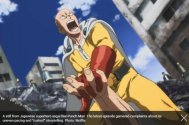
When online outrage torpedoed the latest episode of One‑Punch Man, few saw past the animation flaws. But what followed exposed a creative industry buckling under impossible expectations.
The sixth episode of the long-awaited third season of the Japanese superhero saga – once praised for its sharp humour and kinetic style – stumbled onto screens under the weight of its own hype in October.
Viewers flooded social media with complaints about its uneven pacing and “rushed” storytelling. On reviews database IMDb, the episode’s audience rating collapsed to 1.4, a brutal comedown for a franchise accustomed to critical acclaim that had usually scored between 7.3 and 9.5.
Days later, the show’s director Shinpei Nagai deleted his social media accounts after posting a message that said the backlash had become too much to bear.
“Honestly, this is taking a toll on my mental health, and it only brings negatives to the work, the staff and the original creators,” he wrote in Japanese.
The sudden implosion of goodwill for One-Punch Man rippled far beyond its immediate fandom. For many inside Japan and South Korea’s creative circles, the uproar captured how social media scrutiny, industrial workloads and fan expectations are converging into a near-unliveable pressure cooker.
Built on burnout
Creative fatigue is inevitable in long-running projects, according to Kim So-won, a research professor at South Korea’s Kyung Hee University who studies the region’s comic industries.“There are limits in coming up with ideas for a series if only one person is in charge,” she told This Week in Asia, adding that keeping ideas fresh was the real challenge.
Those demands have only intensified as anime and webtoons – the name for South Korea’s digital comics – have evolved into global cultural exports worth billions.
Yet behind the screens, many artists describe an emotional and physical grind that few outsiders see.
In Japan, where manga and anime are pillars of soft power, production cycles can stretch over years while budgets thin and deadlines shrink.
One‑Punch Man, whose first season debuted a decade ago, has switched studios and directors multiple times, producing noticeable stylistic shifts and production challenges. The six-year hiatus between seasons two and three supercharged fan expectations and left little margin for error when the new episodes resumed.
“There’s immense pressure on the artists to come up with new material that satisfies the fan base,” said Yang Ji-hoon, an associate research fellow at the Korea Culture and Tourism Institute.
“The rate of success is low, while disappointment from fans that comes after is tremendous.”
South Korea’s webtoon industry faces similar strains. Valued at about 2 trillion won (US$1.36 billion), the sector has become a cornerstone of K-culture exports. Platforms such as Naver and Kakao are investing aggressively overseas, from Marvel collaborations to Star Wars tie-ins for US audiences.
But rapid growth has taken its toll. Artists report working an average of nearly six days a week, often for more than nine hours a day. Roughly one in 10 said they had faced copyright disputes, a survey last year by South Korea’s culture ministry found.
A 2024 white paper by the government’s Korea Creative Content Agency found that while the webtoon market had expanded, average annual artist earnings fell by more than 22 million won (US$15,000).
The dopamine war
Veteran webtoonist Kwak Baek-soo, creator of Gaus Electronics and other hit titles, said conditions had improved since a wave of protests a decade ago, with new contracts giving artists a larger share of digital royalties – as much as 50 per cent in some cases, compared with about 10 per cent for many Japanese manga creators.Yet he warned that competition for studio jobs had never been fiercer.
“It’s hard to get a job in these studios these days,” Kwak said. “On top of employment struggles, we have to compete with short reels and YouTube, which I think is at an advantage when providing a shot of dopamine to audiences.”
Feeding the relentless attention economy has deep human consequences. Last year’s suicide of manga artist Hinako Ashihara, who days earlier had bitterly criticised a television adaptation of her work Sexy Tanaka-san, exposed the darker side of Japan’s creative hierarchy.
Fellow artists and industry observers said her death reflected a wider sense of exhaustion and invisibility among creators who felt squeezed by commercialisation. In South Korea, a recent study on working conditions in the industry found that artists regularly faced “high labour intensity, limited job discretion and a notable prevalence of depressive symptoms”.
“In the industry, there’s a perception that being a manga artist is a gruelling occupation with long work hours and low wages,” said Kim of Kyung Hee University. “And there is no guarantee that you will become a famous artist.”
As anime and webtoons become ever more mainstream, they carry with them a paradox that no algorithm can resolve: the more connected fans and creators feel, the more exposed the creative process and its human limits become.
ONE FRAME MAN
 ANYWAYS...
US sets 2027 deadline for Europe-led NATO defense, officials say
-US could withdraw from some NATO planning mechanisms if unsatisfied with progress
-Unclear how US would measure progress
-Trump rhetoric towards alliance runs hot and cold

A Navy warship mistook US fighter jets for enemy missiles and opened fire. The targeted pilot saw his life flash before his eyes.
A US Navy warship fired missiles at two American F/A-18 fighter jets above the Red Sea last year.
The warship mistook the fighter jets for Houthi cruise missiles, the investigation shows.
One of the fighter jets was shot down. The other barely survived the friendly fire incident.

The hilarious part is he is surprised because "blocking chips leaving China" is considered an "export control" typically reserved as a "non-proliferation measure only!! Not fair!! China not suppose to do that!!"不知彼,不知己,每战必殆
Are we really that surprised by this level of incompetence? It is clear that these politicians are ignorant of themselves and of the other side, with their attempt to engage in "lawfare" when the leverage of the actual material goods is held by China. On top of that baseline lack of knowledge, I think there is also the implicit racism of assuming that China can do little other than take the slap and protest feebly.
...and what, Dutch invoking a wartime law to seize ownership is fair game, but China cannot perform routine peacetime border controls. The fact the Dutch arbitrarily invoke export controls on EUVs yet so "blindsided" when China gives them a taste of their own medicine on chips just exposes how incompetent and clueless they are, dont understand the tech, supply chain, or anything they are controlling. The default behavior is ban hammer or literally theft of a company.
The funny part is he is so insistent he was right, would do it again, he didnt consult experts or his allies, doesnt explain his rationale for capitulation aside framing benevolence in return for China concession. What an idiot. these are all the idiots in West behind the lawfare and export control.
This episode really exposes how many planted stooges US has in Europe, or extent they are vassalized to obey US overlords.

Engineer
Major
Management archetype in the west. They are incompetent because they never need to be competent in life. Most of these people got to where they are through nepotism... I mean networking, and by failing upward. They only care about having a say in how things run, not on having to know how things are actually run.The hilarious part is he is surprised because "blocking chips leaving China" is considered an "export control typically reserved as a non-proliferation measure only!! unfair!!."
...and what, Dutch invoking a wartime law to seize ownership is fair game, but China cannot perform routine peacetime border controls. The fact the Dutch arbitrarily invoke export controls on EUVs yet so "blindsided" when China gives them a taste of their own medicine on chips just exposes how incompetent and clueless they are, dont understand the tech, supply chain, or anything they are controlling. the default behavior is Ban hammer or literally theft.
The funny part is he is so insistent he was right, would do it again, he didnt consult experts or his allies, doesnt explain his rationale for capitulation aside framing benevolence in return for China concession. What an idiot. these are all the idiots in West behind the lawfare and export control.
This episode really exposes how many planted stooges US has in Europe, or extent they are vassalized to obey US overlords.

The hilarious part is he is surprised because "blocking chips leaving China" is considered an "export control" typically reserved as a "non-proliferation measure only!! Not fair!! China not suppose to do that!!"
...and what, Dutch invoking a wartime law to seize ownership is fair game, but China cannot perform routine peacetime border controls. The fact the Dutch arbitrarily invoke export controls on EUVs yet so "blindsided" when China gives them a taste of their own medicine on chips just exposes how incompetent and clueless they are, dont understand the tech, supply chain, or anything they are controlling. The default behavior is ban hammer or literally theft of a company.
The funny part is he is so insistent he was right, would do it again, he didnt consult experts or his allies, doesnt explain his rationale for capitulation aside framing benevolence in return for China concession. What an idiot. these are all the idiots in West behind the lawfare and export control.
This episode really exposes how many planted stooges US has in Europe, or extent they are vassalized to obey US overlords
Karma will come in the form of involuntary tree planting all in due time.