

You are using an out of date browser. It may not display this or other websites correctly.
You should upgrade or use an alternative browser.
You should upgrade or use an alternative browser.
Miscellaneous News
- Thread starter bd popeye
- Start date
In all honesty that doesn't really surprise me because as I've mentioned previously regarding decisively winning a strategic nuclear conflict, China already possesses the industrial technical means to actually achieve this even if it hasn't yet been fully implemented. That capability was something that would be existent regardless of whatever the US chose to do.Pretty much, but actually far worse.
They essentially had two viable paths left to try to compel China into an arms race where they might have a reasonable chance of winning.
The first was economic, in the form of AI.
The second was actual Star Wars 2.0 with Falcon rockets.
AI was always the far worst investment because it was obvious that even if they won that race AI was never going to deliver the magical god-like powers promised. And AI is utterly useless in the face of overwhelming hard power dominance by your opponent.
With a real Star Wars arms race, even if you loose you should still get some really useful hard power orbital and/or anti-orbital weapons. By effectively abandoning that field, the Americans have all but guaranteed that China will dominate in space now that they have materially reduced SpaceX/NASA’s technological edge. Indeed, from the prominence given to space exploration in the latest 5 year plan, we can see which path China was actually really worried and focused on. Which is doubly ironic, because China putting the foundation to rapidly deploy Real Star Wars in space would allow China to fundamentally hard counter America’s biggest and most powerful Cold War hard power endowment - its nuclear arsenal.

Frog bacterium wiped out cancer tumors in mice with a single dose
A bacterium from Japanese tree frogs erased tumors in mice with a single dose, hinting at a surprising new way to fight cancer.
Unlike many previous studies that focused on changing the composition of gut bacteria or using fecal microbiota transplants, this research isolated individual bacterial strains, grew them in the laboratory, and delivered them intravenously to attack tumors.
The team collected 45 bacterial strains from the intestines of Japanese tree frogs, Japanese fire belly newts (Cynops pyrrhogaster), and Japanese grass lizards (Takydromus tachydromoides). After screening the bacteria for anticancer activity, nine strains showed promise. Among them, Ewingella americana produced the strongest results.
Single Treatment Eliminated Tumors in Mice
In a mouse model of colorectal cancer, a single intravenous dose of E. americana completely eliminated tumors, producing a 100% complete response (CR) rate. According to the researchers, the treatment outperformed standard therapies used for comparison, including immune checkpoint inhibitors (anti-PD-L1 antibody) and the chemotherapy drug liposomal doxorubicin.
The researchers emphasize that these findings are limited to mice, but they believe the results provide an encouraging proof of concept for developing new bacterial cancer therapies.
Dual Attack on Cancer Cells
The bacterium appears to fight cancer through two complementary mechanisms.
First, E. americana directly attacks tumors. As a facultative anaerobic bacterium, it thrives in both oxygen rich and oxygen poor environments, allowing it to multiply inside the oxygen deprived regions commonly found within tumors. Once there, the bacterial population increased by roughly 3,000 fold within 24 hours after treatment, directly damaging cancer cells.
Second, the bacterium stimulates the immune system. Its presence attracted T cells, B cells, and neutrophils into tumors. These immune cells then released inflammatory signaling molecules, including TNF-α and IFN-γ, which strengthened the immune response and promoted cancer cell death.
Why the Bacteria Target Tumors
One of the most striking findings was that E. americana accumulated almost exclusively inside tumors and did not colonize healthy organs.
The researchers believe this tumor specificity results from several factors working together:
Together, these characteristics allow the bacteria to concentrate where tumors are located while avoiding normal tissues.
- The low oxygen environment inside tumors encourages bacterial growth.
- Cancer cells produce the CD47 protein, which suppresses local immune activity and creates conditions that allow the bacteria to survive.
- Tumor blood vessels are unusually leaky, making it easier for bacteria circulating in the bloodstream to enter tumor tissue.
- Tumor specific metabolic changes provide nutrients that support bacterial growth.
Favorable Safety Results
The research team also evaluated the treatment's safety.
They found that the bacteria were rapidly cleared from the bloodstream, with a half life of approximately 1.2 hours, and became undetectable within 24 hours. No bacterial colonization was detected in healthy organs, including the liver, spleen, lungs, kidneys, or heart.
The treatment caused only mild, temporary inflammation that returned to normal within 72 hours. During a 60 day observation period, the researchers found no evidence of chronic toxicity.
Expanding to Other Types of Cancer
The study establishes proof of concept for using naturally occurring bacteria as a cancer therapy. Future research will examine whether the approach can be applied to additional solid tumors, including breast cancer, pancreatic cancer, and melanoma.
The team also plans to optimize treatment methods through approaches such as dose fractionation and direct injection into tumors. Researchers will also investigate whether E. americana works even better when combined with existing chemotherapy or immunotherapy.
The findings also highlight the potential value of exploring biodiversity as a source of future medical treatments, offering the possibility of new therapeutic options for patients with cancers that are difficult to treat.
Glossary
- Facultative Anaerobic Bacteria: Bacteria capable of growing in both oxygen rich and oxygen depleted environments, allowing them to selectively multiply in the low oxygen conditions found inside tumors.
- Complete Response (CR): Complete disappearance of detectable tumors following treatment.
- Immune Checkpoint Inhibitor: Drugs that remove the signals cancer cells use to suppress the immune system, allowing T cells to attack tumors more effectively.
- CD47: A protein on the surface of cells that sends a "don't eat me" signal to the immune system. Many cancer cells produce large amounts of CD47 to avoid immune attack
In a mouse model of colorectal cancer, a single intravenous dose of E. americana completely eliminated tumors, producing a 100% complete response (CR) rate.
One of the most striking findings was that E. americana accumulated almost exclusively inside tumors and did not colonize healthy organs.
They found that the bacteria were rapidly cleared from the bloodstream, with a half life of approximately 1.2 hours, and became undetectable within 24 hours. No bacterial colonization was detected in healthy organs, including the liver, spleen, lungs, kidneys, or heart.
There is potential for a major medical breakthrough. Assuming US Insurance companies and Big Pharma doesn’t send US kill teams to make Japanese tree frogs extinct while destroying bacterial samples in labs. Though the concept and idea will remain for testing other strains.
First, E. americana directly attacks tumors. As a facultative anaerobic bacterium, it thrives in both oxygen rich and oxygen poor environments, allowing it to multiply inside the oxygen deprived regions commonly found within tumors. Once there, the bacterial population increased by roughly 3,000 fold within 24 hours after treatment, directly damaging cancer cells.
Second, the bacterium stimulates the immune system. Its presence attracted T cells, B cells, and neutrophils into tumors. These immune cells then released inflammatory signaling molecules, including TNF-α and IFN-γ, which strengthened the immune response and promoted cancer cell death.

supercat
Colonel
Talking about "AI communism", China wants AI to be a public utility, so it benefits everyone like another infrastructure. This is in stark contrast with American tech oligarchies. Here American tech oligarchies complain about Chinese AI:Same "full AI communism" guy earlier by the way:
View attachment 178417
Why is it always like this...
full AI communism, which is precisely what China proposes: rather than a market product, AI is a 'public good' which will ultimately be provided by the state as a kind of 'digital public infrastructure.
Government subsidies won't help you much. Providing education opportunities for STEM will.
Any update?
Daily coping about Kimi K3:
Michael Schuman copes hard.

Last edited:

But wait, there’s more:
i sure hope all those investors and fund managers who poured billions of capital into American AI, also took the time to invest in some nice anti anxiety meds.
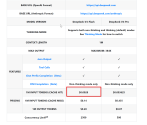
Im pretty sure that price is only referring to the cache hit in non-thinking mode for the Flash version... but even if their Pro model (not the Flash) is close to Opus 4.8 tier, then its game over for the US hyperscalers
when things were cheap and free its East European that push this modern STEM and this seem one time event.Government subsidies won't help you much. Providing education opportunities for STEM will.
This interview was done in 1991. in five minutes the founder of AI was giving credit to an American co-founder. his english is not American. the founder of Quantum not want associate himself with chosen. remember to say Thank You.
I think its related to imposing culture of Oil/Gas. American choice of Oil and Gas.When you have to beg the British to pump more oil out of their depleted tiny oil and gas fields.
with this battery plant i dont think any ICE cars will be built in UK.
why bother invest in it if tech is coming from Korea and management is Indian.
PH authorities raided an alleged chinese owned steel plant.
The National Bureau of Investigation – Cybercrime and Forensic Management Investigation Unit (NBI-CFMIU) served a search warrant at a steel manufacturing plant in Barangay Navaling, Magalang town at noon on Sunday, July 19.
The Magalang Municipal Police Station said police officers were deployed to provide area and perimeter security while NBI operatives conducted their operation at Chuangxing Steel Plant Corporation.
Four executives of the company were placed under inquest proceedings. They were identified as Honggou Wang, Ma Irish Casipe, Lyu Yang, and Lyu Jingdong.

India is already hitting back. Thats India for you. Always causing trouble with blame shifting while never doing anything of substance to defuse the situation and making things work in the end. Its not hard to have seen this coming since they are like that with everyone.
That is the Indians. They always seem to be in the way. Like they are an obstacle to any plan or arrangement.
Then when it comes to chipping in, they never chip in. Only want to grab stuff for themselves. The last part, cannot really blame them, after what the British did.
Still, it makes it a place for others to avoid.
The example I always bring up, is the RCEP negotiations. In the end, after two years of fruitless negotiations with India, after getting rid of them, finally the RCEP moved forward to completion. Without any of those importing more Indian clauses to the agreement, because India is not part of the RCEP.
Negotiations with India delayed RCEP implementation for two years.
But wait, there’s more
Some random violence. Viewer discretion advised.