You know what is the biggest irony of all? is that ALL of the companies blacklisted by China ARE military companies. While none of the one blacklisted by the US are really military companies. Is like China saying "this is how you do it idiot".Bold of them to assume China wants to "dissuade" US from symbolic actions and isn't just looking forward to US providing excuses to do what China wants to do anyway.

You are using an out of date browser. It may not display this or other websites correctly.
You should upgrade or use an alternative browser.
You should upgrade or use an alternative browser.
Miscellaneous News
- Thread starter bd popeye
- Start date
I think the even more ironic part is it's actually true to say ALL American companies are military connected, if only because they're all commercially uncompetitive and so all has to take military contracts to survive.You know what is the biggest irony of all? is that ALL of the companies blacklisted by China ARE military companies. While none of the one blacklisted by the US are really military companies. Is like China saying "this is how you do it idiot".
Breakthrough in femtosecond laser technology! High aspect ratio micro-hole fabrication achieved on 3.7mm thick SiC.
In the high-end manufacturing sector, silicon carbide (SiC) ceramics, with their superior properties such as high hardness, high thermal conductivity, high temperature resistance, and corrosion resistance, have become an important basic material for industries such as semiconductor equipment, aerospace, and new energy. However, due to the material's inherent hardness and brittleness and the extremely high difficulty in processing, achieving high-precision, high-quality micropore processing on thick silicon carbide has always been a significant technical challenge for the industry.
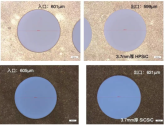
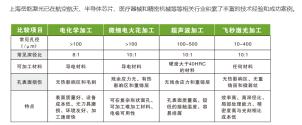
Recently, Yueqian Laser announced new progress in femtosecond laser precision machining technology, successfully completing the machining of a large aspect ratio micro-hole in 3.7 mm thick silicon carbide material. This machining achieved high-quality fabrication with a 600-micron aperture, demonstrating excellent machining accuracy and consistency, and providing a new technical solution for the manufacturing of silicon carbide precision components.
In terms of processing results, both types of silicon carbide materials achieved near-ideal straight holes, with minimal difference between the inlet and outlet diameters of the micropores, smooth and flat hole walls, and no common defects such as cracks or recast layers. Some samples even exhibited high surface finish, demonstrating the unique advantages of femtosecond lasers in the micromachining of hard and brittle materials.
The core of this achievement lies in the "cold processing" characteristics of femtosecond lasers. Unlike traditional machining or long-pulse laser processing, femtosecond lasers can complete energy deposition in an extremely short time, directly removing materials through a "cold ablation" mechanism. This significantly reduces the formation of heat-affected zones, avoids microcracks and material damage caused by thermal stress, and thus preserves the original properties of silicon carbide to the greatest extent.
Meanwhile, femtosecond laser processing also features high precision, high consistency, and non-contact processing. This technology can effectively control hole size, roundness, and taper, achieving stable batch processing; at the same time, it avoids problems such as edge chipping and breakage caused by tool wear and mechanical contact, providing reliable assurance for the manufacturing of complex structures and precision micro-holes.
Recently, Yueqian Laser announced new progress in femtosecond laser precision machining technology, successfully completing the machining of a large aspect ratio micro-hole in 3.7 mm thick silicon carbide material. This machining achieved high-quality fabrication with a 600-micron aperture, demonstrating excellent machining accuracy and consistency, and providing a new technical solution for the manufacturing of silicon carbide precision components.
In terms of processing results, both types of silicon carbide materials achieved near-ideal straight holes, with minimal difference between the inlet and outlet diameters of the micropores, smooth and flat hole walls, and no common defects such as cracks or recast layers. Some samples even exhibited high surface finish, demonstrating the unique advantages of femtosecond lasers in the micromachining of hard and brittle materials.
The core of this achievement lies in the "cold processing" characteristics of femtosecond lasers. Unlike traditional machining or long-pulse laser processing, femtosecond lasers can complete energy deposition in an extremely short time, directly removing materials through a "cold ablation" mechanism. This significantly reduces the formation of heat-affected zones, avoids microcracks and material damage caused by thermal stress, and thus preserves the original properties of silicon carbide to the greatest extent.
Meanwhile, femtosecond laser processing also features high precision, high consistency, and non-contact processing. This technology can effectively control hole size, roundness, and taper, achieving stable batch processing; at the same time, it avoids problems such as edge chipping and breakage caused by tool wear and mechanical contact, providing reliable assurance for the manufacturing of complex structures and precision micro-holes.

manqiangrexue
Brigadier

Israel 'will be at war with Syria sooner or later', says Likud minister
An Israeli minister from Prime Minister Benjamin Netanyahu’s Likud party said this week that Israel “will be at war with Syria sooner or later”. The remarks came in a series of radio interviews given by Minister of Diaspora Affairs Amichai Chikli on Wednesday and Thursday, in which he outlined what he dubbed a "radical Sunni axis of evil" in the Middle East. “There is no way that a jihadist regime rooted in Isis and al-Qaeda, whose aspiration is the unification of Jerusalem, can live in peace alongside the State of Israel,” the far-right minister said, referring to Syrian President Ahmed al-Sharaa’s government. Speaking to Israel’s Army Radio on Thursday, Chikli outlined what he considers to be a new anti-Israel alliance made up of Pakistan, Turkey and Qatar, which he said worried him far more than Iran and its ceasefire deal with the US. While the Likud minister acknowledged that Iran had scored some major achievements with the US agreement, he said that “what is far more troubling is the new axis emerging in the Middle East”.
“What we are witnessing before our eyes is the rise of a new axis,” Chikli told 103FM radio on Wednesday, referring to Turkey, Qatar and Pakistan. He described this so-called alliance as “a radical Sunni axis of evil, more dangerous than anything we have seen before”.During his Kol Barama radio interview, the Israeli minister said that Pakistan and Turkey are “enemies” of India, Greece and Cyprus, which are close allies of Israel.

UK PM is now the Bonnie Blue of government positions???I don't know how you can say that. The UK is THE perfect democracy! Sooner of later, everyone gets a turn at being Prime Minister...

AssassinsMace
Lieutenant General
I have a friend that I’ve know since childhood. He’s easy going and friendly. He’s a people person and people naturally like him. He travels around the world especially Asia with his wife. One day we were talking about Thailand and I brought up how Israelis are taking over prime real estate in Thailand and preventing non-Israelis from entering those areas. It was like all of the sudden this person I never knew before took over him. He just started going off on Israel like he’s always known this was going on.
It makes me wonder ever since recently hearing some Rabbi commenting how China “ethnically cleansed “ the Jews from Shanghai. So was every other foreigner because the communists took over. Is the guy trying to stake a claim to Shanghai? Maybe. It’s like how Jews want the “swastika” symbol banned out of Buddhism. It’s a thing they want to have happen but they’re just not saying it out loud right now because they know there would be a worldwide backlash if they dared. Given what’s happening today, they probably do want to claim Shanghai as a part of the Greater Israel Project. Look at how they’re doing like out of spite not what is expected of any civilized person. Why not claim Shanghai? I bet some in the US would even support it because that would be an expression of power where you make people accept things that go against their own will. Iran is an example of some who just want to tell the world who’s boss.
Now you have India thinking they can be another Israel thinking they can replicate the kind of tactics Israel has employed onto the world. What does it say when it’s the ugly parts that what appeals to you?

Good. Crippling the American MIC is the biggest step the world has made towards a lasting peace since the Cold War.Bold of them to assume China wants to "dissuade" US from symbolic actions and isn't just looking forward to US providing excuses to do what China wants to do anyway.
Tell him about the Kaifeng Jews, who managed to survive over a thousand years across multiple dynastic cycles.
I have a friend that I’ve know since childhood. He’s easy going and friendly. He’s a people person and people naturally like him. He travels around the world especially Asia with his wife. One day we were talking about Thailand and I brought up how Israelis are taking over prime real estate in Thailand and preventing non-Israelis from entering those areas. It was like all of the sudden this person I never knew before took over him. He just started going off on Israel like he’s always known this was going on.
It makes me wonder ever since recently hearing some Rabbi commenting how China “ethnically cleansed “ the Jews from Shanghai. So was every other foreigner because the communists took over. Is the guy trying to stake a claim to Shanghai? Maybe. It’s like how Jews want the “swastika” symbol banned out of Buddhism. It’s a thing they want to have happen but they’re just not saying it out loud right now because they know there would be a worldwide backlash if they dared. Given what’s happening today, they probably do want to claim Shanghai as a part of the Greater Israel Project. Look at how they’re doing like out of spite not what is expected of any civilized person. Why not claim Shanghai? I bet some in the US would even support it because that would be an expression of power where you make people accept things that go against their own will. Iran is an example of some who just want to tell the world who’s boss.
Now you have India thinking they can be another Israel thinking they can replicate the kind of tactics Israel has employed onto the world. What does it say when it’s the ugly parts that what appeals to you?
They're also not fans of Israel, who are more or less trying to wipe them out by forcibly converting them into European Orthodox and Reform Jews and wiping out their distinctly Chinese-rooted Jewish traditions.
They were well educated through generations with longer life span. you cannot expect to compete with them until recently.India doesn't have the necessary foundation to pull this off like Israelis did. They will fail due to overestimating themselves just as they did when they thought they could be the next China by using COVID-19 to move industry from China to India - the few that came left as quickly, simply because India did not have the neither the foundational infrastructure nor industrial ability.
As for the Israelis, their method is tied into Christian theological belief which is manipulated and exploited. India simply does not have this. Moreover, the foundation of Israelis were laid down over several centuries by the European Jewry who were a dominant power in banking & finance. Israel itself is just a small symbol of that power that took centuries to develop.
The strategy is not bad. Foundation is nonexistent.
That Science that came to Odessa was from European Universities. Odessa was Greek trading and banking port city not Science.
Now It is assumed that Putin want to liberate Russians from that negative effect of Karl Marx or that Academic culture that is prevalent in Russian Universities and he is relying on Soft Power. that Soft Power is super advanced beyond anything Gulf Royals have interacted.
This year Kazan is Capital of Islamic culture. Capital of Islamic culture means that global muslims especially from Central Asia increasingly interact through control environment with Russians in Tatarstan. Control environment can be Mosques, Islamic Schools or Universities and this after Grozny was capital of Russian culture last year.
imagine using AI looking at those fingers.
Putin is a refined version of Netanyahu. he will arrange hard power through third party than directly involve himself. Even for degrading a segment of population he has to rely on others to repeat it.
Yuditskaya-Berliner died in 2017 at 96. In her will, she instructed that her apartment be given to the Russian government.
Putin called the Russia-Islamic World forum very beneficial for the entire country.