This doesn’t prove anything. Most stocks are up today.Another good day for Chendu aircraft. Was the J-36 and H-20 talk disinformation? Market believed it is real at least.View attachment 167572

This doesn’t prove anything. Most stocks are up today.Another good day for Chendu aircraft. Was the J-36 and H-20 talk disinformation? Market believed it is real at least.View attachment 167572

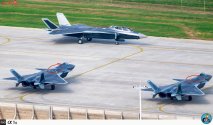
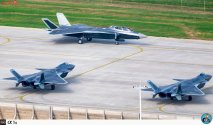
They're too high-res to be able to upload here unfortunatelyA batch of beautiful J-20 photos, i'm sure AP will add them here too in due time.


They're too high-res to be able to upload here unfortunately

Civilian tech leads military tech by a wide margin because military tech favors reliability and known performance over raw capabilities. Su-7 may work fine as a civilian product. But how does it function after getting hit by shrapnel. Are the electronics vulnerable to microwave and possibly atomic radiation? How redundant are the subsystems?Just gonna say this here; if the sensor fusion on these things is anywhere near as good as what's found in Chinese EVs like the SU7/YU7 (and let's be serious, it's way better, this thing is a military project with far more funding and expertise than Xiaomi ever had to build those cars), this is probably the most dangerous BVR platform in the world right now. I just had fun driving my friend's YU7 EV that he had imported, it's INSANE. Actually batshit insane tech on that thing that works so well together I'm actually jealous.
Full-res @
Fun fact, a $650 DJI Min 4 Pro has same number of EODAS sensor fusion cameras as F-35.Just gonna say this here; if the sensor fusion on these things is anywhere near as good as what's found in Chinese EVs like the SU7/YU7 (and let's be serious, it's way better, this thing is a military project with far more funding and expertise than Xiaomi ever had to build those cars), this is probably the most dangerous BVR platform in the world right now. I just had fun driving my friend's YU7 EV that he had imported, it's INSANE. Actually batshit insane tech on that thing that works so well together I'm actually jealous.
We really don't get many photos of J-20 from above.A batch of beautiful J-20 photos, i'm sure AP will add them here too in due time.