
You are using an out of date browser. It may not display this or other websites correctly.
You should upgrade or use an alternative browser.
You should upgrade or use an alternative browser.
H-6 Bomber Aircraft Discussions
- Thread starter F40Racer
- Start date


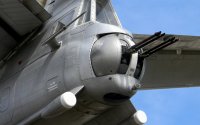
Does anybody know when the H-6 deleted the tail turret like the one found on the Tu-16?

lcloo
Major
At least as far as 5th January 2007, when H6K took its maiden flight. Not sure if there is any other version without tail gun turret prior to H6K.Does anybody know when the H-6 deleted the tail turret like the one found on the Tu-16?
View attachment 164706
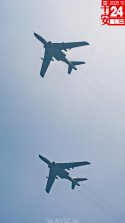
Two H-6Ns flying together. Posted by the official Weibo account of AVIC.
D
Deleted member 27830
Guest
Does anybody know when the H-6 deleted the tail turret like the one found on the Tu-16?
View attachment 164706
There are older pre-2000s variants without the turret such as the H-6H missile carrier, but that one had some sensors above and below the gunner station instead of the more modern H-6K,J,N APU.At least as far as 5th January 2007, when H6K took its maiden flight. Not sure if there is any other version without tail gun turret prior to H6K.
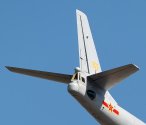
Btw, does anyone know where the APU intake is mounted on the H-6K,J,N variants?
Hi,A H-6J seen flying with what looks to be YJ-12(?) missiles. Posted by @欧阳振我86468 on Weibo.
Video:
Do these bombers been given radar upgrade like a AESA, or they already operating those
radars Any information on it.
thank you

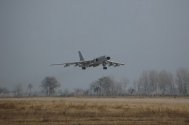

19th anniversary of H-6K's first flight
View attachment 167587
Prototype with max payload and bomb-bay open
Funny ... you beat me by a few minutes! I just found this:
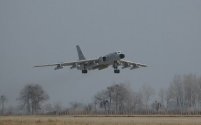
Impressive! If I'm not mistaken it is the first time we see it with 6 KD-20 in the air?
Excerpts from four academic papers from 2017:
-《航空弹药旋转弹射装置滚转机构力学特性分析》(Analysis of the Mechanical Characteristics of the Rolling Mechanism in Aircraft Munition Rotary Ejection Devices)
-《轰炸机巡航导弹旋转投弹仿真研究》(Simulation Research on Rotary Bombing of Cruise Missiles by Bombers)
-《两种弹射方案对旋转发射架的振动影响分析》(Analysis of the Vibration Impact of Two Ejection Schemes on Rotary Launchers)
-《巡航导弹旋转弹射装置设计及动力学仿真研究》(Design and Dynamic Simulation Research of a Cruise Missile Rotary Ejection Device)
-《航空弹药旋转弹射装置滚转机构力学特性分析》(Analysis of the Mechanical Characteristics of the Rolling Mechanism in Aircraft Munition Rotary Ejection Devices)
-《轰炸机巡航导弹旋转投弹仿真研究》(Simulation Research on Rotary Bombing of Cruise Missiles by Bombers)
-《两种弹射方案对旋转发射架的振动影响分析》(Analysis of the Vibration Impact of Two Ejection Schemes on Rotary Launchers)
-《巡航导弹旋转弹射装置设计及动力学仿真研究》(Design and Dynamic Simulation Research of a Cruise Missile Rotary Ejection Device)
现况:我军国产战略轰炸机发射反舰巡航导弹只能外挂不能内埋
研究:内埋6联装旋转挂架
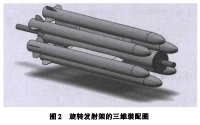
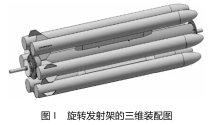
空心转轴长5m外径0.5m壁厚20mm,材料铸造合金钢:图1
挂耳距离928mm,导弹折叠弹翼(文中省略):图2、图3
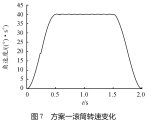
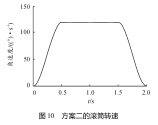
发射用时1~1.5s,旋转用时2s(加减速各0.5s、最大角速度维持1s),连发间隔<3.5s
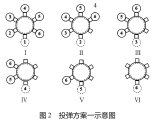
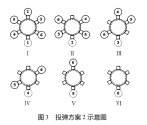
投弹方案一:图4、图5
逆时针旋转依次投放,旋转角度为60°→60°→60°→60°→60°
最大角速度40°/s
投弹方案二:图6、图7
对称投放,旋转角度为180°→60°→180°→60°→180°
最大角速度120°/s
比较:图8~图11
方案二振幅、加速度更小
Current Status: Our military's domestically produced strategic bomber can only launch anti-ship cruise missiles externally; it cannot carry them internally.
Research: Internally mounted six-cell rotary launcher.
The hollow rotating shaft is 5m long, with an outer diameter of 0.5m and a wall thickness of 20mm. Material: Cast alloy steel. (Figure 1)
The distance between hanging lugs is 928mm. Missile features folded wings (omitted in the text). (Figures 2, 3)
Launch time: 1–1.5s. Rotation time: 2s (0.5s each for acceleration and deceleration, 1s at maximum angular velocity). Salvo interval: < 3.5s.
Bombing Scheme 1: (Figures 4, 5)
Release sequentially via counterclockwise rotation, with rotation angles: 60°→60°→60°→60°→60°
Maximum angular velocity: 40°/s
Bombing Scheme 2: (Figures 6, 7)
Symmetrical release, with rotation angles: 180°→60°→180°→60°→180°
Maximum angular velocity: 120°/s
Comparison: Figure 8 - Figure 11
Scheme 2 exhibits smaller amplitude and acceleration.