The yanks wolf crying wolf. I believe they started it when a yank visted the Wuhan labDuring Korean war, not much China could retaliate. But now, China could do that easily and as powerful if not more powerful
For Covid, I am not sure .. I think likely incident involving American scientists or labs in US or overseas (i.e Wuhan)

You are using an out of date browser. It may not display this or other websites correctly.
You should upgrade or use an alternative browser.
You should upgrade or use an alternative browser.
Food & Resource Security
- Thread starter Maikeru
- Start date
Something I haven't seen discussed is PRC's massively expanding coal->chemical industry. I've been doing some research and napkin math, maybe I'm wildly off, some one more keen can double check. TLDR total PRC oil independance for industry + transportation in 10 years. Coal is god.
Some basic numbers:
PRC uses 14m bpd oil. 4m domestic production 10m imports.
Use: 7m transportation (decreasing) , 5m industry/petrochem (increasing), 2m energy/heating.
Strategically PRC massively rolling out coal -> petrochem production last few years but I had no idea scale, there appears to be significant hedge with coal-to-olefins CTO. This part is key PRC currently already have enough CTO capacity to fully displace ~2m oil - they're simply at 60/70% utilization because CTO more expensive when oil <$70 per barrel. CTO projects in the pipline has potential to displace 1.5m bpd, or 400k bpd per year, i.e. in 10 years domestic oil 4m bdp, domestic CTO at full utilization 5m bdp equivalent, 60% NEV penetration basically sustains full industry/tranport energy autarky. Assumption numbers:
PRC petro chem need: 5m bpd.
Current CTO capacity: 2.5m bpd equivalent / 1m used
10 year CTO pool at current expansion rate: 2.5m+4m = 6.5m bpd equivalent
6.5m CTO bdp equivalent can displace industrial oil, with surplus / 25% increase petrochem capacity
Redirect 4m bdp domestic oil for transport (7m declining)
50/60% NEV penetration = displace 4m bpd
3-4m actual oil need for IC fleet / aviation / shipping
Maybe back to net oil exporter kek.
This projection happens happens in 10 years. Faster if PRC hammers CTO / NEV adoption.
The bottleneck seems mostly policy, i.e. most CTO infra is in water managed/scarce north, CTO process uses 15x more water than oil, but really we're talking about diverting water from 150k acres of farmland, i.e. 0.05% of PRC arable land. Looking at current rollout rate I presume that is what is basically happening, farmers demographically declining / agri centralizing. Other down side is CTO is more emission intensive, but overall current pace of CTO rollout suggest this is plan B (hidden plan A) for industrial/petrochem autharky. Also reminder you can make fertilizer out of coal as well, PRC use to be #1 fertilizer exporter but industry unwound to cut back coal. TLDR is coal is god, and there is increasing coal infra (inclduing all the underutliized coal plants) to for comprehensive domestic energy and industry autarky medium term.
US future: produces more oil than it uses, but can't use the oil mix it produces due to geographic refinery composition and unless they can infrat their way to proper refinery composition in 10 years, will remain net oil importer. Currently they're importing ~6mbb, half from Canada (Edmonton, Hardsky) which are... let's just say within missile range. Combine with PRC having functionally unlimited amount of cheap coal and US shale / tier1 cheap permian oil price expriing in 20-30 years and we are going to look at very interesting reversal of energy autarky scenario in medium term.
Some basic numbers:
PRC uses 14m bpd oil. 4m domestic production 10m imports.
Use: 7m transportation (decreasing) , 5m industry/petrochem (increasing), 2m energy/heating.
Strategically PRC massively rolling out coal -> petrochem production last few years but I had no idea scale, there appears to be significant hedge with coal-to-olefins CTO. This part is key PRC currently already have enough CTO capacity to fully displace ~2m oil - they're simply at 60/70% utilization because CTO more expensive when oil <$70 per barrel. CTO projects in the pipline has potential to displace 1.5m bpd, or 400k bpd per year, i.e. in 10 years domestic oil 4m bdp, domestic CTO at full utilization 5m bdp equivalent, 60% NEV penetration basically sustains full industry/tranport energy autarky. Assumption numbers:
PRC petro chem need: 5m bpd.
Current CTO capacity: 2.5m bpd equivalent / 1m used
10 year CTO pool at current expansion rate: 2.5m+4m = 6.5m bpd equivalent
6.5m CTO bdp equivalent can displace industrial oil, with surplus / 25% increase petrochem capacity
Redirect 4m bdp domestic oil for transport (7m declining)
50/60% NEV penetration = displace 4m bpd
3-4m actual oil need for IC fleet / aviation / shipping
Maybe back to net oil exporter kek.
This projection happens happens in 10 years. Faster if PRC hammers CTO / NEV adoption.
The bottleneck seems mostly policy, i.e. most CTO infra is in water managed/scarce north, CTO process uses 15x more water than oil, but really we're talking about diverting water from 150k acres of farmland, i.e. 0.05% of PRC arable land. Looking at current rollout rate I presume that is what is basically happening, farmers demographically declining / agri centralizing. Other down side is CTO is more emission intensive, but overall current pace of CTO rollout suggest this is plan B (hidden plan A) for industrial/petrochem autharky. Also reminder you can make fertilizer out of coal as well, PRC use to be #1 fertilizer exporter but industry unwound to cut back coal. TLDR is coal is god, and there is increasing coal infra (inclduing all the underutliized coal plants) to for comprehensive domestic energy and industry autarky medium term.
US future: produces more oil than it uses, but can't use the oil mix it produces due to geographic refinery composition and unless they can infrat their way to proper refinery composition in 10 years, will remain net oil importer. Currently they're importing ~6mbb, half from Canada (Edmonton, Hardsky) which are... let's just say within missile range. Combine with PRC having functionally unlimited amount of cheap coal and US shale / tier1 cheap permian oil price expriing in 20-30 years and we are going to look at very interesting reversal of energy autarky scenario in medium term.
Last edited:

PiSigma
"the engineer"
Permian is not going to last 20-30 years, I can promise you that. We are already at a point where shale is a giant money sink and the breakeven cost is closer to $50 per barrel. It is the giant cash flow keeping everything afloat, the margins are thin.Something I haven't seen discussed is PRC's massively expanding coal->chemical industry. I've been doing some research and napkin math, maybe I'm wildly off, some one more keen can double check. TLDR total PRC oil independance for industry + transportation in 10 years. Coal is god.
Some basic numbers:
PRC uses 14m bpd oil. 4m domestic production 10m imports.
Use: 7m transportation (decreasing) , 5m industry/petrochem (increasing), 2m energy/heating.
Strategically PRC massively rolling out coal -> petrochem production last few years but I had no idea scale, there appears to be significant hedge with coal-to-olefins CTO. This part is key PRC currently already have enough CTO capacity to fully displace ~2m oil - they're simply at 60/70% utilization because CTO more expensive when oil <$70 per barrel. CTO projects in the pipline has potential to displace 1.5m bpd, or 400k bpd per year, i.e. in 10 years domestic oil 4m bdp, domestic CTO at full utilization 5m bdp equivalent, 60% NEV penetration basically sustains full industry/tranport energy autarky. Assumption numbers:
PRC petro chem need: 5m bpd.
Current CTO capacity: 2.5m bpd equivalent / 1m used
10 year CTO pool at current expansion rate: 2.5m+4m = 6.5m bpd equivalent
6.5m CTO bdp equivalent can displace industrial oil, with surplus / 25% increase petrochem capacity
Redirect 4m bdp domestic oil for transport (7m declining)
50/60% NEV penetration = displace 4m bpd
3-4m actual oil need for IC fleet / aviation / shipping
Maybe back to net oil exporter kek.
This projection happens happens in 10 years. Faster if PRC hammers CTO / NEV adoption.
The bottleneck seems mostly policy, i.e. most CTO infra is in water managed/scarce north, CTO process uses 15x more water than oil, but really we're talking about diverting water from 150k acres of farmland, i.e. 0.05% of PRC arable land. Looking at current rollout rate I presume that is what is basically happening, farmers demographically declining / agri centralizing. Other down side is CTO is more emission intensive, but overall current pace of CTO rollout suggest this is plan B (hidden plan A) for industrial/petrochem autharky. Also reminder you can make fertilizer out of coal as well, PRC use to be #1 fertilizer exporter but industry unwound to cut back coal. TLDR is coal is god, and there is increasing coal infra (inclduing all the underutliized coal plants) to for comprehensive domestic energy and industry autarky medium term.
US future: produces more oil than it uses, but can't use the oil mix it produces due to geographic refinery composition and unless they can infrat their way to proper refinery composition in 10 years, will remain net oil importer. Currently they're importing ~6mbb, half from Canada (Edmonton, Hardsky) which are... let's just say within missile range. Combine with PRC having functionally unlimited amount of cheap coal and US shale / tier1 cheap permian oil price expriing in 20-30 years and we are going to look at very interesting reversal of energy autarky scenario in medium term.
Hardisty is not anywhere near Edmonton, but that is where oil is distributed south. Ironically ever since TMX was completed, China is now 2nd largest oil buyer of Canadian oil and likely to increase more in future.
If US want to retrofit their refineries to handle Permian light oils, it will take over a decade just for the Texas ones. By then Permian will be out of oil, or the economic ones anyway.
US Shale will be propped up unless there's other economic reserves, too much strategic need, lobbying and self esteem tied to being big oil producer. Main message is domestic fossil coal/shale/gas going to power ~50% of US/PRC power generation for foresseable future, but PRC coal prices is stable unlike US shale, and once tier1 US shale depletes and they have to tap tier2/3 acreage with $70/80+ break even costs, PRC COTs costs also comes ahead.
Edmonton/Hardisky ~200km apart, functionally same irbm+ range. I think Edmondon is the blending hub that feeds Hardisty, both will take heavy from US market and disrupt freight/aviation/bunker/industry. To be explicit, I am saying there can be some future scenario where US will have their Malacca delimma, where non trivial % of their strategic oil can be threatened outside US territory, where PRC has Calgary on escalation ladder.
Very rough trend projection:
Us oil dependency (crude feedstock vunerability) on Canadian import = 30% of freight diesel, 25% of aviation fuel, 20% of bunker fuel.
US depedence on all import source = 45% of diesel, 35% aviation fuel, 30% bunker fuel. A lot of this is martime and will be disrupted, on the assumption if malacca is going to be disrupted, tankers to CONUS willlikely be too.
At current PRC CTO / electirifcation / NEV oip displacement rate, in ~5-6 years US will have parity oil insecurity as PRC, assuming all sources outside CONUS degradable, ~7-8 years just slapping Canada. Past 7 years PRC has more domestic energy autarky than US.
Edmonton/Hardisky ~200km apart, functionally same irbm+ range. I think Edmondon is the blending hub that feeds Hardisty, both will take heavy from US market and disrupt freight/aviation/bunker/industry. To be explicit, I am saying there can be some future scenario where US will have their Malacca delimma, where non trivial % of their strategic oil can be threatened outside US territory, where PRC has Calgary on escalation ladder.
Very rough trend projection:
Us oil dependency (crude feedstock vunerability) on Canadian import = 30% of freight diesel, 25% of aviation fuel, 20% of bunker fuel.
US depedence on all import source = 45% of diesel, 35% aviation fuel, 30% bunker fuel. A lot of this is martime and will be disrupted, on the assumption if malacca is going to be disrupted, tankers to CONUS willlikely be too.
At current PRC CTO / electirifcation / NEV oip displacement rate, in ~5-6 years US will have parity oil insecurity as PRC, assuming all sources outside CONUS degradable, ~7-8 years just slapping Canada. Past 7 years PRC has more domestic energy autarky than US.
PiSigma
"the engineer"
Edmonton is the refining center of Alberta. There are 4 refineries in and near Edmonton. Shell scotford and red water in the NE of Edmonton by scotford. Suncor and Imperial oil in edmonton. The blending happens in Hardisty. Most of the refining products is actually for Canadian users. The dilbit is exported through Keystone pipeline or the mainline to US, which are both buried.US Shale will be propped up unless there's other economic reserves, too much strategic need, lobbying and self esteem tied to being big oil producer. Main message is domestic fossil coal/shale/gas going to power ~50% of US/PRC power generation for foresseable future, but PRC coal prices is stable unlike US shale, and once tier1 US shale depletes and they have to tap tier2/3 acreage with $70/80+ break even costs, PRC COTs costs also comes ahead.
Edmonton/Hardisky ~200km apart, functionally same irbm+ range. I think Edmondon is the blending hub that feeds Hardisty, both will take heavy from US market and disrupt freight/aviation/bunker/industry. To be explicit, I am saying there can be some future scenario where US will have their Malacca delimma, where non trivial % of their strategic oil can be threatened outside US territory, where PRC has Calgary on escalation ladder.
Very rough trend projection:
Us oil dependency (crude feedstock vunerability) on Canadian import = 30% of freight diesel, 25% of aviation fuel, 20% of bunker fuel.
US depedence on all import source = 45% of diesel, 35% aviation fuel, 30% bunker fuel. A lot of this is martime and will be disrupted, on the assumption if malacca is going to be disrupted, tankers to CONUS willlikely be too.
At current PRC CTO / electirifcation / NEV oip displacement rate, in ~5-6 years US will have parity oil insecurity as PRC, assuming all sources outside CONUS degradable, ~7-8 years just slapping Canada. Past 7 years PRC has more domestic energy autarky than US.
In theory, if the mass tank farms at Hardisty is trashed, then there will be no feedstock to the pipelines going south. And those will take a long time to replace since those are all massive field fabricated tanks. Takes about half a year to build each.

Two experimental fields for ratoon rice in Hunan and Jiangxi provinces set a record of a combined yield of nearly 3,000 jin (1,500 kg) per mu for two harvests, roughly the same as that of normally planted double-cropping rice.
Ratoon rice refers to the regrowth of rice stubble after the first harvest. When ordinary rice is run over by harvester crawlers, its regrowth capacity and yield decrease significantly. Through breeding, scientists have developed rice that retains its regrowth capacity even after being run over by harvesters. Combined with appropriate planting methods, this has increased the yield of ratoon rice.
With rural labor costs continually rising, skipping one full sowing cycle can save about 500 yuan per mu in costs.
Ratoon rice refers to the regrowth of rice stubble after the first harvest. When ordinary rice is run over by harvester crawlers, its regrowth capacity and yield decrease significantly. Through breeding, scientists have developed rice that retains its regrowth capacity even after being run over by harvesters. Combined with appropriate planting methods, this has increased the yield of ratoon rice.
With rural labor costs continually rising, skipping one full sowing cycle can save about 500 yuan per mu in costs.
Last edited:

Two experimental fields for ratoon rice in Hunan and Jiangxi provinces set a record of a combined yield of nearly 3,000 jin (1,500 kg) per mu for two harvests, roughly the same as that of normally planted double-cropping rice.
Ratoon rice refers to the regrowth of rice stubble after the first harvest. When ordinary rice is run over by harvester crawlers, its regrowth capacity and yield decrease significantly. Through breeding, scientists have developed rice that retains its regrowth capacity even after being run over by harvesters. Combined with appropriate planting methods, this has increased the yield of ratoon rice.
With rural labor costs continually rising, skipping one full sowing cycle can save about 500 yuan per mu in costs.
You should include the source.

This was something close to my heart and I worked on this stuff way back, when I worked with CNCEC on coal gasification (Texaco/Shell/OMB and U gas gasifiers) and we were doing shit like MTG at Shanxi Jinchen, DME stuff and the normal FT stuff.Something I haven't seen discussed is PRC's massively expanding coal->chemical industry. I've been doing some research and napkin math, maybe I'm wildly off, some one more keen can double check. TLDR total PRC oil independance for industry + transportation in 10 years. Coal is god.
Some basic numbers:
PRC uses 14m bpd oil. 4m domestic production 10m imports.
Use: 7m transportation (decreasing) , 5m industry/petrochem (increasing), 2m energy/heating.
Strategically PRC massively rolling out coal -> petrochem production last few years but I had no idea scale, there appears to be significant hedge with coal-to-olefins CTO. This part is key PRC currently already have enough CTO capacity to fully displace ~2m oil - they're simply at 60/70% utilization because CTO more expensive when oil <$70 per barrel. CTO projects in the pipline has potential to displace 1.5m bpd, or 400k bpd per year, i.e. in 10 years domestic oil 4m bdp, domestic CTO at full utilization 5m bdp equivalent, 60% NEV penetration basically sustains full industry/tranport energy autarky. Assumption numbers:
PRC petro chem need: 5m bpd.
Current CTO capacity: 2.5m bpd equivalent / 1m used
10 year CTO pool at current expansion rate: 2.5m+4m = 6.5m bpd equivalent
6.5m CTO bdp equivalent can displace industrial oil, with surplus / 25% increase petrochem capacity
Redirect 4m bdp domestic oil for transport (7m declining)
50/60% NEV penetration = displace 4m bpd
3-4m actual oil need for IC fleet / aviation / shipping
Maybe back to net oil exporter kek.
This projection happens happens in 10 years. Faster if PRC hammers CTO / NEV adoption.
The bottleneck seems mostly policy, i.e. most CTO infra is in water managed/scarce north, CTO process uses 15x more water than oil, but really we're talking about diverting water from 150k acres of farmland, i.e. 0.05% of PRC arable land. Looking at current rollout rate I presume that is what is basically happening, farmers demographically declining / agri centralizing. Other down side is CTO is more emission intensive, but overall current pace of CTO rollout suggest this is plan B (hidden plan A) for industrial/petrochem autharky. Also reminder you can make fertilizer out of coal as well, PRC use to be #1 fertilizer exporter but industry unwound to cut back coal. TLDR is coal is god, and there is increasing coal infra (inclduing all the underutliized coal plants) to for comprehensive domestic energy and industry autarky medium term.
US future: produces more oil than it uses, but can't use the oil mix it produces due to geographic refinery composition and unless they can infrat their way to proper refinery composition in 10 years, will remain net oil importer. Currently they're importing ~6mbb, half from Canada (Edmonton, Hardsky) which are... let's just say within missile range. Combine with PRC having functionally unlimited amount of cheap coal and US shale / tier1 cheap permian oil price expriing in 20-30 years and we are going to look at very interesting reversal of energy autarky scenario in medium term.
But given current trajectory I don't think coal to oil is needed as we are electrifying most of the transportation. Think, the bulk of the coal for this is in Inner Mongolia, Shanxi, Ningxia, Gansu etc provinces that don't have that much water and once we make the oil most of the fuel would need to be trucked to coastal regions anyway since that is where the demand is and that would be god damn inefficient.
Better to just continue with Coal to synthetic natural gas, or coal to olefin to directly substitute oil as feedstock for these petrochemical products, and leave transportation to electrification like what is happening now. Synthetic aviation fuels etc though still make sense too since we can use biomass as well as coal for these.
That being said, nothing wrong with having the raw capacity there, but don't think we need to expand much given the actual transport component of the oil usage has plateaued and will head down.
This was something close to my heart and I worked on this stuff way back, when I worked with CNCEC on coal gasification (Texaco/Shell/OMB and U gas gasifiers) and we were doing shit like MTG at Shanxi Jinchen, DME stuff and the normal FT stuff.
But given current trajectory I don't think coal to oil is needed as we are electrifying most of the transportation. Think, the bulk of the coal for this is in Inner Mongolia, Shanxi, Ningxia, Gansu etc provinces that don't have that much water and once we make the oil most of the fuel would need to be trucked to coastal regions anyway since that is where the demand is and that would be god damn inefficient.
Better to just continue with Coal to synthetic natural gas, or coal to olefin to directly substitute oil as feedstock for these petrochemical products, and leave transportation to electrification like what is happening now. Synthetic aviation fuels etc though still make sense too since we can use biomass as well as coal for these.
That being said, nothing wrong with having the raw capacity there, but don't think we need to expand much given the actual transport component of the oil usage has plateaued and will head down.
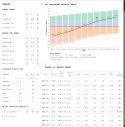
Threw up a basic model + assumptions, coal replacing oil for petchem and redirecting domestic oil transportation + eletrification does most of the work, i.e. in 10 years PRC will basically have energy and petchem autarky assuming transportation oil peak. In ~7 years PRC maritime oil vunerability will be comparable to US import vunerability from Canada, i.e. when Malacca dilemma = Hardisky dilemma. There's still a <1 million mbqd gap that can be wiped away if domestic crude production increases or transport eletrication is more aggressive, but by that time the SPR will be enough to backfill for multiple years.
Last edited:
COFCO has purchased its first cargo of wheat from Argentina, the latest development in new Sino-Argentine grain imports this year following soybeans and sorghum. Aligning various safety and phytosanitary standards was key.
is loading the first bulk commercial shipment of Argentine wheat to China, kicking off a new trade flow between the two countries, the Chinese state-owned agricultural giant’s trading unit said in a on Saturday. Loading is underway at the Chinese food trader’s Timbúes port terminal in Argentina, according to the statement. The shipment of about 65,000 tonnes of wheat for the milling industry will depart via the Paraná River, top up at Quequén port in Buenos Aires Province, and then sail to China, it said.