COMAC C919

bd popeye

The Last Jedi
VIP Professional
Please, Log in or Register to view URLs content!

Please, Log in or Register to view URLs content!


A C919 jetliner is pictured after landing at Harbin Taiping International Airport in Harbin, northeast China's Heilongjiang Province, April 15, 2026. The flight MU5631 carrying 140 passengers landed in Harbin on Wednesday, marking a successful maiden flight of C919, China's homegrown large passenger aircraft, on the Harbin-Shanghai route of China Eastern Airlines. (Xinhua/Zhang Tao)

Please, Log in or Register to view URLs content!


A ground crew member works at Harbin Taiping International Airport in Harbin, northeast China's Heilongjiang Province, April 15, 2026.(Xinhua/Zhang Tao)

Please, Log in or Register to view URLs content!


Staff members pose for a memorial group photo at Harbin Taiping International Airport in Harbin, northeast China's Heilongjiang Province, April 15, 2026.(Xinhua/Zhang Tao)

Please, Log in or Register to view URLs content!


Please, Log in or Register to view URLs content!


Passengers disembark a C919 jetliner operated by China Eastern Airlines at Harbin Taiping International Airport in Harbin, northeast China's Heilongjiang Province, April 15, 2026. (Photos by Xinhua/Zhang Tao/Liu Yang

Please, Log in or Register to view URLs content!


A ground crew member directs a C919 jetliner operated by China Eastern Airlines during taxiing at Harbin Taiping International Airport in Harbin, northeast China's Heilongjiang Province, April 15, 2026. (Xinhua/Zhang Tao)
 

Michael90

Senior Member
Registered Member
Existing C919 production line has 50 aircrafts capacity annually.
Indeed but capacity doesn’t mean actual production . COMAC barely produced 16C919 last year. That’s far from even half of their stated production capacity . I don’t think they will do marginally better this year. It will takes years for them to even reach close to their full production capacity . Civil airline industry is a very health and safety focused industry , so nothing can be rushed here. China will need decades to have a chance of really competing on a level playing field with Europe and the US in this sector. There is no short cut for this, not in this industry (unlike others were China can catch up more easily and faster). So dependence on Europe and the US in this sector will probably last the longest out of any other sector.
 

henrik

Captain
Registered Member
Indeed but capacity doesn’t mean actual production . COMAC barely produced 16C919 last year. That’s far from even half of their stated production capacity . I don’t think they will do marginally better this year. It will takes years for them to even reach close to their full production capacity . Civil airline industry is a very health and safety focused industry , so nothing can be rushed here. China will need decades to have a chance of really competing on a level playing field with Europe and the US in this sector. There is no short cut for this, not in this industry (unlike others were China can catch up more easily and faster). So dependence on Europe and the US in this sector will probably last the longest out of any other sector.

How many Leap engines did they sell to China, when Marcon visited Beijing? They have a back log of 1000 C919 planes. For these planes they need about 1500 engines.
 

lcloo

Major
How many Leap engines did they sell to China, when Marcon visited Beijing? They have a back log of 1000 C919 planes. For these planes they need about 1500 engines.
How many Leap engines did they sell to China, when Marcon visited Beijing? They have a back log order book of 1000 C919 planes. For these planes they need about 1500 engines for future deliveries of C919
 

PopularScience

Senior Member
Registered Member
The second quarter of 2026 will be the most crucial period, with the Changjiang-1000A engine expected to officially obtain its type certificate from the Civil Aviation Administration of China by the end of June. In the third quarter of 2026, the first C919 demonstrator equipped with the Changjiang-1000A engine will be delivered to China Eastern Airlines. In 2027, mass production and delivery will officially begin, running in parallel with imported engines to gradually achieve full replacement.

Please, Log in or Register to view URLs content!
 

Tomboy

Captain
Registered Member
The second quarter of 2026 will be the most crucial period, with the Changjiang-1000A engine expected to officially obtain its type certificate from the Civil Aviation Administration of China by the end of June. In the third quarter of 2026, the first C919 demonstrator equipped with the Changjiang-1000A engine will be delivered to China Eastern Airlines. In 2027, mass production and delivery will officially begin, running in parallel with imported engines to gradually achieve full replacement.

Please, Log in or Register to view URLs content!
This source also claims CJ-1000A is 7 percent more fuel efficient than LEAP-1C which IMO is a pretty strong claim (Especially from Chahuahui which is a reasonably trusted source that claims CJ-1000A is actually slightly less fuel efficient than LEAP series). Does anyone have a rough idea of the reliability of this source?
 

latenlazy

Brigadier
This source also claims CJ-1000A is 7 percent more fuel efficient than LEAP-1C which IMO is a pretty strong claim (Especially from Chahuahui which is a reasonably trusted source that claims CJ-1000A is actually slightly less fuel efficient than LEAP series). Does anyone have a rough idea of the reliability of this source?
Possible that chaguan trio is working off outdated information. Sometimes you find some easy performance wins in the process of testing and debugging, or you start your NPI improvements early as low risk high benefit changes become available during your testing process. Sometimes it’s as simple as a few material changes that don’t qualify as significant design revisions which would require significant certification re-testing.
 

Alfa_Particle

Senior Member
Registered Member
This source also claims CJ-1000A is 7 percent more fuel efficient than LEAP-1C which IMO is a pretty strong claim (Especially from Chahuahui which is a reasonably trusted source that claims CJ-1000A is actually slightly less fuel efficient than LEAP series). Does anyone have a rough idea of the reliability of this source?
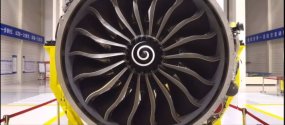
Long story short, pretty credible. I'll explain. The source of this claim originated from a guy who has direct connections to COMAC/ACAE (and has visited their facilities before). He has insisted prior (and still is) that the CJ1000A is actually more fuel efficient than the LEAP-1C "by a few %." The extent was never specified, but curiously ≈7% is a number that I kept on hearing about from various sources.

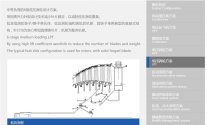
Anecdotes aside, how might that be? If we trace back to ACAE's old website, you could've came across this:
1778168436331_edit_422701485932657.jpg

...which showed a 6 stage LPT configuration. But if we refer to the notice from caac.gov.cn, you would see this:

1778168705406.jpeg
...which shows a 7 stage LPT configuration instead and states that it has a composite fan and fan casing. Yankee's article also said a 7 stage LPT configuration:

"CJ1000A为双转子大涵道比直驱涡扇发动机,涵道比约为9,推力约113~127kN,由1级风扇、3级增压级、10级高压压气机、燃烧室、2级高压涡轮及7级低压涡轮组成。"

But what's interesting is that his article also says the following:

"CJ1000A的风扇直径约为1.95m,叶片数量为18片,采用小展弦比三维宽弦空心叶片,叶片材料为TC4钛合金,内部采用“瓦伦”空心结构,超塑成形(SPF)/扩散连接(DB)工艺,风扇机匣采用硬壁包容设计,低压压气机为3级。"

We know the hollow titanium fan part isn't accurate anymore. See the CAAC report and this:20260501_022724.jpg

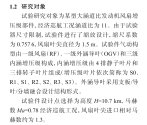
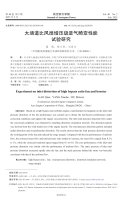
What I want to emphasise is the BPR of 9 and a fan diameter of 1.95 m part. Because if we refer to this paper submitted June 2023 by ACAE:
Screenshot_20260508_015726_org_mozilla_firefox_HomeActivity.jpg
Section 1.2:
Screenshot_20260508_015849_org_mozilla_firefox_HomeActivity.jpg
...we see a BPR of 11 instead. And if you work backwards from the scaling factor, you can see that the original fan diameter is 1.98 m, which is identical to that of the LEAP-1C. And no way ACAE is just out here messing around with a LEAP-1C without significant outrage/pushback from CFM.

So my understanding is that there have been quite a significant design change between the years (that may or may not have been due to the advancements in composites enabling the use of a composite fan), which lead to the 1.95 m enlarged to 1.98 m and the BPR grew from 9 to 11. To accommodate for this change, an extra LPT stage was added from 6 to 7 to drive this larger fan.

Yankee's article might've had a weird mix-up of old and updated information (it's from 2018 after all, by the time the CJ1000A was testing on the Y-20 testbed, it was already 2023). And although unconfirmed, I'm also not ruling out changes in other areas (e.g. from a SAC combustor to a TAPS II esque one) that might've lead to the current spec of the CJ1000A to be superior to the LEAP-1C (or 2018 spec CJ1000A) in terms of TSFC.

Possible that chaguan trio is working off outdated information. Sometimes you find some easy performance wins in the process of testing and debugging, or you start your NPI improvements early as low risk high benefit changes become available during your testing process. Sometimes it’s as simple as a few material changes that don’t qualify as significant design revisions which would require significant certification re-testing.
Yes, basically that.

 
Top