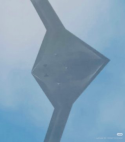
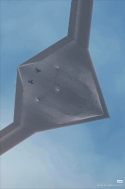
The UAVs need not necessarily be for ISR.
Everyone wants a platform to do more, be more - gold plate it to the point that it no longer does what was the bare spec requirement that birthed the platform to start with. Every sensor you add to this modular container platform is adding to the cost of such a platform - not just acquisition $ cost but also HR cost in having the trained operators there to operate said capabilities.
A primary (and simplest) capability of this modular containers is to extend range rings and magazine depth.
eg, Land based SAMs are not capable of covering Taiwan from Mainlad. Putting CEC capable SAMs on board and parking them in the middle of the Taiwan straits, extends SAM coverage over Taiwan itself and frees PLAF and PLAN primary assets to do more than baby sit a blockade. Cheaper to sustain too.
Likewise, we've seen enough IRBM range rings diagrams to be aware of the ability of the PLARF to reach out and touch targets along the 1IC. Problem is these rely heavily on ballistic missiles, hypersonics and other high-end missiles that in spite of the manufacturing capabilities of China, will still be a tall order to churn out in numbers required to keep key blue force bases in a constant state of non-operability. Subsonics LAMs are a lot cheaper but cheap usually means shorter range. Spamming YJ-62A/YJ-18s (400~500km+) is going to be cheaper than spamming YJ-18s and even cheaper than 1,500km+ IRBMs. Small container ship, sailing in green water, within the cover of land based air and lost in the coastal traffic of China's merchant traffic can easily push hundreds of LAM/AShM out daily with little risk to themselves or strain on PLAF/PLAN.
Problem than is that when you push a short/medium range missile out and need to do mid-course guidance via datalinks - you are out of range of data links. You could put satcom on the missile but again, this is gold plating, making every missile expensive like a tomahawk, instead of cheap, like a harpoon.
To tie into the opening line, the UAV would need to be a datalink repeater, to ensure that the missiles are able to receive mid-course guidance, especially when targeting mobile land/sea based targets.
As recent conflicts have shown, magazine depth and the ability to prosecute war is based on not just actual platforms that go dakka dakka but also providing these platforms with said dakka. Not being able to sustain desired level of operations due to lack of artillery shells and not being able to defend onself due to lack of air defence missiles is a real thing. This is a stress point that the PLA can easily exploit and that this container system seems designed to exploit.
Saturation of an enemy defence is a real thing but to do so, you need weapons that you can throw at them at a pace beyond their ability to keep pace. The equivalent of 600 Geran drones in a night but every night if you may.
Everyone wants a platform to do more, be more - gold plate it to the point that it no longer does what was the bare spec requirement that birthed the platform to start with. Every sensor you add to this modular container platform is adding to the cost of such a platform - not just acquisition $ cost but also HR cost in having the trained operators there to operate said capabilities.
A primary (and simplest) capability of this modular containers is to extend range rings and magazine depth.
eg, Land based SAMs are not capable of covering Taiwan from Mainlad. Putting CEC capable SAMs on board and parking them in the middle of the Taiwan straits, extends SAM coverage over Taiwan itself and frees PLAF and PLAN primary assets to do more than baby sit a blockade. Cheaper to sustain too.
Likewise, we've seen enough IRBM range rings diagrams to be aware of the ability of the PLARF to reach out and touch targets along the 1IC. Problem is these rely heavily on ballistic missiles, hypersonics and other high-end missiles that in spite of the manufacturing capabilities of China, will still be a tall order to churn out in numbers required to keep key blue force bases in a constant state of non-operability. Subsonics LAMs are a lot cheaper but cheap usually means shorter range. Spamming YJ-62A/YJ-18s (400~500km+) is going to be cheaper than spamming YJ-18s and even cheaper than 1,500km+ IRBMs. Small container ship, sailing in green water, within the cover of land based air and lost in the coastal traffic of China's merchant traffic can easily push hundreds of LAM/AShM out daily with little risk to themselves or strain on PLAF/PLAN.
Problem than is that when you push a short/medium range missile out and need to do mid-course guidance via datalinks - you are out of range of data links. You could put satcom on the missile but again, this is gold plating, making every missile expensive like a tomahawk, instead of cheap, like a harpoon.
To tie into the opening line, the UAV would need to be a datalink repeater, to ensure that the missiles are able to receive mid-course guidance, especially when targeting mobile land/sea based targets.
As recent conflicts have shown, magazine depth and the ability to prosecute war is based on not just actual platforms that go dakka dakka but also providing these platforms with said dakka. Not being able to sustain desired level of operations due to lack of artillery shells and not being able to defend onself due to lack of air defence missiles is a real thing. This is a stress point that the PLA can easily exploit and that this container system seems designed to exploit.
Saturation of an enemy defence is a real thing but to do so, you need weapons that you can throw at them at a pace beyond their ability to keep pace. The equivalent of 600 Geran drones in a night but every night if you may.