You are using an out of date browser. It may not display this or other websites correctly.
You should upgrade or use an alternative browser.
You should upgrade or use an alternative browser.
Chinese semiconductor thread II
- Thread starter vincent
- Start date

Huawei's latest chip will match 3nm A19, guys do you think it's realistic? Is it cuz of logicfolding



Oriental Crystal Source's IPO application on the Science and Technology Innovation Board has been accepted, with the funds raised intended for the R&D, upgrading, and industrialization of semiconductor yield management equipment.
On June 30, the IPO application status of Orient Crystal Microelectronics Technology (Beijing) Co., Ltd. (hereinafter referred to as "Orient Crystal") on the Shanghai Stock Exchange's Science and Technology Innovation Board was changed to "accepted".
According to the prospectus, the funds raised by Oriental Crystal Source will be used for the R&D upgrade and industrialization project of high-end semiconductor yield management equipment, the R&D upgrade project of EDA tools for computational lithography and design process collaborative optimization, and to supplement working capital.
Dongfang Jingyuan's main business is the research, development, production and sales of integrated circuit measurement and testing equipment, as well as the research, development and sales of integrated circuit manufacturing EDA software. It is committed to solving the pain points of yield in chip manufacturing, and provides customers with overall solutions to improve chip manufacturing yield by organically combining measurement and testing equipment hardware products, manufacturing EDA software products and different products.
After years of continuous independent research and development, Orient Crystal has successfully launched a number of self-developed software and hardware products, forming a diversified portfolio of tools for improving chip manufacturing yield. Its integrated circuit metrology equipment products include four types of electron beam metrology equipment for front-end integrated circuit processes: CDSEM (electron beam critical dimension measurement equipment), EBI (electron beam defect detection equipment), DR-SEM (electron beam defect re-inspection equipment), and HV-SEM (high-energy electron beam equipment). Its manufacturing EDA software products mainly consist of computational lithography software and other integrated circuit manufacturing EDA software that optimizes and improves lithography processes to enhance wafer manufacturing yield.
According to the prospectus, the funds raised by Oriental Crystal Source will be used for the R&D upgrade and industrialization project of high-end semiconductor yield management equipment, the R&D upgrade project of EDA tools for computational lithography and design process collaborative optimization, and to supplement working capital.
Dongfang Jingyuan's main business is the research, development, production and sales of integrated circuit measurement and testing equipment, as well as the research, development and sales of integrated circuit manufacturing EDA software. It is committed to solving the pain points of yield in chip manufacturing, and provides customers with overall solutions to improve chip manufacturing yield by organically combining measurement and testing equipment hardware products, manufacturing EDA software products and different products.
After years of continuous independent research and development, Orient Crystal has successfully launched a number of self-developed software and hardware products, forming a diversified portfolio of tools for improving chip manufacturing yield. Its integrated circuit metrology equipment products include four types of electron beam metrology equipment for front-end integrated circuit processes: CDSEM (electron beam critical dimension measurement equipment), EBI (electron beam defect detection equipment), DR-SEM (electron beam defect re-inspection equipment), and HV-SEM (high-energy electron beam equipment). Its manufacturing EDA software products mainly consist of computational lithography software and other integrated circuit manufacturing EDA software that optimizes and improves lithography processes to enhance wafer manufacturing yield.
Yishitong sent samples of its self-produced high-purity synthetic quartz sand to be drawn into glass rods for verification.
Recently, Yishitong stated during an institutional survey that the company has completed the drawing of quartz glass rods using its self-produced synthetic high-purity quartz sand. The products have already been sent to downstream quartz glass fiber cloth manufacturers for spinning, weaving, and application performance verification. Due to the long supply chain and high requirements for multi-stage collaboration, this business is currently still in the early verification stage.
Yishitong is a leading company in the inorganic non-metallic composite materials field listed on the Science and Technology Innovation Board. Its original main business, lithium-ion battery boehmite, held a global market share of over 40%, making it a core supplier for CATL and BYD. Since 2023, the company has focused on expanding into the semiconductor materials sector, developing synthetic high-purity silica sand to break the long-term monopoly of overseas companies like Unimin and TQC. Currently, the company's Bengbu base has a 10,000-ton/year high-purity silica sand production capacity, supplying products in batches to leading domestic quartz device manufacturers and entering the supply chains of wafer foundries such as SMIC and Yangtze Memory. In the first quarter of 2026, the company's net profit attributable to the parent company increased by 82.17% year-on-year, with the semiconductor materials business contributing an increasingly larger share, becoming a core growth driver to hedge against the cyclical fluctuations of the lithium-ion battery industry.
The company also noted that the Q-fabric industry chain involves the coordination of multiple links, including sand purity control, rod drawing process, and spinning and weaving. The verification period is relatively long, and it is unlikely to make a significant contribution to performance in the short term. Further progress remains to be seen.
Yin Zhiyao, Chairman of AMEC, has been listed on Forbes China's Best CEOs list for the fourth time.
Dr. Yin Zhiyao, Chairman and General Manager of AMEC, was once again included in Forbes China's 2026 list of Best CEOs released today. This marks the fourth time Dr. Yin has been selected as one of Forbes China's 50 Best CEOs, following his inclusion in 2020, 2024, and 2025.
Dr. Zhiyao Yin is the founder of AMEC (Advanced Micro-Fabrication Equipment Inc.). He received his Bachelor of Science degree in Chemical Physics from the University of Science and Technology of China and later pursued graduate studies in the Department of Chemistry at Peking University, earning his Ph.D. in Physical Chemistry from UCLA in 1984. Subsequently, he worked for several international semiconductor giants, participating in and leading the development of more than half of the industry's heavyweight plasma etching equipment, including the Rainbow CCP high-energy plasma dielectric etching machine, ICP low-energy plasma etching technology and equipment, DPS metal etching machines, and polysilicon etching machines. He is also one of the main inventors and promoters of the industrial application of several generations of plasma etching technologies and equipment.
They aspiring to reach 5-3nm matching with timing reduction, is probably.
Huawei's latest chip will match 3nm A19, guys do you think it's realistic? Is it cuz of logicfolding
Jiangbolong: Completed construction of a monthly mSSD production capacity and delivery capability of one million units.
On June 30, Longsys announced that its mSSD (mini solid-state drive) high-speed storage media production capacity has reached a milestone, with a monthly delivery capacity of one million units. It has the conditions for stable large-scale mass production and can meet the current incremental market demand. There is still room for continued expansion and doubling of production capacity in the future.
Longsys is a leading domestic storage module company. It was listed on the ChiNext board in 2022 and has formed a complete industry chain layout of "self-developed main control + advanced packaging and testing + brand operation". Its consumer-grade brand Lexar has a leading global market share. Its industrial-grade and enterprise-grade storage are implemented through its subsidiary Yuancheng Innovation. Its customers cover multiple tracks such as PC, server, and automotive electronics.
mSSD is a key differentiated product category for the company in recent years, featuring a small size of 30×40mm and read/write speeds of over 7GB/s at the PCIe 4.0 level. It perfectly meets the dual requirements of "small size + high performance" for storage in AI PCs, thin and light laptops, handheld consoles, and in-vehicle infotainment terminals. Related products have completed packaging and testing at Yuancheng's Suzhou base, and the yield rate is stable at a high level in the industry.
At the 2025 PTM Storage Technology Exhibition, Longsys launched several mSSD products with performance comparable to mainstream international models, and has already entered the supply chain of leading domestic PC manufacturers.
Longsys is a leading domestic storage module company. It was listed on the ChiNext board in 2022 and has formed a complete industry chain layout of "self-developed main control + advanced packaging and testing + brand operation". Its consumer-grade brand Lexar has a leading global market share. Its industrial-grade and enterprise-grade storage are implemented through its subsidiary Yuancheng Innovation. Its customers cover multiple tracks such as PC, server, and automotive electronics.
mSSD is a key differentiated product category for the company in recent years, featuring a small size of 30×40mm and read/write speeds of over 7GB/s at the PCIe 4.0 level. It perfectly meets the dual requirements of "small size + high performance" for storage in AI PCs, thin and light laptops, handheld consoles, and in-vehicle infotainment terminals. Related products have completed packaging and testing at Yuancheng's Suzhou base, and the yield rate is stable at a high level in the industry.
At the 2025 PTM Storage Technology Exhibition, Longsys launched several mSSD products with performance comparable to mainstream international models, and has already entered the supply chain of leading domestic PC manufacturers.
A Super Memory Processing Unit Based on 3D Stacking and Hybrid Bonding for High-Efficiency AI Computing
Abstract
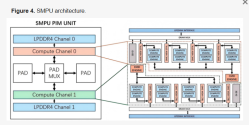
DRAM-based in-memory computing integrates computational regions into the main memory, enabling local data processing within the memory, thereby achieving faster and more efficient data computation. However, enhancing system performance requires addressing a critical challenge: achieving more general and sufficiently powerful data processing capabilities within DRAM-PIM. Existing DRAM-PIM implementations often suffer from limited computational capabilities due to the shared standard DRAM package area between memory cells and computational circuits or because the operator circuits are overly customized, which limits their ability to meet required data processing demands. To address this issue, in this paper, we propose a Super Memory Processing Unit (SMPU). The SMPU uses Hybrid Bonding technology to 3D-stack DRAM and many-core computational clusters, enabling large-bandwidth (0.25 TB/s per-bank, 2 TB/s for 8-bank system bandwidth) on-chip data transmission between DRAM and the computational cluster via copper interconnects, effectively breaking the memory wall bottleneck of existing computing architectures. The SMPU constructs a dual-channel fine-grained computational cluster at the logical computing layer, providing flexible and ample computility for various AI models, such as ResNet50 and Llama2. The SMPU uses standard DDR protocols and integrates a new memory space allocation and parsing controller to ensure system compatibility without modifying the host-end hardware, facilitating the integration and invocation of computility in memory particles. Additionally, the SMPU features an independent dual-channel memory-management mechanism within the memory particles, enabling simultaneous multi-channel, multi-modal AI model inference. We compared a CPU system equipped with an SMPU to current computing systems using FPGA simulations. The FPGA simulation results show that, under the same computational configuration, the system with the SMPU improves the performance of ResNet50-v1.5 by up to 5.1× and Llama by up to 27.43× compared to the base system, while reducing system power consumption by 71.6% (ResNet50-v1.5) to 77.8% (Llama 7B).