Chinese semiconductor thread II

tokenanalyst

Lieutenant General
Registered Member

Peking University, has made significant progress in multimodal sensing fusion research.​


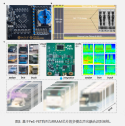
Peking University has achieved a major breakthrough in multimodal sensing fusion by addressing the limitations of current AI systems that rely on energy-intensive "sensing-first" algorithms. Inspired by the human brain's ability to integrate vision and hearing with low power consumption through neural principles like superadditivity, Professor He Ming's team at the School of Integrated Circuits developed a novel approach driven by physical computation rather than traditional software processing. This research challenges existing paradigms that lack adaptive, nonlinear coupling characteristics, aiming instead to replicate biological efficiency directly within hardware architecture to overcome latency and power constraints in edge intelligence applications.

The core innovation involves the creation of in-situ acousto-optic fusion schemes using strain-engineered ferroelectric semiconductor transistors (FeS-FETs). By manipulating lattice symmetry in two-dimensional Bi₂O₂Se material, the team induced intrinsic ferroelectric properties while maintaining semiconducting behavior, allowing sound and light signals to be coupled at a physical device level. Experimental results demonstrate that this single-device architecture achieves an impressive 2800% fusion enhancement factor with extremely low power consumption of just 15 pJ per operation. Furthermore, when scaled into arrays with pulse generation circuits, the system exhibits biomimetic synaptic plasticity and high frequency selectivity, effectively converting analog multi-physics signals into time-coded sequences that mimic neuronal behavior.
1782166755911.png

To realize end-to-end multimodal perception, the researchers integrated the FeS-FET array with a TaOx-based resistive random-access memory (RRAM) chip to form a hierarchical neuromorphic system capable of autonomous recognition. This architecture leverages the parallel computing advantages of RRAM for accurate classification of complex targets, such as fuzzy vehicles, achieving up to 98.2% accuracy even under extreme Gaussian noise interference. The findings, published in Nature Communications, highlight the potential of combining ferroelectric-semiconductor physics with neuromorphic engineering to create robust, energy-efficient perception systems that surpass traditional algorithmic methods while maintaining high resilience in noisy environments.
Please, Log in or Register to view URLs content!
 

tokenanalyst

Lieutenant General
Registered Member

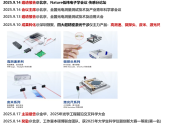
Harbin tech transfers sub-nanometer positioning technology and its equivalents to state of the art and export controlled brands.​


1782181167193.png

Leading Technology, a high-end precision equipment company incubated by Harbin Institute of Technology, has completed an angel round of financing.​


Recently, Shenzhen Lingju Technology Co., Ltd. (hereinafter referred to as "Lingju Technology") announced the completion of an angel round of financing of over 10 million yuan. The investors are Beike Zhongfa Development Qihang Fund and Zhongfa Xinchuang Fund, both managed by Qihang Investment under Zhongguancun Development Group. An academician serves as the long-term strategic technology advisor. This financing will be mainly used for the research and development and industrialization of core products such as ultra-precision laser interferometers, nanoscale motion modules, and ultra-precision aperture systems, as well as the construction of engineering and delivery capabilities at the Shenzhen headquarters.


Founded in December 2024 and located in Bao'an District, Shenzhen, Lingju Technology leverages the technological achievements of Harbin Institute of Technology to focus on providing ultra-precision optoelectronic measurement and ultra-precision motion control products, as well as customized and application-specific solutions. The core team originates from the Precision Instrument Engineering Research Institute of Harbin Institute of Technology, possessing over twenty years of technical expertise in ultra-precision laser interferometry and nanoscale motion control. Its independently developed core products, including high-speed laser interferometers, picometer-level laser interferometers, micro-probe laser interferometers, and nanoscale motion modules, are widely used in semiconductor manufacturing, ultra-precision machining, optical assembly, microelectronic measurement, and scientific instruments. These products have been successfully delivered to dozens of leading domestic high-end equipment manufacturers and top domestic and international metrology institutions.

Please, Log in or Register to view URLs content!
 

huemens

Junior Member
Registered Member
LineShine Exascale Supercomputer that was unveiled a few months ago has now surprisingly been added to the top 500 supercomputer list maintained by Top500.org. It's well known that China has had several other exascale supercomputers for years but they stopped submitting to this list years ago.

LineShine Debuts at No. 1 as the TOP500 Enters a New Global Exascale Era​

Please, Log in or Register to view URLs content!
LineShine achieved 2.198 Exaflop/s on HPL — about 80 percent of its 2.736 Exaflop/s theoretical peak — making it the first system on the TOP500 to exceed two exaflops of sustained double-precision performance using CPUs only. Installed at the National Supercomputing Centre in Shenzhen (NSCS) and built by the Shenzhen Cloud Computing Center, the system is based on a custom Chinese processor and the “LingKun” platform: 13.79 million cores across 304-core LX2 processors running at 1.55 GHz, linked by the proprietary LingQi interconnect and running Kylin OS. LineShine draws approximately 42.2 megawatts of power, for an efficiency of 52.07 Gigaflops/Watt. Its debut marks the first time since 2017 that a Chinese system has led the TOP500, and it also takes over the No. 1 position on the HPCG ranking with 22.00 HPCG-Petaflop/s. On the HPL-MxP mixed-precision benchmark, LineShine reached 7.92 Exaflop/s for fourth place, a comparatively modest 3.6x speedup over its HPL score that points to a CPU-only design without dedicated low-precision accelerators.
 
Last edited:

PopularScience

Senior Member
Registered Member
LineShine Exascale Supercomputer that was unveiled a few months ago has now surprisingly been added to the top 500 supercomputer list maintained by Top500.org. It's well known that China has had several other exascale supercomputers for years but they stopped submitting to this list years ago.

LineShine Debuts at No. 1 as the TOP500 Enters a New Global Exascale Era​

Please, Log in or Register to view URLs content!

They said hidden AI server in spacex is much more powerful
.
Please, Log in or Register to view URLs content!
 

Tomboy

Captain
Registered Member
They said hidden AI server in spacex is much more powerful
.
Please, Log in or Register to view URLs content!
I'm not sure why that matters, Reuters is trying to somehow redirect everything back to AI when the entire purpose of LineShine is scientific research. Typically for these type of workload you'd want to optimise for the maximum fp32 or even fp64 performance which is why LineShine's architecture is CPU only, on the other hand AI training uses sparse datasets hence needs to optimise for maximum low precision performance which is why training clusters use mostly GPU accelerators but as a tradeoff suffers when it comes to higher precision performance.

They are literally trying to compare apples to oranges here. If they want to be objective when comparing systems they should compare it to Huawei's training clusters not HPC supercomputers.
 

PopularScience

Senior Member
Registered Member
I'm not sure why that matters, Reuters is trying to somehow redirect everything back to AI when the entire purpose of LineShine is scientific research. Typically for these type of workload you'd want to optimise for the maximum fp32 or even fp64 performance which is why LineShine's architecture is CPU only, on the other hand AI training uses sparse datasets hence needs to optimise for maximum low precision performance which is why training clusters use mostly GPU accelerators but as a tradeoff suffers when it comes to higher precision performance.

They are literally trying to compare apples to oranges here. If they want to be objective when comparing systems they should compare it to Huawei's training clusters not HPC supercomputers.

Winnology
 

bsdnf

Senior Member
Registered Member
The 15th FYP planned a cluster with 10 EFlops; this 2 EFlops cluster is just one of the result of the previous FYP.

This cluster was only made public because it uses Huawei chips; the Tianhe and Sunway clusters remain classified.
 
Last edited:
Top