Chinese semiconductor thread II

tokenanalyst

Lieutenant General
Registered Member

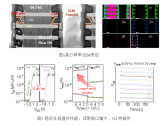
Frequency-domain enhanced spatial multi-position moiré fringe alignment method​

Abstract​

Most existing lithography alignment methods adopt multi-wavelength light sources and off-axis illumination technologies. In practical lithography alignment scenarios, alignment marks are generally located in the wafer scribe lane, and their positions vary with the chip layout. Nevertheless, conventional off-axis illumination schemes are incapable of fixed-point illumination for alignment marks and coordinated regulation of light source wavelength and illumination incident angle. To address the above limitations, this paper proposes a frequency-domain enhanced spatial multi-position moiré fringe alignment method. The proposed method enables the modulation of illumination wavelength and incident angle at any position within the field of view of 7430 × 8830 μm, with an operating wavelength ranging from 532 nm to 635 nm. The measurement repeatability 3 value is less than 1 nm at arbitrary detection positions.
1781736748197.png

Please, Log in or Register to view URLs content!
 

tokenanalyst

Lieutenant General
Registered Member

The Longqing Aerospace & Shanghai Jiao Tong University School of Integrated Circuits Joint Laboratory for Satellite Internet was officially established.​


Longqing Aerospace and the School of Integrated Circuits at Shanghai Jiao Tong University (SJTU) officially established the "Satellite Internet Joint Laboratory." The collaboration aims to integrate SJTU's academic research strengths with Longqing Aerospace's engineering and industrial application capabilities to advance China's satellite internet sector. Key leaders and experts from both institutions attended the unveiling ceremony to outline the lab's strategic planning, research directions, and talent training mechanisms.

The joint laboratory will focus on four primary areas of research and development. First, it will tackle core technologies for low-orbit satellite phased array antennas and mass-producible communication terminals for various applications. Second, it will explore onboard intelligent computing and satellite payload processing using Longqing's AI computing chips to evolve satellite internet from simple connectivity to "intelligent services." Third, the lab will develop high-reliability systems for onboard network interconnection, security, and storage. Finally, it will emphasize industry-education integration to cultivate interdisciplinary talents at the intersection of commercial aerospace and integrated circuits.

This initiative serves as a strategic move to address national demands and support Shanghai's commercial aerospace ecosystem. Representatives from both SJTU and Longqing Aerospace highlighted the strong synergy of the partnership, noting that combining university-level theoretical research with enterprise-level product definition and engineering implementation will accelerate the transition of scientific achievements into practical, industrialized products. This collaborative model is expected to significantly enhance the independent controllability and efficiency of core satellite internet technologies.

Looking ahead, the laboratory aims to build a comprehensive platform for technological innovation, talent cultivation, and achievement transformation, ensuring that research remains verifiable, transferable, and industrializable. Longqing Aerospace, a high-tech enterprise specializing in the deep integration of AI and commercial aerospace, will leverage this partnership to drive the evolution of satellite networks. Ultimately, the joint lab will contribute to Shanghai's goal of becoming a global commercial aerospace hub and support the high-quality, self-reliant development of the national aerospace industry.​

Please, Log in or Register to view URLs content!
 

Wrought

Captain
Registered Member
Thinktank piece which argues the US should stop digging itself deeper with export controls.

The fundamental reason for this posture is that China’s regulatory authorities no longer think U.S. chip companies are reliable business partners. As a result, there will be no going back to earlier levels of interdependence, where U.S. companies dominated the Chinese chip market. Even if Chinese companies wanted to train and operate their artificial intelligence (AI) models on U.S. chips, China’s authorities would not let them.

The global AI and chip marketplaces, however, are still up for grabs, and U.S. companies still welcome and hold an advantage there. The U.S. and China might not have really reached a detente or stalemate on the chips issue, however, and there are policy mistakes the U.S. could make in a misguided effort to keep China in a technological box. Such miscalculations would hurt the ability of U.S. companies to maintain their lead with international buyers. Chief among these potential policy errors are
Please, Log in or Register to view URLs content!
to third countries in the hopes of keeping Chinese companies from evading U.S. controls, measures to
Please, Log in or Register to view URLs content!
and applications from the U.S. and other markets, and restrictions on access to
Please, Log in or Register to view URLs content!
by U.S. and allied companies. Each of these ideas is under active consideration among U.S. policymakers and commentators, and each would accomplish little except isolating U.S. companies from the global AI and chip marketplace.

Please, Log in or Register to view URLs content!
 

tokenanalyst

Lieutenant General
Registered Member

The Shengjisheng Advanced Semiconductor Product Incubation and Manufacturing Center project was signed and launched in Wuxi.​

The Shengjisheng Advanced Semiconductor Product Incubation and Manufacturing Center project was officially signed and will be located in Huishan High-tech Zone. Shengjisheng will build an advanced product incubation center in Huishan Advanced Manufacturing Industrial Park, with an initial area of approximately 6,000 square meters. It will initially introduce two advanced 12-inch thin film deposition equipment, and after mass production, it will achieve an annual output value of over 150 million yuan.

It is reported that Shengjisheng Semiconductor Technology Co., Ltd., as a national high-tech enterprise and a national specialized and innovative "little giant" enterprise, takes "gathering global wisdom and promoting the development of the semiconductor industry" as its mission. Focusing on the needs of leading domestic customers, it has continuously increased its investment in independent research and development, actively deployed the development of special equipment for integrated circuit manufacturing, and has successfully developed a number of self-developed products such as 12-inch thin film deposition equipment and rapid thermal processing equipment. It also actively participates in national key projects and is committed to leveraging its resource advantages to achieve the goal of self-manufacturing domestic equipment.

Please, Log in or Register to view URLs content!
 

tokenanalyst

Lieutenant General
Registered Member

China's first 8.6-generation AMOLED production line, with a total investment of 63 billion yuan, has officially started mass production.​

China's display industry reached a milestone! BOE's (Beijing Oriental Electronics) first 8.6th generation AMOLED production line in China officially began mass production in Chengdu High-tech Zone.

On June 17th, China's display industry reached a milestone! BOE's (Beijing Oriental Electronics) first 8.6-generation AMOLED production line officially began mass production in Chengdu High-tech Zone. With a total investment of 63 billion yuan and a designed capacity of 32,000 glass substrates per month, this production line is the largest single industrial project in Sichuan Province to date. It primarily produces high-end touch OLED displays for smart terminals such as laptops and tablets, while also catering to mobile phone displays.

BOE and Chengdu have been cooperating for 19 years. Since BOE's 4.5-generation LCD panel production line was established in Chengdu in 2007, the two parties have successively launched a series of key projects, including the first 6th generation AMOLED panel production line in China, an AMOLED process technology testing center, a smart system innovation center, and an automotive display base, completing a diversified ecosystem layout from a single manufacturing line to covering R&D, testing, and innovative applications.

Please, Log in or Register to view URLs content!
 

tokenanalyst

Lieutenant General
Registered Member

The Institute of Microelectronics has made progress in the field of IGZO 2T0C 3D DRAM.​

    The rapid development of artificial intelligence and high-performance computing applications has led to a surge in demand for high-capacity, high-bandwidth storage. High-speed SRAM, limited by its 6T structure, struggles to achieve high capacity; off-chip DRAM, due to its high access latency, cannot fully meet the high-bandwidth requirements. Against this backdrop, the IGZO-based 2T0C architecture, which can be integrated onto logic chips in the later stages, is considered an effective solution balancing high capacity and high bandwidth. However, current research on 2T0C DRAM is limited to planar and vertical 4F² architectures, lacking single-step multi-layer three-dimensional integration solutions, thus restricting further density improvements.

To address the aforementioned challenges, the team from the National Key Laboratory of Integrated Circuit Manufacturing Technology at the Institute of Microelectronics, Chinese Academy of Sciences, in collaboration with the Beijing Superstring Memory Research Institute, innovatively proposed a single-step multi-layer stacking scheme for 3D DRAM based on a 2T0C cell structure, and demonstrated for the first time a 4-layer stacked 3D 2T0C. This novel 3D DRAM adopts a vertical word line architecture and a dual-gate 2T0C cell design, offering advantages such as high read margin, stable dual-gate read control, and low fabrication cost. The IGZO transistors based on dual-gate control achieve excellent performance and high stability. The fabricated 3D 2T0C cells combine high-speed writing with long data retention capabilities and successfully achieve multi-value storage, significantly improving storage density.

1781798124019.png

Please, Log in or Register to view URLs content!
 

tokenanalyst

Lieutenant General
Registered Member

Shanghai Hejing establishes a new company, Xinjing Semiconductor.​

Recently, Henan Xinjing Semiconductor Co., Ltd. was established, with a business scope including: research and development of electronic special materials; manufacturing of electronic special materials; sales of electronic special materials; import and export of goods, etc. According to Qichacha's equity penetration analysis, the company is wholly owned by Shanghai Hejing.

Shanghai Hejing Silicon Materials Co., Ltd., established in December 1994, is a foreign-invested listed company mainly engaged in the research, development, production and sales of semiconductor silicon epitaxial wafers. Its products are used in automotive electronics, communication equipment and other fields, and it has the full-process production capability from crystal growth to epitaxial growth.

Shanghai Hejing is accelerating the construction of the Zhengzhou Hejing expansion project. According to public information and project progress, the Zhengzhou Hejing 12-inch large silicon wafer R&D and industrialization project is scheduled to start production in June 2026.​

1781799640214.png

Please, Log in or Register to view URLs content!
 
Top