Chinese semiconductor thread II

tokenanalyst

Lieutenant General
Registered Member
How is CXMT planning to deal with the unavailability of EUV? It has stretched DUV quite far, but wouldn't that be a bottleneck soon enough?
Looks like it doesn't. They are using multi patterning techniques and self assembly.

CXMT 3D DRAM.​

Stacked DRAM Solution: Multilayer Horizontal Cell (MHC) 1T1C DRAM​

Abstract:​

Stacked dynamic random access memory (DRAM) technology has garnered considerable attention as a means to continue the relentless pursuit of scaling. In this context, we have developed a five-layer horizontal cell with vertical word line (WL) and pillar capacitor to realize a stacked DRAM architecture. This design boasts an excellent combination of high on-state and off-state current ratio ( Ion / Ioff) of ~1E8, a steep subthreshold slope (SS) of ~93 mV/dec and a moderate threshold voltage ( Vt) of 0.76 V. A novel process integration scheme incorporating boron silicate glass (BSG)/phosphorus silicate glass (PSG) capping doping, double gate formation, channel thickness optimization, and device electrical engineering considerations are presented and discussed. Moreover, we have also explored the feasibility of fabricating a 64-layer structure through the development of critical unit processes. This study suggests a promising approach using multilayer horizontal cells (MHCs) to further advance the scaling of DRAM technology.​

View attachment 175169

Please, Log in or Register to view URLs content!
 

tokenanalyst

Lieutenant General
Registered Member

Semiconductor organic patterning lithography manufacturer Aoshi Technology completes over 100 million RMB Series B financing.​


Recently , Guangzhou Aoshi Technology Co., Ltd. (hereinafter referred to as " Aoshi "), a leading company in China's semiconductor organic patterning lithography field, announced the completion of a B-round financing of over 100 million yuan . This round of financing was jointly invested by multiple strategic investors and well-known industrial funds. The funds raised will be mainly used to build the K2 factory with an annual processing capacity of 60,000 12-inch wafers .

According to available information, the main founding team members of Aoshi Technology come from globally renowned semiconductor and display companies. The company's mission is to focus on creating advanced AI display - computing - storage key processes and human-computer interaction interfaces , from XR smart wearables to high-performance computing, to fully leverage the application potential of large models in different scenarios .

It is understood that the K1 factory of Aoshi is located in Nanhai District, Foshan. The K2 factory , which is currently planned to be invested and constructed, will adopt the maskless organic patterning lithography process based on independent intellectual property rights and industry-leading technology. It will mainly produce second-generation silicon-based OLED screens with brightness of up to 20,000 nits and advanced packaging RDL substrates. It is planned to be completed and put into production in Q4 of 2027 .

As device sizes continue to shrink and chip 3D structures become more complex (HBM/3D multilayer stacking ), semiconductor organic patterning lithography employs novel process and substrate materials , offering significant advantages in terms of precision, density, structural flexibility, and material compatibility. It supports entirely new device structures and etching targets , and is widely used in key semiconductor process layers related to silicon-based OLEDs , quantum dot Micro LEDs , advanced packaging, and AI , HPC , and memory technologies such as HBM .

Please, Log in or Register to view URLs content!


tokenanalyst

Lieutenant General
Registered Member

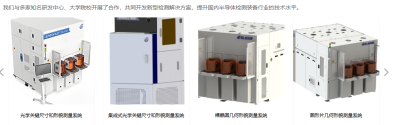
Jingsheng Electronics: Semiconductor orders on hand exceed 2.5 billion yuan. Increasing investment in front-end mass testing R&D and capacity expansion.​


Jingsheng Electronics and its subsidiary Shanghai Jingsheng Semiconductor Technology Co., Ltd. have achieved significant momentum in China's domestic semiconductor testing equipment sector. As of the end of April 2026, the company has secured cumulative semiconductor orders exceeding 2.53 billion yuan, demonstrating robust demand for domestically produced testing equipment amid China's aggressive wafer fab expansion and equipment localization initiatives. This milestone reflects the growing confidence in Chinese-made semiconductor metrology solutions as the country pushes toward greater self-sufficiency in the industry.

To support this growth, Shanghai Jingsheng is substantially expanding its R&D and production capabilities. The company announced plans in December 2025 to invest approximately 350 million yuan in a second-phase laboratory expansion project in Qingpu District, Shanghai, dedicated to front-end semiconductor metrology equipment development and manufacturing. This initiative entered the construction phase in March 2026 following the signing of a 288 million yuan general contracting agreement with Shanghai Baoye Group, marking a critical step toward strengthening China's indigenous high-end semiconductor testing equipment industrialization capabilities.

The strategic importance of these developments cannot be overstated. Front-end metrology and defect detection equipment are essential for yield control at advanced process nodes, yet these technologies have historically been dominated by overseas manufacturers due to their high technical barriers and lengthy verification cycles. The rapid evolution of advanced packaging technologies including Chiplet, 2.5D/3D packaging, and hybrid bonding is further intensifying demand for precision metrology solutions that can ensure dimensional accuracy, warpage control, and alignment precision. Jingsheng Electronics has been steadily strengthening its technological portfolio in optical metrology, defect detection, and process control, gradually achieving product verification and adoption at leading domestic wafer fabs.
1779120421382.png
The company will showcase its latest advancements at the upcoming JIMIC Conference in Shanghai from May 27-29, 2026, widely regarded as a barometer for China's semiconductor industry. At the Advanced Packaging and Testing Technology Innovation Summit on May 27th, Shanghai Jingce will deliver a presentation titled "The Precision Revolution in Advanced Packaging: Precision Metrology Technology," sharing insights on high-precision testing requirements and innovations in the advanced packaging era while demonstrating recent breakthroughs in domestically produced semiconductor testing equipment.

These developments underscore Jingsheng Electronics' strategic positioning to capitalize on China's semiconductor self-sufficiency drive. By combining strong order momentum with substantial R&D investment, the company is establishing itself as a key player in the high-barrier, high-growth field of front-end semiconductor metrology a critical enabler for advancing China's domestic manufacturing and packaging capabilities in an increasingly competitive global semiconductor landscape.


Please, Log in or Register to view URLs content!
 

tokenanalyst

Lieutenant General
Registered Member
As I said before, the biggest issue with the Chinese government plans to increase the percentage of domestic products used was that the mental barrier against domestication was just too high. The government changed tactics into 70% of state procured chips be make domestically, hopefully with domestically equipement, materials and software.

That is what Stooges think tankers didn't understood when they pushed for exports controls, these controls broke through that mental barrier like anything that the government couldn't. The total of the IT, AI, Electronics and Chip industry are becoming less and less disjointed with time.

You could put Norinco or a Chinese military university in the export control list and get away with it. But pushing Huawei into making chips and SMIC and YMTC to use domestic equipment was stooges strategic mistake.
Yin Zhiyao stated that domestic customers face a mental barrier when adopting domestically produced equipment: actual data shows that leading foreign equipment rarely encounters problems once it's installed on the production line. However, domestically produced equipment often presents numerous issues initially, requiring significant time to resolve. This stems from a preconceived notion that foreign equipment is superior, while domestic equipment is riddled with problems.

Yin Zhiyao shared his 20 years of experience working in the United States, saying, "In fact, when a new piece of equipment from overseas manufacturers enters the most advanced production lines of customers like TSMC and Samsung, its initial performance is not perfect. It takes two or three years, with the help of leading companies like TSMC and Samsung, to gradually debug and improve the equipment, and customers also provide a lot of feedback. When this equipment is introduced to China, it has already undergone two or three years of testing, so domestic customers will definitely receive it in good condition. Domestically produced equipment will also have problems when it first enters domestic production lines. It's not that domestically produced equipment is really bad; it's just that the environment is different. So I hope that domestic customers can give domestic equipment companies more opportunities."​
 

tokenanalyst

Lieutenant General
Registered Member

China's AMOLED display driver chip market is booming: Domestic manufacturers are accelerating their breakthrough, reshaping the global competitive landscape.​


The global display industry is undergoing a significant transformation as production capacity shifts increasingly toward mainland China. From 2020 to 2024, China's share of global display panel manufacturing surged from 50% to 70%, with projections indicating it will reach 80% by 2029. This industrial relocation has created an unprecedented growth opportunity for the domestic AMOLED display driver chip market, which is now experiencing rapid expansion alongside smartphones, wearables, and automotive displays. While global sales of these chips grew at a CAGR of 15.6% over the last four years, the Chinese mainland market outpaced this average with a CAGR of 27.6%, driving China's market share from roughly one-quarter to nearly 40% in just four years.

Amidst this expansion, domestic manufacturers are accelerating their efforts to compete on the global stage, led notably by Yunyinggu. As the world's third-largest independent AMOLED supplier and currently the largest for smartphone brands in mainland China, Yunyinggu has achieved significant milestones, including over 50 million units sold in 2024 alone. It employs a fabless business model that integrates hardware design with advanced software algorithms and pixel compensation circuits. Other key players are also making breakthroughs: OmniVision is mass-producing OLED chips for top-tier panels; Chipone Technology recently launched high-resolution 1.5K TDDI chips utilizing proprietary RRAM storage technology; and companies like Tiandeyu, Galaxycore, and New Image Microelectronics are optimizing algorithms for motion blur, entering the wearable market, or diversifying into automotive and AR applications to meet evolving technical demands.

Looking ahead, the competitive landscape of AMOLED display driver chips is being fundamentally reshaped by China's rise. Although Korean and Taiwanese competitors still hold advantages in scale and first-mover status, Chinese firms are narrowing the gap through rapid technological accumulation, localized R&D teams, and supply chain integration. As demand expands into larger screens with complex temperature requirements, Chinese manufacturers are poised to capture a dominant share of this high-value segment. By 2029, mainland China is expected to account for over half of the global AMOLED driver chip market revenue, solidifying its position not just as the manufacturing hub, but as a critical engine driving innovation and growth in the global semiconductor industry.

Please, Log in or Register to view URLs content!
 

tokenanalyst

Lieutenant General
Registered Member

Zhongjuxin plans to raise 800 million yuan through a private placement to increase its electronic-grade sulfuric acid production capacity and establish a base in North China.​

On the evening of May 15, Zhongjuxin, a leading electronic chemical company listed on the Science and Technology Innovation Board, released its 2026 plan to issue A-shares to specific targets, intending to raise no more than 800 million yuan to expand the production of electronic-grade sulfuric acid, build a production base in North China, and supplement working capital, continuing to increase its investment in the localization of semiconductor wet chemicals.

According to the announcement, the proposed private placement will issue no more than 148 million shares to no more than 35 specific investors, with a lock-up period of 6 months. The proceeds will be used in three main areas: first, a new 60,000-ton-per-year electronic-grade sulfuric acid project, with a total investment of 212 million yuan, of which 200 million yuan will be raised, focusing on filling the gap in the high-end market in the Yangtze River Delta; second, a key electronic materials production base for integrated circuits in North China, located in Cangzhou, Hebei Province, with a total investment of 417 million yuan, of which 360 million yuan will be raised, to build a new annual production capacity of 60,000 tons of electronic-grade sulfuric acid, 15,000 tons of electronic-grade nitric acid, and 12,500 tons of electronic-grade ammonia; and third, 240 million yuan to supplement working capital and optimize the financial structure.

Please, Log in or Register to view URLs content!
 

sunnymaxi

Colonel
Registered Member
As I said before, the biggest issue with the Chinese government plans to increase the percentage of domestic products used was that the mental barrier against domestication was just too high. The government changed tactics into 70% of state procured chips be make domestically, hopefully with domestically equipement, materials and software.

That is what Stooges think tankers didn't understood when they pushed for exports controls, these controls broke through that mental barrier like anything that the government couldn't. The total of the IT, AI, Electronics and Chip industry are becoming less and less disjointed with time.

You could put Norinco or a Chinese military university in the export control list and get away with it. But pushing Huawei into making chips and SMIC and YMTC to use domestic equipment was stooges strategic mistake.
during CCTV interview. Yin Zhiyao said,

China's semiconductor equipment industry has achieved a breakthrough from zero to a complete system today. Mature processes are basically self-sufficient, core equipment has entered the world's first tier , and the gap with the international community is continuously narrowing in areas where it has been lacking.

We now have the capability to manufacture the most advanced equipment.

in December 2023, AMEC decided to enter the large flat panel etching equipment field (previously, it relied entirely on imports for approximately 17 types of process equipment). This equipment weighs 150 tons, is 15 meters long and 15 meters wide, and is about two and a half stories high .
 

tokenanalyst

Lieutenant General
Registered Member
during CCTV interview. Yin Zhiyao said,

China's semiconductor equipment industry has achieved a breakthrough from zero to a complete system today. Mature processes are basically self-sufficient, core equipment has entered the world's first tier , and the gap with the international community is continuously narrowing in areas where it has been lacking.

We now have the capability to manufacture the most advanced equipment.

in December 2023, AMEC decided to enter the large flat panel etching equipment field (previously, it relied entirely on imports for approximately 17 types of process equipment). This equipment weighs 150 tons, is 15 meters long and 15 meters wide, and is about two and a half stories high .
When China first commercial EUV machine comes out, probably sooner than most people expect, I think it wouldn't be the best litho machine, probably lower productivity than ASML, mostly good enough for 7nm and not as precise but as long ASML don't sell theirs in China it will be the best EUV lithography machine that Chinese companies can buy and a positive feedback loop around the machine will happen at the absent of ASML that will speed up the development of these machine
 

sunnymaxi

Colonel
Registered Member
How is CXMT planning to deal with the unavailability of EUV? It has stretched DUV quite far, but wouldn't that be a bottleneck soon enough?
so far top 3 giants Samsung , Sk Hynix and Micron hesitant to adapt EUV coz of astronomical cost involved in EUV though this could solve the multi patterning issue but memory manufacturers are still prioritizing older and cheaper methods.

Samsung and SK Hynix are focused on developing 3D DRAM and shrinking architectures rather than just shrinking the old 2D designs with EUV.

this is good for CXMT as their competitors still using old but reliable DUVi machines.
 
Top