Chinese semiconductor thread II

tokenanalyst

Lieutenant General
Registered Member

Fullerd's 210 million yuan precision cleaning and recycling service base project was signed and settled in Optics Valley.​


On April 20, Anhui Fulede Technology Development Co., Ltd. (hereinafter referred to as "Fulede") signed an agreement with Wuhan Optics Valley Intelligent Manufacturing Industrial Park to build a precision cleaning and regeneration service base project.

Fullerd's predecessor was the surface treatment division of Shanghai Shenhe Investment Co., Ltd., one of the earliest companies in China to engage in precision cleaning services, entering the field of precision cleaning services for semiconductor equipment as early as 2000. Fullerd was officially registered in 2017 and listed on the ChiNext board in 2022. The company primarily provides one-stop precision cleaning services for semiconductor and display panel manufacturers, achieving contamination control of production equipment. Major clients include leading international and domestic manufacturers such as Applied Materials, Tokyo Electron, SMIC, TSMC, CSOT, and NAURA.

Precision cleaning and regeneration services are a crucial supporting link in the semiconductor industry chain, directly affecting the operational accuracy and lifespan of semiconductor equipment. They are widely used in wafer foundry, display panel manufacturing, and integrated circuit packaging and testing. This industry has grown alongside the development of China's semiconductor and display panel industries, and the domestic semiconductor precision cleaning service industry is still in its growth phase.

According to China Merchants Securities Optics Valley, Fullertech , a leading company in the field, plans to invest 210 million yuan to build a precision cleaning and regeneration service base in Wuhan Optics Valley, providing convenient services to customers in Central China such as Yangtze Memory Technologies and Wuhan Xinxin Semiconductor Manufacturing Co., Ltd. The project will significantly enhance the completeness of the semiconductor industry chain in the High-tech Zone.
Please, Log in or Register to view URLs content!
 

tokenanalyst

Lieutenant General
Registered Member

1.3 billion yuan! Xinghua Qingke Semiconductor High-end Materials Project Signed and Settled in Kunshan Development Zone​

As a leading company in the industry, Xinghua Qingke focuses on the localization of high-end semiconductor materials. Its products cover key consumables such as grinding and polishing slurry, grinding pads, and cleaning fluids, which are mainly used in the grinding, polishing, and cleaning of integrated circuits.

It is reported that with this signing, Xinghua Qingke will establish its headquarters and listed entity in Kunshan Development Zone, building China's first large-scale integrated circuit materials production line with a complete industrial chain , and simultaneously constructing a joint verification line for equipment and materials, filling a domestic gap. The project has a total investment of 1.3 billion yuan , and after reaching full production capacity, it is expected to achieve an annual output value of over 1 billion yuan and annual tax revenue of over 60 million yuan.

In recent years, the demand for high-performance computing chips in the artificial intelligence industry has exploded, and high-end semiconductor materials have become an indispensable underlying support for the industry's development. The implementation of this project will effectively guarantee the security and independent control of the domestic AI chip supply chain, further promote the development zone's leap from "manufacturing" to "intelligent manufacturing," and help the city gain a first-mover advantage and take the initiative in development in the new round of industrial transformation.

Please, Log in or Register to view URLs content!
 

tokenanalyst

Lieutenant General
Registered Member

Shenzhen Pinghu Laboratory and Peking University EDA Research Institute have made progress in their in-depth collaboration in the field of AI-assisted modeling of wide-bandgap semiconductor devices.​


On April 22, 2026, the Shenzhen Pinghu Laboratory and the Peking University EDA Research Institute (along with its subsidiary, XinHuai Technology) signed a deep technical cooperation agreement to advance AI-assisted modeling of wide-bandgap semiconductor devices.
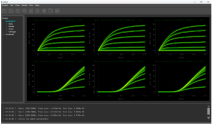
The partners successfully integrated neural network-based GaN HEMT power device modeling into iMoB (Intelligent Model Builder), XinHuai Technology's independently developed software. This marks a significant fusion of domestic EDA toolchains with cutting-edge AI technology. The collaboration addresses long-standing industry challenges by significantly improving the accuracy and efficiency of power semiconductor circuit design and optimization.

1776874750683.png

iMoB is now capable of automatically learning nonlinear device behaviors for diverse technologies, including traditional silicon devices, FinFET/GAA structures, and 2D materials (like MoS₂). It supports integration with multiple commercial circuit simulation programs.

A specialized module developed specifically for GaN HEMTs using the iMoB platform has been deployed. This module:​
  • Performs accurate DC and AC small-signal simulations.​
  • Precisely reproduces electrical characteristic changes across varying temperatures.​
  • Provides critical support for designing and optimizing high-performance GaN power circuits.​
This milestone underscores a long-term strategy of "industry-academia-research-application" collaboration between the two entities. The Shenzhen Pinghu Laboratory aims to leverage this open model within its domestic EDA platform, offering full-process design simulation services for third-generation compound semiconductors and enabling efficient technical support for users globally.

Please, Log in or Register to view URLs content!
 

tokenanalyst

Lieutenant General
Registered Member

Nortel Testing's advanced packaging substrate TGV mass testing equipment is being shipped in batches to leading industry customers.​


Recently, Beijing Electronic Measurement Equipment Co., Ltd. has successfully shipped its independently developed advanced packaging substrate TGV measurement equipment in batches to leading customers in the advanced packaging TGV industry.

1776874943904.png

The advanced packaging substrate TGV metrology equipment shipped in this batch relies on core capabilities such as a high-precision platform mechanism, an advanced metrology optical system, a highly reliable AI large model, and ADC automatic defect classification. It can efficiently detect defects such as surface cracks, scratches, bubbles, internal via blockages, and foreign objects, and assists in quickly locating process anomalies. This equipment can be adapted to various specifications of glass substrates according to customer needs and is widely used in the production processes of advanced substrates in fields such as 2.5D, RF, and silicon photonics co-packaging, providing a systematic metrology solution from through-glass vias (TGV) to redistribution layers (RDL).

This shipment represents a significant step for the company in deepening its TGV industry chain layout and promoting the independent control of the semiconductor industry chain. In the future, Nortel Testing will continue to focus on the core needs of its customers and the industry, further deepening its independent R&D and industrial application of semiconductor metrology equipment, and contributing to the independent control and high-quality development of my country's semiconductor industry chain.

Please, Log in or Register to view URLs content!
 

FriedButter

Brigadier
Registered Member
Please, Log in or Register to view URLs content!

Nvidia has not yet sold its H200 AI chips to China, Lutnick says​

WASHINGTON, April 22 (Reuters) - Nvidia's (NVDA.O) powerful H200 AI chips have not yet been sold to Chinese companies, Commerce Department Secretary Howard Lutnick said on Wednesday, citing difficulties faced by those firms to get permission from the Chinese ‌government.

The Trump administration in January gave a formal green light to China-bound sales of Nvidia's H200 chips with some conditions, igniting deep concerns among China hawks in Washington who fear Beijing will harness the technology to supercharge its military.

The Reuters Iran Briefing newsletter keeps you informed with the latest developments and analysis of the Iran war. Sign up here.

But shipments of the chips have been stymied by disagreements over the terms of the sales both in China and ⁠the U.S., sources have said.

"The Chinese central government has not let them, as of yet, buy the chips, because they're trying to keep their investment focused on their own domestic industry," Lutnick said, when asked about H200 sales to China at a Senate hearing.

"We have not sold them chips as of yet," he added.

Nvidia did not immediately respond to a request for comment.

The continued delay of the chip sales would be welcomed by China hardliners in the U.S., who reject Trump administration arguments that such sales discourage Chinese competitors - such as heavily sanctioned Huawei - ‌from ⁠redoubling efforts to catch up with U.S. AI chip designers.

But Lutnick, citing the complexity of U.S.-China relations and the balancing act it requires, also appeared to back off a pledge to reimpose in November a rule that would restrict U.S. tech exports to thousands of Chinese companies.

The regulation, known as the ⁠affiliates rule, was delayed for a year last November as part of a trade negotiation with China.

"I agree that the affiliates rule is a smart thing for the United States of America to consider, ⁠but it is part of the balance of that full trade agreement," Lutnick said.

Lutnick also downplayed his role on China issues more broadly, saying that the U.S.'s "very complex" trade relationship with ⁠China was led by President Donald Trump as well as a team that includes Treasury Secretary Scott Bessent and U.S. Trade Representative Jamieson Greer.

"I focus on the rest of the world," he said.
"The Chinese central government has not let them, as of yet, buy the chips, because they're trying to keep their investment focused on their own domestic industry," Lutnick said, when asked about H200 sales to China at a Senate hearing.
But shipments of the chips have been stymied by disagreements over the terms of the sales both in China and ⁠the U.S., sources have said.

So China doesn’t really want to buy it and the US doesn’t really want to sell it either.
 

jx191

Junior Member
Registered Member
Please, Log in or Register to view URLs content!


So China doesn’t really want to buy it and the US doesn’t really want to sell it either.
The train has already started moving for China's domestic industry and selling more Nvidia stuff will not stop it

From now on Nvidia will be not be able to dominate the Chinese market because the government and industrial giants know how dangerous that is. Good news for the domestic Chinese players who are getting access to market share they could not have hoped for years ago.
 

tokenanalyst

Lieutenant General
Registered Member

The Institute of Microelectronics has made significant progress in the field of 3D simulation of DRAM etching processes.​

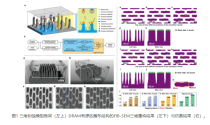
As DRAM manufacturing processes continue to shrink, controlling the etching morphology of the active region fin structure has become a key bottleneck for improving yield. The industry has widely observed the wiggling AA effect, where non-uniform sidewalls and bending distortion appear in the fin structure, severely reducing capacitance efficiency and device reliability. However, its physical root cause has long been unclear, lacking systematic characterization and mechanistic models, making it difficult to precisely control the etching process.
To address the aforementioned challenges, Researcher Rui Chen from the EDA Center of the Institute of Microelectronics, Chinese Academy of Sciences, in collaboration with Senior Engineer Junjie Li and Senior Engineer Jing Wen from the Pilot Center, and Professor Lado Filipovic from the Vienna University of Technology, innovatively integrated focused ion beam scanning electron microscopy (FIB-SEM) three-dimensional reconstruction technology with etching process models. By combining simulations and experiments of the etching process under different process conditions, they revealed the core mechanism and regulation mechanism of the wiggling AA effect.
The research findings were recently published in Communications Engineering, a sub-journal of Nature's engineering field, entitled "3D reconstruction and etching profile simulation for wiggling active area effect in dynamic random access memory manufacturing." Ziyi Hu, a doctoral student at the Institute of Microelectronics, is the first author of the paper, and Rui Chen, a researcher at the Institute of Microelectronics, Junjie Li, a senior engineer, and Professor Lado Filipovic of the Vienna University of Technology are the co-corresponding authors. This research was supported by the National Key Research and Development Program of China (Young Scientists Program), the National Natural Science Foundation of China (General Program), and the International Partnership Program of the Chinese Academy of Sciences.


1776877864972.png

Please, Log in or Register to view URLs content!
 

tokenanalyst

Lieutenant General
Registered Member

Numerical investigation of tin contaminant transport induced by opposed hydrogen jets in a low-pressure confined chamber​

Abstract​

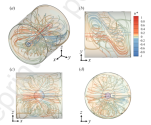
Tin debris contamination remains a significant impediment to the operational longevity of collector mirrors in extreme ultraviolet (EUV) lithography sources. This study presents a high-fidelity numerical analysis of tin contaminant transport in a low-pressure confined environment regulated by three-dimensional opposed hydrogen jets. Using a Reynolds-averaged Navier–Stokes framework coupled with a species transport model, we evaluate the synergistic effects of jet momentum, outlet topology, and flow asymmetry in seeking tin debris removal efficiency. Results identify jet velocity as the primary determinant of contaminant removal efficiency. In the low-momentum regime, the removal rate scales almost linearly with velocity; however, once a high-momentum threshold is surpassed, the marginal gain tapers off. Although elevated velocities enhance the uniformity of contaminants on the mirror surface, the induced secondary vortices slightly compromise global chamber homogeneity. Notably, the annular outlet—by providing a continuous radial pressure-relief path—yields markedly superior scavenging performance relative to conventional discrete orifice configurations. Furthermore, implementing a left-dominant momentum bias achieves targeted contaminant suppression without sacrificing distribution uniformity. This work elucidates the fundamental fluid-dynamic mechanisms governing debris mitigation and establishes actionable design reference for next-generation high-power EUV source modules.​

1776892146431.png

Please, Log in or Register to view URLs content!
 

tokenanalyst

Lieutenant General
Registered Member

Research on PPB-Level Ultra-Low Linear Expansion Coefficient Measurement Based on Fizeau Interference and Dynamic Refractive Index Compensation​

Abstract​

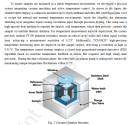
As extreme ultraviolet (EUV) lithography enters the sub-nanometer precision era, the demand for characterizing ultra-low expansion materials has reached the 10-9 (PPB) level. At this resolution, even minute airflow disturbances or transient temperature gradients become dominant noise sources. To mitigate these effects, this study employs a high-vacuum thermal control chamber to maintain pressure below 100Pa and limits temperature fluctuations to within 0.1℃. We further enhanced the Fizeau interferometry system by developing a dynamic compensation model based on optical path drift. The model captures real-time atmospheric pressure and thermal field conditions via a sensor array in a vacuum chamber. And after integrating Ciddor's semi-empirical air refractive index formula, we precisely invert the optical path length change caused by residual air. Experimental results show that this compensation model significantly improves isothermal phase repeatability to 0.3nm. Based on this precision compensation system, we measured a microcrystalline sample over a 5-50℃ range, obtaining a CTE of 4.72*10-9/℃. Following the integrated evaluation, the system's expanded uncertainty was significantly reduced to 1.01*10-9. This achievement enables reliable characterization of ultra-low CTE materials at the PPB level, significantly enhancing the system's ability to suppress interference from complex thermal vacuum environments. This provides high-precision metrology support for material selection and validation in the next generation of high-end semiconductor lithography equipment.​

1776892308195.png
Please, Log in or Register to view URLs content!
 
Top