Since its founding, Xinhuazhang has been a pioneer in digital verification within the electronic design automation (EDA) ecosystem, focusing on agile, platform-based, intelligent, and cloud-native solutions. With over 200 patent applications and more than a dozen commercial-grade products, the company offers end-to-end EDA tools tailored for chip-to-system verification. In response to global semiconductor shifts particularly the push toward domestic self-reliance and fueled by rapid advancements in artificial intelligence, Xinhuazhang has strategically prioritized system-level verification for high-performance AI chips, high-performance computing (HPC), and advanced RISC-V architectures. This focus positions the company as a key enabler of China’s independent, secure, and scalable semiconductor design ecosystem.
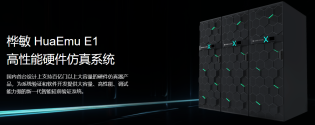
The year 2025 marked Xinhuazhang's "Year of Technology Implementation and Market Acceleration," driven by strong demand for domestic EDA solutions amid global supply chain restructuring. The company achieved nearly 50% revenue growth, expanded its customer base significantly, and shipped over 100 hardware emulators nearly 40 deployed in large-scale cascaded configurations to verify ultra-large AI chips.
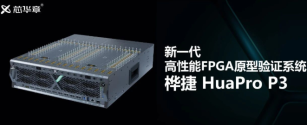
Its formal verification tools surpassed international benchmarks in performance for intelligent computing chip verification, closing a critical gap in high-end EDA capabilities.
These achievements were powered by a “scenario-driven innovation” strategy that embedded deep collaboration with industry leaders like Phytium and ZTE Microelectronics delivering breakthrough efficiency gains such as ninefold increases in operator proofs without additional manpower..
.
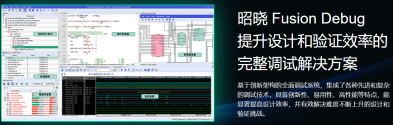
Xinhuazhang embraced EDA 2.0 a paradigm shift from “following” global standards to “leading” technological innovation. The company implemented three core pillars:
automation & intelligence, leveraging AI to transform verification from a manual task into an autonomous process (e.g., SVAEval reduced debugging time from days to hours);
openness & standardization, opening APIs and supporting domestic server architectures to enable seamless integration with open-source projects like the “Xiangshan” processor; and
platformization & service orientation, advancing its EDaaS model via the upgraded FusionFlex cloud platform, which now manages not just CPUs and emulators but also AI-capable GPUs. This allowed customers to access scalable verification power on demand, dramatically lowering entry barriers.
The company has harnessed generative AI to democratize high-end formal verification enabling junior engineers to master complex tasks in days rather than months via tools like GalaxEC-HEC and RV-APP. Its LLM-powered SVA generation tool, co-developed with ZTE Microelectronics, boosted development efficiency by 40%. The launch of ChatDV a large language model for digital verification further strengthens supply chain security. At the architectural level, GalaxFV’s AI-driven scheduling system intelligently optimizes massive verification tasks, outperforming traditional tools in throughput and scalability.
Driving Growth Through Ecosystem Synergy and Strategic Leadership
Looking ahead to 2026, Xinhuazhang has set a bold target of over 50% growth by accelerating the commercialization of AI-native solutions and deepening ecosystem collaboration. The company aims to expand beyond digital verification into backend design and IP integration, creating comprehensive ecosystems with partners across HPC, autonomous driving, and AI chip markets. It will further strengthen supply chain security through mutual verification initiatives and its “inclusive benefit for startups” program making mass-production-grade emulators freely available to accelerate innovation.