
You are using an out of date browser. It may not display this or other websites correctly.
You should upgrade or use an alternative browser.
You should upgrade or use an alternative browser.
Chinese semiconductor thread II
- Thread starter vincent
- Start date
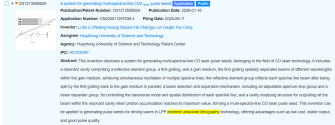
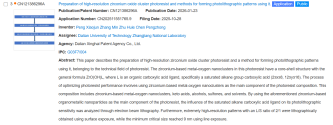
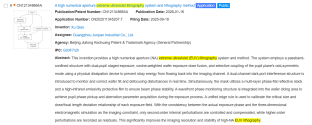
Guoxin Technology's RAID series products have achieved mass production and shipment in multiple fields, accelerating the localization of disk array storage.
Guoxin Technology has achieved a major breakthrough in China’s storage technology sector by achieving mass production and widespread deployment of its domestically developed RAID controller chips and RAID cards. Leveraging its in-house C8000 processor core, the company launched the CCRD3316 for enterprise servers and the CCRD3304 for industrial and edge computing environments — both offering full RAID 0/1/5/6/10/50/60/JBOD support, PCIe 3.0 and SATA 3.0 interfaces, and power-loss protection. These chips directly replace leading foreign products like LSI 3308/3316 and Marvell 88SE9230, marking a pivotal step toward reducing reliance on Western storage controllers and enabling true technological self-reliance.
The company’s entire RAID card production chain — from chip design and firmware development to hardware manufacturing — is now fully domestic, ensuring supply chain security and compliance with national industrial policies. Products such as the CCUSR8216, CCUSR8016, CCUSR6004, and CCUSR6304 are engineered for real-world demands: wide temperature tolerance (-25°C to 85°C), ultra-low power consumption (3–5W), and multi-level data protection mechanisms. Their compatibility with leading Chinese platforms — including Phytium, Loongson, Kylin, and UOS — along with native support for domestic BMC and BIOS systems, demonstrates a strategic shift from isolated component breakthroughs to integrated, ecosystem-wide solutions.
Guoxin’s RAID solutions are already delivering tangible value across critical infrastructure sectors. In 5G base stations, RAID1 mirroring ensures uninterrupted 24/7 operation by automatically switching to a backup disk upon failure, drastically reducing maintenance needs. In industrial and edge environments, their ruggedized cards withstand vibration and extreme temperatures, enabling reliable data collection and control. For video surveillance NVRs used in public safety and finance, the products provide scalable, high-capacity storage with hardware-level redundancy to prevent costly data loss. Meanwhile, in enterprise storage servers, they unlock full disk performance while ensuring data integrity for high-IOPS and archival workloads.
Looking ahead, Guoxin’s success aligns with China’s national digital sovereignty agenda, including the “Three-Year Action Plan for IT Innovation (2025–2027)” and mandatory domestic procurement policies. Beyond RAID, the company has built a broader portfolio of secure peripherals — such as Trusted Computing Modules (TCM) and PCI-E cryptographic cards — establishing itself as a foundational pillar in China’s secure computing ecosystem. By transitioning from “usable” to “preferred” in mission-critical applications, Guoxin is not only advancing storage technology but also laying the groundwork for a fully independent, resilient, and future-proof national information infrastructure.
Semiconductor equipment company Leuven Instruments launches A-share IPO
On January 22, the China Securities Regulatory Commission (CSRC) website disclosed that Luwen Instruments, a semiconductor equipment company based in Pizhou, Jiangsu Province, had completed its listing guidance filing with the Jiangsu Securities Regulatory Bureau.
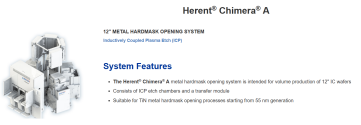
According to its official website, Leuven Instruments is committed to providing advanced equipment and process solutions for the integrated circuit manufacturing industry. For key process passes in fields such as logic, memory, power devices, optics, and microdisplays, it has developed industry-leading ion beam shaping equipment (IBS) and ion beam deposition equipment (IBD). It also provides wafer manufacturing and testing equipment such as inductively coupled plasma etching equipment (ICP), thin film deposition equipment (CVD), and vapor phase decomposition metal contamination collection equipment (VPD).
As of 2022, Leuven Instruments had completed nine rounds of financing, the latest being the E+ round in 2022. Shareholders include Leuven Instruments (holding 19.82%, the controlling shareholder). Additionally, the Institute of Microelectronics of the Chinese Academy of Sciences is also a shareholder of Leuven Instruments, holding 2.98% of the shares.
According to its official website, Leuven Instruments is committed to providing advanced equipment and process solutions for the integrated circuit manufacturing industry. For key process passes in fields such as logic, memory, power devices, optics, and microdisplays, it has developed industry-leading ion beam shaping equipment (IBS) and ion beam deposition equipment (IBD). It also provides wafer manufacturing and testing equipment such as inductively coupled plasma etching equipment (ICP), thin film deposition equipment (CVD), and vapor phase decomposition metal contamination collection equipment (VPD).
As of 2022, Leuven Instruments had completed nine rounds of financing, the latest being the E+ round in 2022. Shareholders include Leuven Instruments (holding 19.82%, the controlling shareholder). Additionally, the Institute of Microelectronics of the Chinese Academy of Sciences is also a shareholder of Leuven Instruments, holding 2.98% of the shares.
Shengmei Shanghai (ACM Shanghai) Aims for Global Leadership in Semiconductor Equipment
Shengmei Shanghai (688082.SH), led by founder Wang Hui, is on track to become a global powerhouse in semiconductor equipment, projecting RMB 8.2–8.8 billion in revenue for 2026, up from an estimated RMB 6.68–6.88 billion in 2025 a year-over-year growth of 19–22%. This follows explosive growth from just RMB 254 million in revenue in 2017.
Focusing on the critical but overlooked semiconductor cleaning equipment market then monopolized by U.S. and Japanese firms Wang’s team pioneered breakthrough technologies like SAPS and TEBO megasonic cleaning, and later Tahoe high-temperature sulfuric acid cleaning, capturing over 8% global market share (4th globally per Gartner) and breaking into key markets like South Korea and Japan.
Shengmei Shanghai became the first Chinese semiconductor equipment maker to secure mass production orders from SK Hynix (2011) and is now expanding into electroplating, coating, and developing equipment new growth engines. The company is dual-listed on Nasdaq (2017) and China’s STAR Market (2021).
In 2025, R&D spending reached RMB 688 million (13.4% of revenue), and Wang Hui announced a bold RMB 5 billion R&D investment over the next three years to achieve full technological independence and compete globally not just replace imports, but lead the world.
With strong order pipelines, expanding global customer base (including clients in Europe and Asia), and a disciplined “strong before large” strategy, Shengmei Shanghai is positioning itself as China’s most technologically advanced and globally competitive semiconductor equipment manufacturer.
Advanced Micro-Fabrication Equipment Inc. (AMEC) reported outstanding results in 2025, with a significant increase in revenue from etching equipment.
On the evening of January 23, AMEC released its 2025 earnings forecast. According to preliminary calculations by the finance department, the company expects its 2025 revenue to be approximately RMB 12.385 billion, representing a year-on-year increase of 36.62%. Of this, sales of etching equipment are expected to reach approximately RMB 9.832 billion, a year-on-year increase of 35.12%; revenue from semiconductor thin-film equipment such as LPCVD and ALD will reach RMB 506 million, a year-on-year increase of 224.23%.
Net profit attributable to owners of the parent company is expected to be between RMB 2.08 billion and RMB 2.18 billion, representing a year-on-year increase of 28.74% to 34.93%. Net profit excluding non-recurring gains and losses is expected to be between RMB 1.5 billion and RMB 1.6 billion, representing a year-on-year increase of 8.06% to 15.26%.
AMEC stated that the main reasons for the revenue growth include the increased recognition of its etching equipment in domestic and international markets, particularly in key etching processes for advanced logic and memory device manufacturing, resulting in a significant increase in new shipments. In addition, several newly developed thin-film equipment models have entered the market, with some receiving repeat orders, and cumulative shipments of LPCVD equipment exceeding 300 reaction stations.
The company's production and R&D bases in Nanchang and Shanghai Lingang are now operational, ensuring rapid sales growth. Simultaneously, the company continues to develop key component suppliers, promoting supply chain stability and maintaining a high equipment delivery rate. R&D investment has increased significantly, reaching approximately RMB 3.736 billion in 2025, accounting for approximately 30.16% of operating revenue.
The main reasons for the increase in net profit attributable to the parent company also include an increase in gross profit of approximately RMB 1.145 billion and an increase in equity investment income of approximately RMB 413 million. The increase in net profit attributable to the parent company after deducting non-recurring items was mainly due to the increase in operating revenue and gross profit, as well as the increase in R&D expenses.
Net profit attributable to owners of the parent company is expected to be between RMB 2.08 billion and RMB 2.18 billion, representing a year-on-year increase of 28.74% to 34.93%. Net profit excluding non-recurring gains and losses is expected to be between RMB 1.5 billion and RMB 1.6 billion, representing a year-on-year increase of 8.06% to 15.26%.
AMEC stated that the main reasons for the revenue growth include the increased recognition of its etching equipment in domestic and international markets, particularly in key etching processes for advanced logic and memory device manufacturing, resulting in a significant increase in new shipments. In addition, several newly developed thin-film equipment models have entered the market, with some receiving repeat orders, and cumulative shipments of LPCVD equipment exceeding 300 reaction stations.
The company's production and R&D bases in Nanchang and Shanghai Lingang are now operational, ensuring rapid sales growth. Simultaneously, the company continues to develop key component suppliers, promoting supply chain stability and maintaining a high equipment delivery rate. R&D investment has increased significantly, reaching approximately RMB 3.736 billion in 2025, accounting for approximately 30.16% of operating revenue.
The main reasons for the increase in net profit attributable to the parent company also include an increase in gross profit of approximately RMB 1.145 billion and an increase in equity investment income of approximately RMB 413 million. The increase in net profit attributable to the parent company after deducting non-recurring items was mainly due to the increase in operating revenue and gross profit, as well as the increase in R&D expenses.

Silan and UNT are both growing their SiC/Power semi business considerably and 2025 recorded much higher revenues here.
About H200 approvals. Bloomberg reported earlier that the govt asked companies to apply for license. New article from Reuters with more information, but still citing anonymous sources, not an official announcement.
China gives nod to ByteDance, Alibaba and Tencent to buy Nvidia's H200 chips - sources
Jan 28 (Reuters) - China has given the green light to three of its largest tech companies to buy Nvidia's H200 artificial intelligence chips, four people familiar with the matter told Reuters, marking a shift in position as Beijing seeks to balance its AI needs against spurring domestic development.
ByteDance, Alibaba and Tencent have been approved to purchase more than 400,000 H200 chips in total, with other firms now joining a queue for subsequent approvals, the sources said, speaking on condition of anonymity.
The Chinese government is only granting approvals with conditions and the sources said they were still being decided upon.
A fifth source said that the licenses were too restrictive and customers were not yet converting the approvals to purchase orders.
China's industry and commerce ministries as well as Nvidia had not yet responded to requests for comment at the time of publication. ByteDance, Alibaba, and Tencent had not responded either.
Iluvatar CoreX targets Nvidia’s Rubin with GPU road map amid China chip push
Chinese chip designer Shanghai Iluvatar CoreX Semiconductor has unveiled a multi-year graphics processing unit (GPU) architecture road map, aiming to surpass Nvidia’s next-generation Rubin platform within two years
The company said its Tianshu architecture had outperformed Nvidia’s Hopper platform last year, while a second architecture, Tianxuan, would be built to benchmark against the US firm’s Blackwell platform. A third, Tianji, was designed to overtake Blackwell in 2026, while a fourth, Tianquan, was projected to surpass Rubin by 2027, after which Iluvatar CoreX planned to move towards what it described as a “breakthrough” architectural design.
The company highlighted efficiency gains from Tianshu, claiming more than 90 per cent effective utilisation of computing power. Innovations included features that reduce redundant memory access to boost effective bandwidth and cut power use, and ease resource contention through dynamic task allocation. It said Tianshu delivered about 20 per cent higher average performance than Hopper on DeepSeek’s V3 model.
Iluvatar CoreX also unveiled four products under its Tongyang, or TY, series for edge computing, covering performance from 100 tera-operations per second to 300 tera-operations per second. The company said its TY1000 outperformed Nvidia’s AGX Orin in various testing scenarios.
Founded in 2015, Iluvatar CoreX launched its first general-purpose GPU – TG Gen1 – which it described as China’s first domestically mass-produced GPU for AI training. A second generation followed in 2023, with TG Gen3 scheduled for mass production in 2026. A separate inference-focused product line, the ZK series, was launched in 2022.
Iluvatar CoreX listed in Hong Kong on January 8 – following peers including Moore Threads Technology and MetaX Integrated Circuit, which listed in Shanghai, and Shanghai Biren Intelligent Technology, which listed in Hong Kong – amid strong capital interest in Chinese chipmakers. Centurium Capital was a key external shareholder, holding nearly 23 per cent of the company before the IPO.
Iluvatar CoreX’s shares closed at HK$182 on Tuesday, giving the company a market capitalisation of HK$46.3 billion (US$6 billion), compared with Moore Threads at 284.6 billion yuan (US$40 billion), MetaX at 229 billion yuan, and Biren at HK$83 billion.
According to its prospectus, Iluvatar CoreX recorded revenue of 189 million yuan, 289 million yuan and 540 million yuan between 2022 and 2024, with a compound annual growth rate of 68.8 per cent, while net losses widened from 554 million yuan to 892 million yuan over the period.
In the first half of 2025, revenue reached 324 million yuan, with a net loss of 609 million yuan. The company said it had delivered more than 52,000 general-purpose GPUs by June 2025.