Chinese semiconductor thread II

tphuang

General
Staff member
Super Moderator
VIP Professional
Registered Member
Please, Log in or Register to view URLs content!

Very interesting diagram here of how to get a 4H-SiC/Diamond substrate and then apply GaN epitaxy & device fabrication on top. Notice how much better the power dissipation is with SiC/Diamond composite substrate vs SiC substrate.

This is great stuff for GaN HEMT devices.

This is conducted by CAS IME & 南京电子器件研究所/CETC 55th Institute
 
Last edited:

tphuang

General
Staff member
Super Moderator
VIP Professional
Registered Member
Please, Log in or Register to view URLs content!

Anlogic announces joint release of domestic chip integrating with post quantum Cryptography. Cyber IP domestic FPGA using 22nm process. It supports all functions of key generation, key encapsulation, and decapsulation under all three security levels.
 

tokenanalyst

Lieutenant General
Registered Member

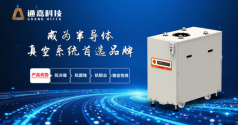
Tongjia Technology Breaks Through Key Links in High-End Manufacturing with its Core Vacuum Pump Technology​


Beijing Tongjia Hongrui Technology Co., Ltd. (Tongjia Technology), established in 2012, has made significant breakthroughs in high-end manufacturing by mastering core vacuum pump technology, a critical component in semiconductor, display panel, photovoltaic, and lithium battery industries. The company specializes in developing energy-efficient, environmentally friendly, and cost-effective dry vacuum pumps and precision components, achieving independent control over key technologies previously dominated by foreign firms.

With strategic partnerships with major industry leaders including SMIC, BOE, CSOT, Yangtze Memory Technologies, Changxin Memory, and JA Solar, Tongjia Technology has earned acclaim for its reliability, rapid service response, and technical support. Operating across four production bases in Beijing, Hebei, Zhejiang, and Shanghai with over 60,000 square meters of manufacturing space the company ensures nationwide supply chain coverage and fast customer responsiveness.

1764962708296.png

Tongjia Technology is now a finalist for the prestigious "IC Industry Leaderboard" Annual Leading Enterprise Award, recognizing its role in overcoming international monopolies and solving critical bottlenecks in semiconductor vacuum systems. Its products are widely used in chip etching and thin-film processes, contributing to stable manufacturing operations. In display panels and photovoltaics, it has achieved market leadership with over 50% share, securing large-scale orders from top-tier manufacturers.

Through continuous innovation and market expansion, Tongjia Technology is a key driver in China’s push for self-reliance in high-end semiconductor equipment, marking a major step forward in industrial chain upgrading.

Please, Log in or Register to view URLs content!
 

tokenanalyst

Lieutenant General
Registered Member

Chillers for Cryogenic Ultra High Aspect Ratio Etching.​


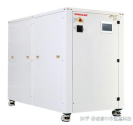
Zhongleng Cryogenics independently developed the ZU35 cryogenic etch Chiller, primarily used for precise temperature control of process equipment in semiconductor (FAB) and FPD display manufacturing processes, such as temperature control of etching/thin film/coating/developing equipment (e.g., LAM, AMAT, TEL, NAURA, Naura, Aixtron, Veeco, AMEC, etc.). The cryogenic etch Chiller mainly consists of a liquid pump, heat exchanger, liquid receiver, refrigeration compressor, and control system for temperature control during the process.

1764964116461.png

Key technical specifications: The ZU35 temperature controller can achieve a wide temperature range of -80°C to +40°C and maintain an extremely high temperature accuracy of ±0.1°C, which provides a stable low-temperature environment for the low-temperature etching processes of equipment manufacturers such as Lam Research and Tokyo Electron (TEL).

Key application scenarios: It is mainly used in the semiconductor and display panel manufacturing process to provide precise temperature control for core process equipment such as etching, thin film deposition, coating and developing, and is a key infrastructure to ensure production yield and equipment performance.

Technical advantages: By adopting advanced fuzzy control, energy-saving frequency conversion and ultra-low temperature refrigeration technology, it is not only accurate and reliable in temperature control, but also significantly reduces equipment energy consumption, which is in line with the development trend of green manufacturing in the semiconductor industry.

These advanced basic process equipment together form the cornerstone of advanced semiconductor manufacturing capabilities, driving the continuous evolution from 3D NAND to the entire computing ecosystem.

 

tokenanalyst

Lieutenant General
Registered Member

Tongjia Technology Breaks Through Key Links in High-End Manufacturing with its Core Vacuum Pump Technology​


Beijing Tongjia Hongrui Technology Co., Ltd. (Tongjia Technology), established in 2012, has made significant breakthroughs in high-end manufacturing by mastering core vacuum pump technology, a critical component in semiconductor, display panel, photovoltaic, and lithium battery industries. The company specializes in developing energy-efficient, environmentally friendly, and cost-effective dry vacuum pumps and precision components, achieving independent control over key technologies previously dominated by foreign firms.

With strategic partnerships with major industry leaders including SMIC, BOE, CSOT, Yangtze Memory Technologies, Changxin Memory, and JA Solar, Tongjia Technology has earned acclaim for its reliability, rapid service response, and technical support. Operating across four production bases in Beijing, Hebei, Zhejiang, and Shanghai with over 60,000 square meters of manufacturing space the company ensures nationwide supply chain coverage and fast customer responsiveness.

View attachment 165798

Tongjia Technology is now a finalist for the prestigious "IC Industry Leaderboard" Annual Leading Enterprise Award, recognizing its role in overcoming international monopolies and solving critical bottlenecks in semiconductor vacuum systems. Its products are widely used in chip etching and thin-film processes, contributing to stable manufacturing operations. In display panels and photovoltaics, it has achieved market leadership with over 50% share, securing large-scale orders from top-tier manufacturers.

Through continuous innovation and market expansion, Tongjia Technology is a key driver in China’s push for self-reliance in high-end semiconductor equipment, marking a major step forward in industrial chain upgrading.

Please, Log in or Register to view URLs content!

Chillers for Cryogenic Ultra High Aspect Ratio Etching.

Zhongleng Cryogenics independently developed the ZU35 cryogenic etch Chiller, primarily used for precise temperature control of process equipment in semiconductor (FAB) and FPD display manufacturing processes, such as temperature control of etching/thin film/coating/developing equipment (e.g., LAM, AMAT, TEL, NAURA, Naura, Aixtron, Veeco, AMEC, etc.). The cryogenic etch Chiller mainly consists of a liquid pump, heat exchanger, liquid receiver, refrigeration compressor, and control system for temperature control during the process.

View attachment 165799

Key technical specifications: The ZU35 temperature controller can achieve a wide temperature range of -80°C to +40°C and maintain an extremely high temperature accuracy of ±0.1°C, which provides a stable low-temperature environment for the low-temperature etching processes of equipment manufacturers such as Lam Research and Tokyo Electron (TEL).

Key application scenarios: It is mainly used in the semiconductor and display panel manufacturing process to provide precise temperature control for core process equipment such as etching, thin film deposition, coating and developing, and is a key infrastructure to ensure production yield and equipment performance.

Technical advantages: By adopting advanced fuzzy control, energy-saving frequency conversion and ultra-low temperature refrigeration technology, it is not only accurate and reliable in temperature control, but also significantly reduces equipment energy consumption, which is in line with the development trend of green manufacturing in the semiconductor industry.

These advanced basic process equipment together form the cornerstone of advanced semiconductor manufacturing capabilities, driving the continuous evolution from 3D NAND to the entire computing ecosystem.
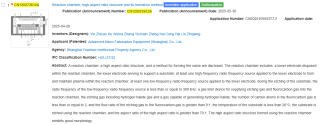
More information about these cryo chillers being used in UHAR etching solutions. Looks like AMEC already develop their own high end cryo etching solution, this patent describe a etching chamber were the temperatures can go as low as -130C, allowing aspect ratio above 90, as they described in their business meeting.

"In the CCP (Chemical Electrode Processing) sector, the company's single-stage dielectric etching products for key etching processes maintained rapid growth. The 60:1 ultra-high aspect ratio dielectric etching equipment has become the standard equipment in China, with mass production indicators steadily improving. The next-generation 90:1 ultra-high aspect ratio dielectric etching equipment is about to enter the market. In the ICP (Inductively Coupled Petroleum Processing) sector, significant progress has been made in the development of ICP etching equipment and chemical vapor deposition (CVD) equipment suitable for next-generation logic and memory customers. Processing precision and repeatability have reached the single-atom level."

That will put them close to LAM level, don't think LAM will be happy about this. They will try to fight a another legal battle with the company, but wait, LAM is NOT allow by the US government to sell Cryo-3 etching machines in China.

1764968998086.png
1764969546725.png
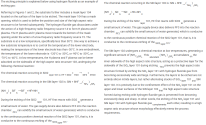
The research AMEC is this area has been active since 2020 and looks like is not stopping, looks like they are putting a lot of resources in the UHAR etching using very low temperatures. And given the timeframe is not surprising that they have made advances.

1764972049474.png

All of this couple with the fact that AMEC launched this year their second version of their temperature control system for their etching machines, the DURGA-II, according them the system allow feedback data from Lithography and Metrology tools for better etching profiles.​


1764970339966.png
 

tokenanalyst

Lieutenant General
Registered Member

AMEC is now expending 31% of their revenue on R&D, an increase of 63% yearly. Cover 6 types equipment and 20 new products.​


Increased R&D investment drove accelerated innovation, and the platform strategy was implemented more quickly. The company adhered to a high-intensity R&D strategy, with R&D expenditure reaching approximately RMB 2.5 billion in the first three quarters, a significant increase of 63% year-on-year, accounting for 31% of revenue. The company's R&D efficiency improved significantly, and the development cycle for new equipment has been significantly shortened to less than two years. Currently, the company's R&D projects cover 6 types of equipment and over 20 new products. With the increasing delivery of high-end products in advanced logic and storage key processes, the company is accelerating its transformation into a platform-based equipment company.​
 

tokenanalyst

Lieutenant General
Registered Member

NAURA R&D expenditure increased by 48% yearly.​


Benefiting from the growth in domestic integrated circuit equipment market demand and the steady increase in market share driven by efficient R&D, the company's third-quarter performance grew rapidly. The company adhered to a high-intensity R&D strategy, with R&D expenses of approximately RMB 3.3 billion in the first three quarters, an increase of 48% year-on-year. Continuous technological investment effectively improved process coverage, laying a solid foundation for the company's long-term high-quality development.
 

sunnymaxi

Colonel
Registered Member

AMEC is now expending 31% of their revenue on R&D, an increase of 63% yearly. Cover 6 types equipment and 20 new products.​


Increased R&D investment drove accelerated innovation, and the platform strategy was implemented more quickly. The company adhered to a high-intensity R&D strategy, with R&D expenditure reaching approximately RMB 2.5 billion in the first three quarters, a significant increase of 63% year-on-year, accounting for 31% of revenue. The company's R&D efficiency improved significantly, and the development cycle for new equipment has been significantly shortened to less than two years. Currently, the company's R&D projects cover 6 types of equipment and over 20 new products. With the increasing delivery of high-end products in advanced logic and storage key processes, the company is accelerating its transformation into a platform-based equipment company.​

NAURA R&D expenditure increased by 48% yearly.​


Benefiting from the growth in domestic integrated circuit equipment market demand and the steady increase in market share driven by efficient R&D, the company's third-quarter performance grew rapidly. The company adhered to a high-intensity R&D strategy, with R&D expenses of approximately RMB 3.3 billion in the first three quarters, an increase of 48% year-on-year. Continuous technological investment effectively improved process coverage, laying a solid foundation for the company's long-term high-quality development.
Piotech and ACM Shanghai have remarkable growth too.. all small/medium sized SME firms too have record earing this year.. i m yet to count SiCarrier. their biggest Shanghai plant will complete in Q1,2026. then they will start selling high end equipment as per their own statement.

all domestic SME firms gradually entering in high end category and mostly have new production plants under construction. which will further boost revenue.

i believe, 2027 will be bloodbath for all foreign tools companies.
 

tokenanalyst

Lieutenant General
Registered Member
I think is almost sure that the current memory crisis is an artificially manufactured crisis between the monopolistic Korean and US memory makers because they are greedy and the US AI labs like Anthropic and OpenAI to stifled the adoption of local AI models, basically forcing everyone to use cloud computing to use AI models.

The problem arise because memory is a commodity that is used in almost everything from TVs, cars, radios, measurement equipment, storage, laptops, tablets, smart watches, even refrigerators. Almost every modern electronics use memory either for compute, DRAM or for long term storage, NAND. This a significant threat to China electronics and IT industry if higher prices lower demand or consumers, like most are doing, delay buying until prices get lower.

I think the Chinese government along other governments like Europeans are going to probably launch an price fixing and artificial scarcity (hoarding) investigation against these companies, I pretty sure know that the US government is going to do nothing.

This crisis will probably also force the Chinese government hand to accelerate the construction of memory fabrication facilities and increase the numbers planned of 2026-2027 fabs projects. This also will put pressure of Equipment Manufacturers like Naura, AMEC, SiCarrier, Piotech and others to accelerate their equipment manufacturing expansions and accelerate their R&D so their tools can be moved from the pilot line to the fab as soon as possible.
 
Top