Chinese semiconductor thread II

tokenanalyst

Lieutenant General
Registered Member

Guangli Microelectronics strategic Layout for "Optoelectronic Integration"​


With AI computing centers driving explosive demand for high-bandwidth, low-power interconnects, silicon photonics technology has rapidly evolved from pluggable optical modules to co-packaged optics (CPO) and optical interconnect (OIO) architectures. However, Guangli Microelectronics identifies two critical industry pain points: an immature ecosystem with disconnected design, manufacturing, and testing processes, and the separation of optical and electrical chip design that prevents collaborative optimization. These challenges lead to multiple iterations, increased costs, and project delays.

To address these issues, Guangli Microelectronics has strategically acquired LUCEDA, positioning itself in the silicon photonics design automation (PDA) sector. The company is also planning to acquire full ownership of its subsidiary Yiruixin to complete its EDA full-chain layout. This strategic move aims to build a new "design-manufacturing-testing-data" foundation, introducing light, electricity, and heat into optoelectronic system-level design to meet CPO scenario challenges.

Guangli Microelectronics' strengths in silicon photonics are reflected in three key areas. First, LUCEDA brings first-mover advantage and advanced technology, offering full-process automation from device design to layout generation while supporting multiple material systems including silicon photonics, silicon nitride, indium phosphide, and thin-film lithium niobate. Second, the integration of LUCEDA and Guangli Micro enables seamless collaboration across the entire process, connecting design tools, wafer-level testing, and yield data analysis to form a closed "design-manufacturing-testing" loop that shortens tape-out iteration cycles. Third, the company has created a unique barrier through software-hardware integration, developing both optimized software tools and specialized silicon photonics testing equipment.

Responding to AI-driven transformation in EDA tools, Guangli Microelectronics has established AI technology integration as a core strategy, launching AI-native tools including the INF-AI semiconductor machine learning platform, DE-iCASE intelligent diagnostic system, SemiMind semiconductor large-scale model platform, and SemiClaw digital employee platform. These tools comprehensively empower yield improvement and defect tracing across manufacturing scenarios.


This strategic approach has delivered remarkable results: the company achieved revenue of 735 million yuan in 2025, up 34.40% year-on-year, with software development and licensing revenue surging 75.13%. Net profit reached 88.688 million yuan, up 10.49%. The company has successfully built a three-in-one closed loop of "EDA software + testing equipment + big data analysis," with platforms like DE-G and DE-YMS deeply integrated with testing equipment and AI models empowering yield optimization across the entire design-manufacturing-testing chain.​

Please, Log in or Register to view URLs content!
 

tphuang

General
Staff member
Super Moderator
VIP Professional
Registered Member
Please, Log in or Register to view URLs content!

中晶科技 says it has robust backlog of orders for silicon ingot. focus is on semi power chips and devices.

Please, Log in or Register to view URLs content!

Lion micro says order for 12-inch heavily doped Silicon wafers is robust and delivery delay has began to emerge.

it is extending into light doped higher end 12-inch product including 28nm logic, BCD tech & PMIC.

it currently has a project for 1.8m wafers per year of 12-inch heavily doped substrate and 1.8m wafers per year of 12-inch epitaxy.
 

tokenanalyst

Lieutenant General
Registered Member

Jingrui Electronics, a company in which Mindray Electronics holds a stake, has achieved small-batch supply of silicon carbide epitaxial wafers.​


On May 19, Mindray Electronics stated on its investor interaction platform that its investee company, Crystal Electronics, has already supplied silicon carbide (SiC) epitaxial wafers in small batches, but the quantity and amount involved are very small, and investors are reminded to pay attention to investment risks.
1779202936349.png

Silicon carbide epitaxial wafers are a key basic material for manufacturing third-generation semiconductor power devices, widely used in new energy vehicles, photovoltaic energy storage, data centers, and industrial control. Mindray Electronics, through its stake in Jingrui Electronics, has positioned itself in the upstream materials segment of the silicon carbide industry chain. The company is committed to building a "smart IDM" ecosystem for power semiconductors, and has already covered core links from wafer raw materials and wafer foundry to chip design through capital ties. Previously, in August and November 2025, the company disclosed that Jingrui Electronics had begun small-batch shipments of its 6-inch silicon carbide epitaxial wafers.

According to industry data, the global silicon carbide epitaxial wafer market size is projected to reach approximately US$1.534 billion in 2025. The Chinese market is growing rapidly, with a market size of approximately RMB 1.7 billion in 2023, and is currently iterating from 6-inch to 8-inch technology. Currently, the domestic silicon carbide epitaxial wafer market exhibits a "one dominant player and many strong competitors" pattern, with Hanteng Technology and Dongguan Tianyu together accounting for over 70% of the market share. Jingrui Electronics, as a new entrant, has achieved small-batch supply, marking its first step towards industrialization in a highly competitive market.

Please, Log in or Register to view URLs content!
 

tokenanalyst

Lieutenant General
Registered Member

Yangtze Memory Technologies Co., Ltd. Initiates IPO Preparations: CITIC Securities and CITIC Construction Investment Provide Support​

the China Securities Regulatory Commission (CSRC) disclosed that Yangtze Memory Technologies Co., Ltd. (YMTC) has completed its initial public offering (IPO) and listing guidance filing, officially signaling its entry into the capital market. The guidance was jointly provided by CITIC Securities and CITIC Construction Investment Securities, marking a crucial stage in the capitalization process of this leading domestic memory chip company.
Yangtze Memory Technologies Co., Ltd. (YMTC) is the only 3D NAND flash memory IDM (Integrated Device Manufacturer) in mainland China and a second-tier global player. Founded in Wuhan Optics Valley in July 2016, YMTC focuses on the R&D, production, and sales of 3D NAND flash memory chips. Leveraging its independently developed Xtacking architecture technology, the company has broken the overseas monopoly, achieving stable mass production of 232-layer processes and breakthroughs in 294-layer equivalent processes. Its products are widely used in core applications such as consumer electronics, servers, and data centers, making it a core force in the substitution of domestically produced memory chips.

Please, Log in or Register to view URLs content!
 

meedicx

Junior Member
Registered Member
When looking into China's semi industry. We need to also take Chinese sources into consideration. HBM is something worked on by multiple players. Huawei has its own HBM packaging IPs and such, but it's not the only one. I think other players like JCET and Tongfu are also working on their own designs. Theoretically speaking, you don't even need CXMT DRAMs, you can buy them from SK or Samsung. Although in practice, I'm not sure they have enough supply

There was a recent report that YLab made a breakthrough in HBM4-level TSV using 100% domestic equipment
This shows domestic equipment is probably not the bottleneck for HBM. Tools for HBM packaging etch / deposition / CMP have very strong domestic vendors.

Please, Log in or Register to view URLs content!
 

jx191

Junior Member
Registered Member
Please, Log in or Register to view URLs content!
九峰山 lab developing new ALD Mo tech for 8-inch platform.
This is for compound semi material

When looking into China's semi industry. We need to also take Chinese sources into consideration. HBM is something worked on by multiple players. Huawei has its own HBM packaging IPs and such, but it's not the only one. I think other players like JCET and Tongfu are also working on their own designs. Theoretically speaking, you don't even need CXMT DRAMs, you can buy them from SK or Samsung. Although in practice, I'm not sure they have enough supply
I don't doubt that there are other players involved, I'm concerned about whether they can produce enough for any meaningful compute ramp up this year.

With insufficient HBM, I don't see Huawei's planned Atlas/950DT release being significant which is very disappointing.

With the proprietary HBM for Huawei, can they produce enough to mass produce Ascend 950s by 2026 end. That's the question.
 

tokenanalyst

Lieutenant General
Registered Member

Broad-wavelength synchronous monitoring instrument for EUV metrology​

Abstract​

Laser-produced plasma (LPP) sources are widely recognized as promising broadband, high-brightness radiation sources in the extreme ultraviolet (EUV) wavelength range for metrology applications. However, their applications are limited by pulse-to-pulse intensity fluctuations and strong dependence on properties of the target materials, both of which degrade measurement accuracy and reproducibility. Most existing studies have focused on single-wavelength monitoring, providing limited insight into broadband emission characteristics. In this paper, a broadband single-shot monitoring system was established to synchronously acquire emission spectra and intensity fluctuation data from Al, Cu, Mo, and W targets in the 20–34 nm wavelength range. The results revealed clear differences in radiation stability among the target materials. Mo and W exhibited superior emission stability, with relative standard deviations (RSDs) typically below 5%, while Al and Cu showed greater variability, with RSDs of 7–10%. In addition, measurements were conducted on a testing beamline under various laser focusing conditions to identify optimal excitation regimes for each material in this wavelength range, corresponding to power densities of 1–3 × 10¹¹ W/cm2. W exhibited the highest emission intensity and the greatest spectral uniformity, followed by Mo, whereas Cu and Al emitted comparatively weaker radiation. A normalization method based on synchronous monitoring was evaluated for its potential use in reflectivity measurements, confirming effective suppression of source instability and demonstrating considerable potential for high-precision EUV spectral characterization.

Please, Log in or Register to view URLs content!
 

tokenanalyst

Lieutenant General
Registered Member

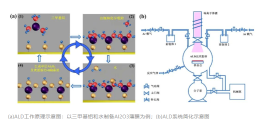
Jiufengshan Laboratory Achieves Breakthrough in 8-inch Atomic Layer Deposition of Molybdenum​


The Jiufengshan Laboratory has successfully developed an Atomic Layer Deposition (ALD) process to produce high-performance metallic molybdenum (Mo) thin films on an 8-inch platform. This is the first such development in China, meeting all requirements for industrial mass production:​
  • New Precursor: Utilizes a stable, fluorine-free precursor (MoCl₂O₂), eliminating reliability risks associated with residual fluorine found in traditional methods.​
  • Low-Temperature Process: Achieves deposition at only 400°C using hydrogen plasma instead of high-temperature processing, preventing substrate damage and reducing energy costs.​
  • Simplified Workflow: Eliminates the need for a molybdenum nitride (MoN) seed layer, allowing direct metal Mo deposition to reduce steps, cycle time, and cost.​
1779209887392.png
System testing revealed that the ALD Mo thin film developed by the Jiufengshan Laboratory's compound semiconductor pilot platform exhibited outstanding performance in five dimensions:
  1. Low Resistivity (~9 μΩ·cm): Significantly lower than traditional processes (>15 μΩ·cm), improving speed and reducing power consumption.​
  2. High Uniformity: Intra-wafer variation is just 2%, ensuring consistency across large wafers.​
  3. Excellent Step Coverage: Perfectly covers complex 3D structures (aspect ratios >12:1), vital for 3D NAND storage and advanced logic.​
  4. High Density & Durability: Creates defect-free films that block impurities and resist corrosion/oxidation.​
  5. Simplified process : No need to prepare MoN seed layer, Mo thin film can be deposited directly, reducing the number of steps, shortening the cycle, and reducing material and equipment costs.​

1779209870426.png

The successful development of this process marks the first time in China that ALD Mo technology has been developed on an 8-inch platform, achieving mass production requirements in key performance indicators. In 3D NAND manufacturing, high step coverage perfectly adapts to vertical channel structures, helping to improve storage capacity and read/write speeds. In 7nm and below logic chips, low resistivity directly leads to lower RC latency, increasing processing speed and reducing power consumption. In DRAM (Dynamic Random Access Memory) manufacturing, high uniformity and dense structures contribute to improved device stability and lifespan.

Please, Log in or Register to view URLs content!
 

tphuang

General
Staff member
Super Moderator
VIP Professional
Registered Member
There was a recent report that YLab made a breakthrough in HBM4-level TSV using 100% domestic equipment
This shows domestic equipment is probably not the bottleneck for HBM. Tools for HBM packaging etch / deposition / CMP have very strong domestic vendors.

Please, Log in or Register to view URLs content!
the issue is not just having domestic equipment but power consumption depending on the DRAM die you use and also the yield. As you add in more layers of DRAMs in the more stacked HBMs, yield comes down exponentially.

I don't doubt that there are other players involved, I'm concerned about whether they can produce enough for any meaningful compute ramp up this year.

With insufficient HBM, I don't see Huawei's planned Atlas/950DT release being significant which is very disappointing.

With the proprietary HBM for Huawei, can they produce enough to mass produce Ascend 950s by 2026 end. That's the question.
you are making a lot of assumptions here without anything to back them up.
 
Top