
You are using an out of date browser. It may not display this or other websites correctly.
You should upgrade or use an alternative browser.
You should upgrade or use an alternative browser.
Chinese semiconductor thread II
- Thread starter vincent
- Start date
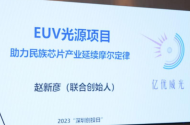

I will lmao if a wire feed is what ends up making LDP viable.
The Wanzhou Semiconductor Device Module Industrialization Project, with an investment of 900 million yuan, is expected to be completed before the Spring Festival.
Chongqing Xianyue Optoelectronic Technology, a subsidiary of Xiandao Group, is advancing its 900-million-yuan semiconductor device module industrialization project in Wanzhou District. Over 90% of civil engineering work is complete at the 29-mu site, with four buildings factory and warehouses totaling 24,000 square meters nearing finish. Construction teams are accelerating outdoor works and electromechanical installations to meet a Spring Festival completion deadline, ensuring readiness for equipment installation and operations in early 2024.
Upon full operation, the facility will produce 50 million laser packages and 25 million modules annually, generating over 1 billion yuan in output, 100 million yuan in tax revenue, and 500 jobs. The company has already begun installing test lines at a neighboring facility to prepare for mass production, leveraging existing infrastructure to expedite readiness.
The project fills a critical packaging gap in Wanzhou’s compound semiconductor supply chain from gallium metal to chips to finished modules supporting high-demand applications in automotive LiDAR, AI, communications, and consumer electronics. Its completion will strengthen regional industrial capabilities and drive growth in emerging and future-oriented industries across the district.
With a total investment of 25.2 billion yuan, the Guangdong Chip Semiconductor 12-inch integrated circuit project (Phase IV) has completed its filing.
According to the WeChat official account "Kan Huangpu", Guangdong Chip Semiconductor Technology Co., Ltd. has completed the filing of the 12-inch integrated circuit mixed-signal specialty process production line project (Phase IV project).
The project, located at No. 26, Phoenix Fifth Road, Jiulong Town, Huangpu District, Guangzhou, has a total investment of 25.2 billion yuan. It has a building area of 210,000 square meters and a land area of 60,000 square meters, with an annual production capacity of 480,000 12-inch wafers. It is scheduled for completion by the end of 2029.
It is worth mentioning that Guangdong Semiconductor Technology Co., Ltd. has recently completed its IPO guidance filing with the Guangdong Securities Regulatory Bureau. The funds raised will be mainly invested in the research and development of specialty processes, the layout of third-generation semiconductors such as silicon carbide, and capacity upgrades, further consolidating its leading position in the field of analog chip foundry.
It is understood that Guangdong Chip focuses on mature 180-40nm processes, specializing in high-voltage and automotive-grade analog chip technologies. Currently, Guangdong Chip has built the region's largest 12-inch chip production platform. Phase I and II projects have achieved a combined monthly production capacity of 80,000 wafers. After Phase III goes into operation, the total capacity will further increase to 120,000 wafers per month, providing core support for key areas such as the Internet of Things, automotive electronics, and industrial control.
China plans to introduce a new policy worth 500 billion yuan to aggressively target equipment, EDA, and AI chips.
China has unveiled a 500 billion yuan ($70 billion) special fund to accelerate semiconductor self-reliance, targeting critical bottlenecks in equipment, EDA tools, and AI chips. Unlike the equity-focused "Big Fund," this initiative emphasizes direct fiscal subsidies, low-interest loans, tax incentives, and specialized financing tools. Key priorities include breaking foreign monopolies in cutting edge semiconductor equipment, high-end photoresists, high end quartz materials and EDA software dominated by Synopsys, Cadence, and Siemens EDA, while advancing AI chips through 3D integration, Chiplet packaging, and HBM memory technologies.
The plan strategically addresses intensifying U.S. and European tech restrictions, such as lithography machine bans and uncertain chip supplies, even as limited exports like Nvidia’s H200 remain technologically behind global leaders. By aligning with the Central Economic Work Conference’s "AI+" agenda, China aims to secure foundational hardware for AI, electric vehicles, and industrial automation, reducing reliance on unstable foreign supply chains. This move signals a shift from short-term market adjustments to long-term systemic resilience, reinforcing national security and industrial sovereignty.
In the short term, the funding will boost R&D capabilities, accelerate prototype validation, and attract private capital to high-risk sectors like semiconductor materials and equipment. Medium-term goals focus on strengthening the entire supply chain encompassing design, manufacturing, and packaging to narrow gaps with international leaders while ensuring stable supply of mature-process chips for domestic demand. Long-term, the initiative seeks to reshape global semiconductor dynamics by establishing China as a self-sufficient hub, reducing dependency on foreign tech, and enabling high-end manufacturing transformation across key industries.
However, challenges persist. Technological iteration cycles are long, and massive investment alone cannot quickly close gaps with advanced rivals. Risks include inefficient fund allocation, stricter sanctions disrupting supply chains, and potential overcapacity if production outpaces market demand. Success will hinge on precise policy execution, avoiding wasteful spending, and navigating geopolitical pressures making this a high-stakes gamble for China’s tech sovereignty.
Bozhong Instruments Opens a New Chapter for Domestic High-End Scientific Instruments with its Independently Controllable 200kV Transmission Electron Microscope.
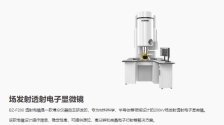
Bozhong Instruments has launched China’s first domestically developed 200kV thermal field emission transmission electron microscope (BZ-F200), breaking foreign monopolies in high-end scientific instruments. Founded in 2020, the Suzhou-based company achieved rapid progress with a prototype in 2022, mass production in 2024, and commercial release in 2025. This milestone marks a critical step toward securing China’s scientific and industrial supply chains, particularly for semiconductors and materials science research.
The BZ-F200 matches global standards with 0.25nm point resolution and 0.10nm lattice resolution, enabling nanoscale material analysis. Bozhong fully controls core components including thermal electron guns, high-voltage power supplies, and precision stages through independent R&D. It holds 19 Class I intellectual property rights, delivered units to institutions like Suzhou University, and was recognized as one of Suzhou’s Top Ten Industrial Scientific and Technological Achievements in 2025. Looking ahead, Bozhong will expand its electron beam technology portfolio, enhancing performance and stability to provide more domestic alternatives for research and industry. This effort aims to strengthen China’s technological sovereignty and support long-term innovation across high-end manufacturing and scientific discovery.

Xiaomi showcases the research of GaN Power Amplifier in phones. This is cool to see because we've seen several articles recently on GaN PAs for mobile handset.
They showcased their research on usage of GaN HEMT as mobile end point for PA MMIC. Show superior Efficiency of over 50%. Able to operate on higher frequency band. Their tubes can operate under 10V and achieve power density of 2.84W/mm.Interesting comparison chart at bottom.
ASML Q3 2025 financial results
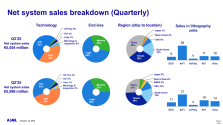


They say 2026 revenue will be "not inferior" to 2025...but with much less China sales....I guess this last statement is just to not infuriate US...but they will infuriate anyhow.
Moving from "future" to reality, 72 machine sold in the quarter and 42% of revenues from China, considering more than 10% of those machines are the ultra expensive EUV, and of course none of them for China, I guess at least 50% of those 77 machines are going to China: 35-40 machines in a quarter is not bad, also the largest part of them are arfi (DUV immersion): 38 on 77 total.
Attachments
-
 1765826153938.png101.1 KB · Views: 14
Last edited:
Jiuen Intelligent's R&D Center has been established in Optics Valley, making it a leading domestic gas purification enterprise.
Recently, Hubei Jiuen Intelligent Technology Co., Ltd. (hereinafter referred to as "Jiuen Intelligent") signed an agreement with Wuhan East Lake High-tech Development Zone to build a research and development and business center in Optics Valley Central City, focusing on the research, development, production and technical services of ultra-high purity gas purifiers.
Founded in 2020, Jiuen Intelligent is a leading enterprise in the gas purification industry. Its products have successfully replaced imported equipment from the United States, filling a technological gap in the domestic market. Jiuen Intelligent is a national high-tech enterprise, a national science and technology-based SME, an innovative enterprise, a specialized and innovative enterprise in Hubei Province, a gazelle enterprise, and an intellectual property demonstration enterprise. The company has fully mastered ultra-high purity purification technologies for various bulk gases, specialty gases, and cryogenic technologies. According to its official information, its products have been applied to several key 12-inch semiconductor projects in China .
With its strong technical capabilities, Jiuen Intelligent has mastered the ultra-high purity purification technology for various gases, achieving a purity of only one impurity out of 1 billion gas molecules. Its XCDA gas purifier, which is used in conjunction with ASML's lithography machine in the Netherlands, can achieve a purity that is 1,000 times higher than that of the former. It is the only product in China that has passed the certification of a top international testing institution.
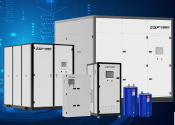
According to news from Optics Valley, Jiuen Intelligent has accumulated more than 10 invention patents and more than 30 utility model patents to date, with over 200 cooperative clients. Its equipment has been installed in the 12-inch wafer fabs of several leading companies. The company's output value is projected to exceed 100 million yuan in 2026; within the next three years, Jiuen Intelligent's R&D and business center is expected to form a team of 100 people. "Settling in Optics Valley is a crucial step for our expansion in Central China and our move towards the whole country," said a representative of Jiuen Intelligent. They added that in the future, they will collaborate with Optics Valley's storage and compound semiconductor industries, creating a synergy that will inject new vitality into the high-quality development of Optics Valley's semiconductor industry.