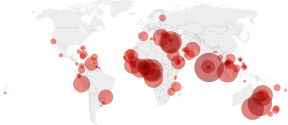
commodity supply is tightening and aluminum and Tungsten companies are making a lot of money in the first quarter of this year vs last year.



Saudi has been arrogant with their pricing toward Asia. They’re the ones who pushed Trump to kick off this damn war, and frankly, they deserve to feel the burnChina oil purchases from Saudi fall off a cliff:
Total crude oil exports from the Middle East to China were 581 million barrels from January to May, which marked a 28% fall from the same months in 2025.
To make up for the shortfall from the likes of Iran and Saudi Arabia, China has stepped up imports from South America and Eastern Europe, with Brazil and Russia both registering strong year-over-year volumes to China so far in 2026.
That said, total crude oil imports by China through the first five months of 2026 are down roughly 10% from the same months in 2025, indicating China's enduring difficulties in replacing Middle Eastern supplies.
On the fuels front, China's combined imports of gasoline, naphtha, gasoil/diesel and jet fuel/kerosene are down by around 11% during January to May compared to that period in 2025, to around 51 million barrels.
From January to May, China's fuel imports from the Middle East are down by 20% to around 19.2 million barrels, while imports from all other regions are down by around 4% on the year to around 31.6 million barrels.
China imported around 40% of its LNG and LPG supplies from Middle Eastern nations in 2025, so the closure of the outbound traffic from the region has also impacted China's gas markets.
From January through May, total China LNG and LPG imports from the Middle East dropped by 43% to just under 9 million metric tons from over 15 million tons during the same months last year.
Total gas shipments from all other regions have also shrunk so far this year, but by only 12%, revealing that Middle East volumes have fallen much more sharply than those from other suppliers.
In LNG, total exports from the Middle East to China during January to May are estimated around 6 million tons, which is around 2.5 million tons or around 30% less than during the same months in 2025.
China's March seaborne crude imports were steady at 10.5 million bpd year-on-year, while inventories rose by 34 million barrels. Middle East cargoes were loaded in January and February so March imports were not yet affected by Strait of Hormuz disruptions, said Emma Li, analyst at ship-tracking firm Vortexa.
Chinese refineries' capacity utilisation rate was 68.79% in March, down 0.9 percentage points year-on-year, and down 4.47 percentage points from February, according to Chinese consultancy Oilchem.
Major refiners and independent refiners both lowered operating rates during the month due to factors including crude supply risks, the firm added in a report.
Customs data also showed that exports of refined oil products, including diesel, gasoline, aviation fuel and marine fuel, dropped 12.2% to 4.6 million tons in March.
China ordered a on refined fuel exports last month that halted cargoes that had yet to clear customs as of March 11.
The export ban, which does not include jet fuel for aviation bunkering, is poised to into April, though exemptions could be applied to small volumes bound for countries in the region that have requested help.
Major refineries raised gasoline and diesel yields in March, after export plans for gasoline and diesel were cut, and China's gasoline and diesel consumption remained relatively low, leaving supply ample and domestic inventories higher, Oilchem added.

China’s foreign trade in goods jumped 18 percent in the first quarter from a year earlier, the fastest quarterly growth for five years, to reach a record USD1.7 trillion amid a surge in demand.


The U.S. has a long way to go if it wants to fight over every port China has financed: As we document in our new , Chinese agencies and state-owned enterprises (SOEs) have bankrolled some 363 Chinese loan- and grant-financed projects worth $24 billion supporting 168 unique ports across 90 countries from 2000 to 2025. The year 2000 is our data-collection starting point, as this was the beginning of the implementation of the state-led “Go Out” initiative, which encouraged Chinese agencies and SOEs to focus loans, grants, and investments in foreign countries rather than at home. Our underlying data presents an as-close-to-real-time picture of Beijing’s global port footprint as there is, including new and recent ports that have been proposed but are as yet unfunded. For every high-profile or contentious case like a Piraeus, there is a Chinese-financed, massive port that has been built in a Tema (Ghana), a Kribi (Cameroon), or the new loan we uncovered for the port of Muara, in Brunei.