Qingzhou 1 (Prototype Spacecraft) is called Xingzengcheng 02
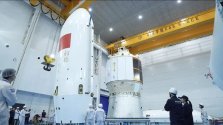
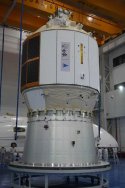
The "New Journey 02 Satellite" (White Elephant Space Test Spacecraft, referred to as the Test Spacecraft) was independently developed by the Innovation Academy for Microsatellites of the Chinese Academy of Sciences (IAMCAS/CAS Microsat). It has a 3-year in-orbit operational capability, with a total mass of 4.2 tons, and features a single-cabin integrated configuration design. The Test Spacecraft incorporates a sealed module, propulsion system, laser IMU, and other components designed using new technologies and processes. It also involves the design of autonomous rendezvous for high-inertia spacecraft, long-term orbital station-keeping capability, distributed integrated spacecraft management, centralized power distribution and scalable energy system design, as well as space science experiment mission planning. These designs help reduce development costs while ensuring system reliability.
During this mission, it carried 27 experimental payloads totaling 1.02 tons — covering technology reserves, verification tests, scientific exploration, and even educational items. These will conduct experiments in orbits between 200 to 600 kilometers above the Earth's ground, Global Times has learned from the spacecraft experiment team.
After entering orbit, the Qingzhou prototype test spacecraft will conduct key on-orbit flight technology verification. Subsequently, the Qingzhou full-scale cargo spacecraft will dock with the Chinese Space Station and provide uplink cargo transportation services for the station.





 ))
))