Gork and Mork, or Navarro and Ron Vara, I guesswho are those 2 familiar with the matter though?
Rumors about the H200 keep taking unexpected turns, you can no longer tell what's true.

Gork and Mork, or Navarro and Ron Vara, I guesswho are those 2 familiar with the matter though?


The classes quickly became a standard feature for thousands of schools — and the results were impressive. As the years passed, Chinese teams started to sweep most of the gold medals at Olympiads, far exceeding their rivals. In 2025, the Chinese national teams sent a total of 23 contestants to the Olympiads: 22 came home with gold medals. Starting in the 2000s, university admissions were reformed, giving more flexibility to colleges to allocate places without relying solely on the results of the gaokao. National competitions were set up for students at the end of their sophomore year of high school. Those who won top prizes in the national exam could receive direct admission to one of the 985 Project universities, China’s 39-member Ivy League equivalent.
The chance to skip the gaokao was a strong incentive for students to participate in the genius stream. The traditional pathway for high-school students in China is three years of study in the gaokao’s mandatory subjects of Chinese, English and Maths, as well as three more chosen subjects from physics, chemistry, biology, history, geography and politics. Exams in all six subjects are taken at the end of the third year. Genius-class students, on the other hand, focus on their “competition subjects”. A student competing in the International Physics Olympiad, for example, needs to not only finish three years of high-school physics but also at least half of the college-level syllabus, in order to be competitive enough to take the national exam. The very dedicated might not study much else at all.
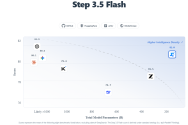

The Dola app has 10m DAU globally. It looks like 2026 will be a global expansion period for ByteDance AI.