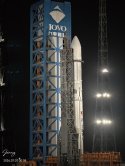
IIRC GW sats are much larger than QF ones.
270kg for Qianfan Gen 1, ~700kg for Mid-inclination GW; ~800-900kg for Polar ones.
Changguang Satellite completed an equity financing round raising nearly RMB 5 billion (~$736M).
The raised funds will be allocated to three core areas: first, accelerating the development of satellite mass-production capabilities and enhancing manufacturing efficiency; second, continuing the constellation deployment of the "Jilin-1" satellite project to solidify high-resolution data acquisition capabilities; and third, deepening the application development of remote sensing data and expanding industry-specific solutions across multiple sectors. According to the company, Changguang Satellite has successfully launched a total of 161 "Jilin-1" satellites across 30 missions, establishing the world's largest sub-meter commercial remote sensing satellite constellation.
They have established a mass-production capacity of 200 communications satellites per year.
They still have their goal of 300 Jilin 1 satellites in orbit by the end of 2027,
20-50cm resolution Gaofen-5-series satellite, but so far they've only launched 4 of the later (2 of them last months); in total they've made about 250 satellites that have been launched, they also seem to be involved in the Guowang program since 4 of the test satellite HJS were made with their participation (2 launched in April 2025, 2 in April 2026); it's not clear if they provide platforms, communication payloads or reconnaissance ones (since guowang is after all multi-purpose). This financing round is noted as the largest for a satellite manufacturer since Spacesail's 7B RMB one a couple years ago.
Landspace's spin-off Hongqing raises 1.3B RMB ($191M)
IIRC there's some speculation the Hongqing-made satellite as part of the Guowang HJS test launch in May could have been a replacement for one lost on the failed ZQ-2E last august.
The Asteroid Monitoring and Early Warning Research Center of the CNSA plans to deploy Space-Based Monitoring Constellation for Asteroid Detection and Early Warning.
This is part of a wider program that also includes ground based telescopes (
)
Research on Near-Earth Asteroid Defense Systems, WU Weiren et al.; JDSE June 2026 gives a few more informations (jdse.bit.edu.cn/sktcxb/en/article/doi/10.3724/j.issn.2096-9287.2026.20260042?viewType=citedby-info), looks like it will involve telescopes in high orbits, like NASA's NEO surveyor.
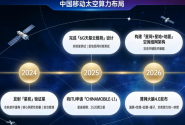
Back in december Chinamobile registered a 2,520 satellite constellation to the ITU, it was thought as a LEO Communication constellation (especially since they're testing Sat-to-cell coms, like with that satellite launched on Zhuque-2E last month), but it now appears to be for orbital datacenters?
On June 29–30, a review meeting for the summary report on the integration and commissioning test of the satellite production line at Aerospace Satellite Super Factory (Hainan) Co., Ltd. was held in Wenchang. A review panel was established, comprising experts in fields such as project management, production line processes, product assurance, and overall satellite systems, drawn from organizations including CASIC, CASC, and commercial satellite companies.
Production could start this year after all; as a reminder, it's not just CASC and CASIC that are involved, but also companies like Spacesail or Hongqing.
Hengdian Capital recently invested RMB 200 million in Space Pioneer (Tianbing Technology),
; There's still no news about April's failure.
CASIC plans a dedicated launch site in Jiuquan, they won't need to share LC 95 with other companies anymore, rumors are that the investment is about 700M RMB, and that it'll be for both the operational solid Kuaizhou 1/11 and their upcoming liquid and liquid/solid Kuaizhou 6/12
And finally, CZ-10B is on pad: