As they should tbh. India is desperate and has the willingness to pay for such an expensive project. If the project is successful they can also promise volume, which none of the countries in FCAS or GCAP can offer. They should be willing to accept minimal work share and ToT because they have no other options and again are desperate.
India hopes to join FCAS it seems?

You are using an out of date browser. It may not display this or other websites correctly.
You should upgrade or use an alternative browser.
You should upgrade or use an alternative browser.
Indian Military News, Reports, Data, etc.
- Thread starter bd popeye
- Start date
Stealth fighter jets will remain important, but stealth drones are likely to play an even greater role in the future of air combat. Manned-unmanned teaming (MUM-T) systems, in which a single manned fighter acts as a mothership controlling several stealth drones, are expected to become increasingly significant. India is already working on such concepts.As they should tbh. India is desperate and has the willingness to pay for such an expensive project. If the project is successful they can also promise volume, which none of the countries in FCAS or GCAP can offer. They should be willing to accept minimal work share and ToT because they have no other options and again are desperate.
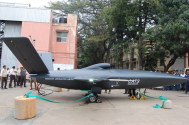
the engine for these drones is the dry-thrust version of the Kaveri engine. Kaveri was initially intended to power Tejas, but after removing the afterburner (wet-thrust) section, it was adapted into a dry-thrust variant that produces around 52 kN of thrust. This version is intended to power the GHATAK stealth unmanned combat aerial vehicle (UCAV).
India is also developing the CATS (Combat Air Teaming System), a family of unmanned systems designed to operate alongside the Tejas. Some of these drones feature low-observable designs and are intended to carry both air-to-air and air-to-ground weapons. They are powered by turbojet engines.
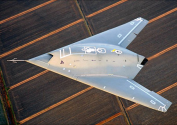
France is also developing the Neuron stealth UCAV, which is designed to demonstrate technologies for future combat drones capable of supporting manned aircraft such as Rafale.
These systems, together with continuing improvements in radar technology, interceptor missiles, satellites, and sensor networks, could provide the Indian Air Force with greater operational flexibility while waiting for the development and induction of the AMCA. stealth is no longer the same decisive advantage it appeared to be in the 1990s; it remains a significant advantage, but it is not a guarantee of survivability.
Last edited:
You want a stealthy survivable fighter to control the drones. I don't see why you would settle for Tejas or Rafale if joining the FCAS is on the table. I would even go as far as cancelling AMCA or just de-prioritizing the project if it means getting FCAS inducted faster.Stealth fighter jets will remain important, but stealth drones are likely to play an even greater role in the future of air combat. Manned-unmanned teaming (MUM-T) systems, in which a single manned fighter acts as a mothership controlling several stealth drones, are expected to become increasingly significant. India is already working on such concepts.
the engine for these drones is the dry-thrust version of the Kaveri engine. Kaveri was initially intended to power Tejas, but after removing the afterburner (wet-thrust) section, it was adapted into a dry-thrust variant that produces around 52 kN of thrust. This version is intended to power the GHATAK stealth unmanned combat aerial vehicle (UCAV).
India is also developing the CATS (Combat Air Teaming System), a family of unmanned systems designed to operate alongside the Tejas. Some of these drones feature low-observable designs and are intended to carry both air-to-air and air-to-ground weapons. They are powered by turbojet engines.
View attachment 177603
France is also developing the Neuron stealth UCAV, which is designed to demonstrate technologies for future combat drones capable of supporting manned aircraft such as Rafale.
View attachment 177604
These systems, together with continuing improvements in radar technology, interceptor missiles, satellites, and sensor networks, could provide the Indian Air Force with greater operational flexibility while waiting for the development and induction of the AMCA. stealth is no longer the same decisive advantage it appeared to be in the 1990s; it remains a significant advantage, but it is not a guarantee of survivability.
having a stealthy mothership is certainly an advantage but it is not essential and 4th generation fighter jets can carry significantly larger payloads than most 5th generation stealth fighters,You want a stealthy survivable fighter to control the drones. I don't see why you would settle for Tejas or Rafale if joining the FCAS is on the table. I would even go as far as cancelling AMCA or just de-prioritizing the project if it means getting FCAS inducted faster.
It's similar to arguing that an AWACS aircraft accompanying a formation of stealth fighters must also be stealthy. A stealthy AWACS would undoubtedly be beneficial, but it is not a requirement for the concept to work.
Stealth drones are much smaller than manned stealth fighters, making them harder to detect visually and on radar. a manned-unmanned teaming system, in which a non-stealth manned aircraft controls several stealth drones, could be even more effective than relying solely on a fleet of manned stealth fighters.
The nature of air combat is evolving rapidly. The roles of unmanned aerial systems, satellites, ground-based radar networks, and interceptor missiles are becoming increasingly important. Recent conflicts have also highlighted the growing importance of integrating these systems into modern air warfare rather than relying exclusively on manned fighter aircraft.

If you want it to survive in contested air - it most certainly is a requirement though...It's similar to arguing that an AWACS aircraft accompanying a formation of stealth fighters must also be stealthy. A stealthy AWACS would undoubtedly be beneficial, but it is not a requirement for the concept to work.
It's viable, but you'll have to be significantly behind the drone formation from target vector.You want a stealthy survivable fighter to control the drones. I don't see why you would settle for Tejas or Rafale if joining the FCAS is on the table. I would even go as far as cancelling AMCA or just de-prioritizing the project if it means getting FCAS inducted faster.
I think that, with the rapid advancement of drone technology and artificial intelligence, unmanned combat drones could eventually replace manned fighter aircraft in offensive roles. In highly contested airspace, manned fighters may rarely enter the battlespace themselves. Instead, they could remain at safer stand-off distances while controlling swarms of loyal wingman drones that carry out the most dangerous missions and launch missiles against enemy targets.If you want it to survive in contested air - it most certainly is a requirement though...
It's viable, but you'll have to be significantly behind the drone formation from target vector.
There may still be occasions when manned fighter aircraft encounter each other and engage in within-visual-range dogfights, but such engagements are likely to become increasingly rare. Most future air combat is expected to take place beyond visual range, with extensive use of loyal wingman drones, advanced sensors, AI-assisted decision-making, and long-range precision missiles.

PiSigma
"the engineer"
He is not wrong in the general direction of air combat development. It's just that India don't have any stealth fighters so beggers can't be choosers. They will have to do with whatever 4th gen they can upgrade. Ironically adding this requirement to Tejas will slow it down on the development front even more since power generation and engines is a major bottleneck for Tejas considering the extra power requirement and computing power for drone control.If you want it to survive in contested air - it most certainly is a requirement though...
It's viable, but you'll have to be significantly behind the drone formation from target vector.
But remember, India can detect J20 from 20000 miles out with a Su30 and naked eye, so why does anyone need 5th or 6th gen to control stealth drones.

Interseting ....
FCAS isn't going to be available until 2040 at the earliest. By then, all of India's planes will have fallen apart other than the Rafales. They sort of need something to replace all that stuff. That said, there's no way that India will stick with FCAS for that long.You want a stealthy survivable fighter to control the drones. I don't see why you would settle for Tejas or Rafale if joining the FCAS is on the table. I would even go as far as cancelling AMCA or just de-prioritizing the project if it means getting FCAS inducted faster.
Oh god, why would you do this?
PiSigma
"the engineer"
Engines are over rated. Tejas are so advanced they can fly with hope and dreams.
In all seriousness India really need to figure out their engine situation and design down so that they can have numbers.
At least gym weight Rader f35 can fly and can be used as trainers.