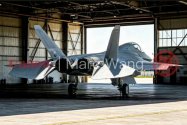
J-35A fighter (PLAAF) + FC-31

AlexYe

Senior Member
Registered Member
I think if Israel's numbers are true then it proves with sufficient priority and preference in resources F-35 can indeed have very high readiness. Perhaps it's even a contributing factor for why the readiness is so low in some other countries.
A Contributing factor for Israels could be because they were given more freedom along with software access? Werent iaf also allowed to do their own internals? Extensively customize and integrate their own indigenous avionics and electronic warfare systems? No one else got this treatment.
 

mack8

Senior Member
I wouldn't put much credence on what the israelis say given their usual propensity to twist facts, i would bet their numbers might refer to the actually flyable aircraft. Flyable doesn't mean fully combat capable (as the Blue Circle F-35s clearly demonstrate), which is probably what the american numbers refer to.
 

zbb

Senior Member
Registered Member
They don't actually fly them, you know, as much as we fly say F-22s up in Elmendorf or something, so they're not going to be running down that sustainment quite as fast.
Yet folks here also proudly talk about PLAAF pilots outflying USAF in training hours. Not everything is true for all units and all aircraft at all times; there are nuances involved with F-22 vs F-35 fleets and so forth. But at the end of the day, you can't have your cake and eat it too.

Both PLAAF and USAF units have ~1.5 pilots per airframe. The force with lower availability rates will have to fly their fewer mission-capable airframes more to get similar amount of flying hours for their pilots. Mission-capable PLAAF planes flying less while PLAAF pilots get more training hours than USAF is exactly what one would see if PLAAF planes have much higher availability rates than USAF planes.
 

zyklon

Senior Member
Registered Member
They don't actually fly them, you know, as much as we fly say F-22s up in Elmendorf or something, so they're not going to be running down that sustainment quite as fast.

Yet folks here also proudly talk about PLAAF pilots outflying USAF in training hours. Not everything is true for all units and all aircraft at all times; there are nuances involved with F-22 vs F-35 fleets and so forth. But at the end of the day, you can't have your cake and eat it too.

USAF units typically operate with more pilots than airframes. IIRC, USAF fighter squadrons are supposed to maintain a 1.25 or 1.5 crew ratio (not a bird brain here, so if anyone knows better, do chime in).

Such crew ratios are especially applicable for units that are deployed, forward deployed or forward stationed like the F-22 squadrons out of Elmendorf, which are responsible for intercepting Russian Tu-95s and what not flying toward or near Alaska.

The Elmendorf based F-22 squadrons are most likely fully manned, if not overstrength.

As such, it's perfectly plausible for said USAF F-22s to log more hours than most PLAAF J-20s, even if individual USAF pilots are logging fewer hours than their PLAAF counterparts on average.

Granted, this might also mean the PLAAF is inducting airframes faster than it's able to train the pilots needed to man them, but let's save that discussion for another thread.

 

Gloire_bb

Colonel
Registered Member
I wonder whether J-35 can take the same twin outer AAM pylons J-20 can, or if it's limited to singles outside.
Same question on fuel tanks; likely, but we haven't seen them yet?
 

AndrewS

Brigadier
Registered Member
I wonder whether J-35 can take the same twin outer AAM pylons J-20 can, or if it's limited to singles outside.
Same question on fuel tanks; likely, but we haven't seen them yet?

The J-35 is supposed to be more multi-role than an air-superiority focused J-20.

So you would expect the J-35 to be able to carry heavier and more types of payloads on the wings.
 

mshrief303

Junior Member
Registered Member
Israel lower their standards when they need to sustain large amount of sorties for a period of time. And that's possible only because US aid, plus their ability to access & modify platforms for their industry output.

And their main focus are fighters, and they depend on US enablers, so they can optimize their resources better than USAF.

Also note Israel's fleet is way smaller compared to the huge aid they take from US compared to USAF.
 

Gloire_bb

Colonel
Registered Member
The J-35 is supposed to be more multi-role than an air-superiority focused J-20.

So you would expect the J-35 to be able to carry heavier and more types of payloads on the wings.
Yes, but for example, so were the F-35. Yet to date, both dtop tanks and twin racks are slides only.
It probably isn't super difficult to add them - it's just low enough priority to not bother when there are much larger problems at hand.

For J-20, we know for sure that both tanks and double racks are operational (up to 14 missiles).
 
Top