China's transport, tanker & heavy lift aircraft

Confusionism

Junior Member
Registered Member
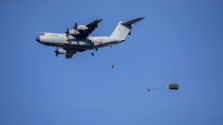
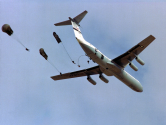
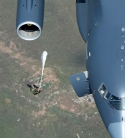
At 2:06 them boys are jumping out the front door infront of the engine is that safe?
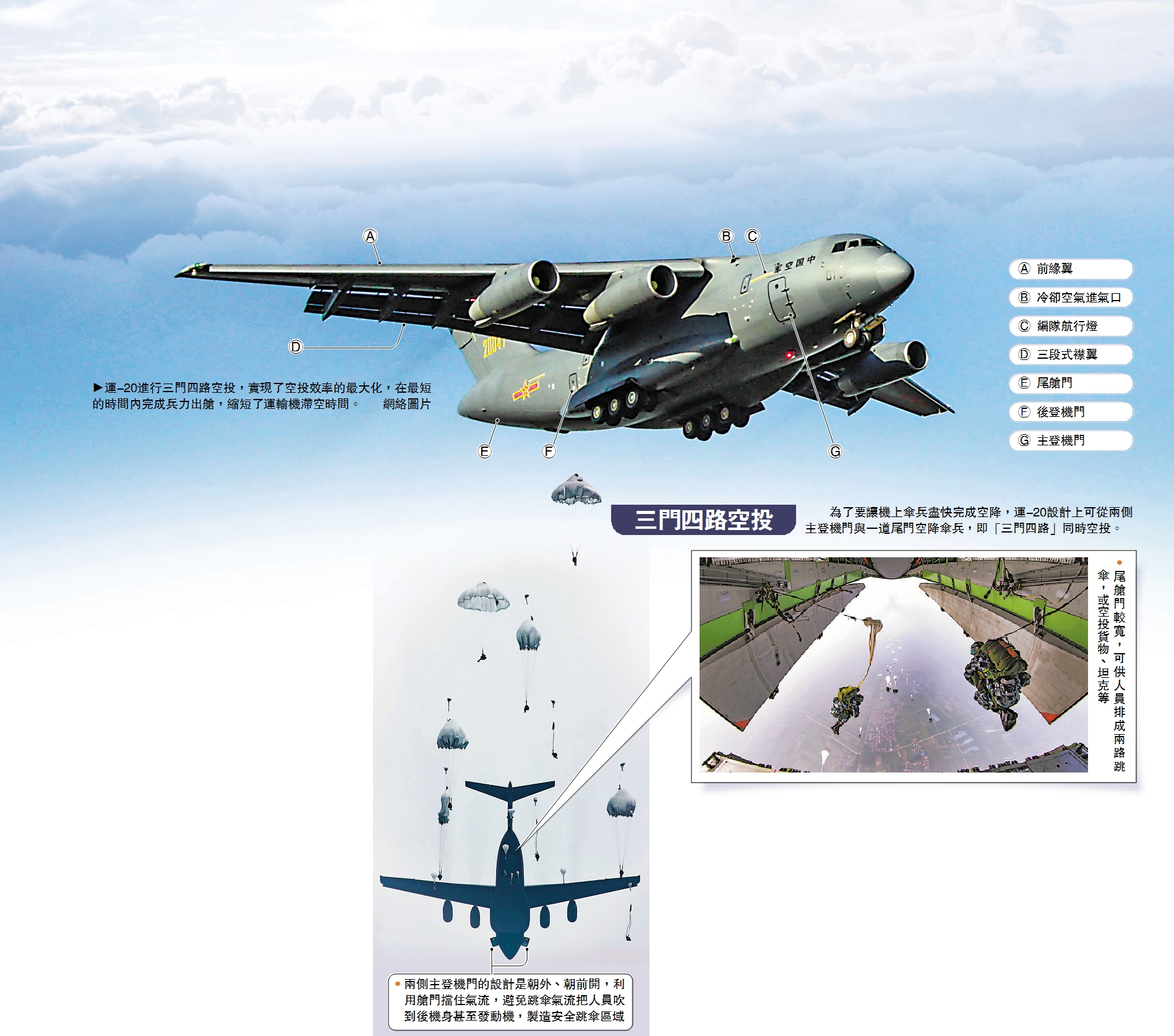
This is known as the 3-door, 4-column drop.
zm-31.jpg

In my opinion, the advantage of jumping from the crew door at the front of the aircraft is that it allows for a 4-column jump from both the crew door and the rear cargo ramp in parallel, maximizing the speed of airborne troop deployment. Because the crew door is farther from the cargo ramp, paratroopers jumping from the crew door will have descended far enough by the time they pass the tail section, thereby avoiding collisions with those jumping from the cargo ramp.

This method appears to originate from the Il-76, as I have never observed it in drops from other aircraft.
1782854655131.png

1782854848444.png

1782854920670.png

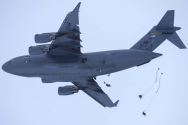
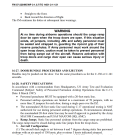
As for why only the Il-76 uses this method (e.g., the US parachuting rules strictly prohibit opening the cargo ramp while jumping from the jump door),


1782857787986.png

Parachuting from the front crew door certainly involves some danger, as the area in front of a jet engine is typically designated as a inlet suction danger area within a certain radius.
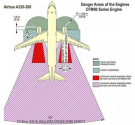
1782858574876.png
But why does the Il-76 use this method to airdrop paratroopers? I think it’s partly because the VDV has always been known for its more aggressive airdrop methods (dropping the crew and the entire BMD vehicle together). On the other hand, it may also be related to the engine's smaller diameter (hence the suction danger zone is smaller, and its boundary is farther from the body.).
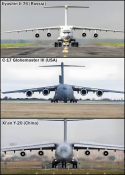
1782859063590.png
So I'm a little curious whether the Y-20B will continue to use this method.
 

Engineer

Major
Parachuting from the front crew door certainly involves some danger, as the area in front of a jet engine is typically designated as a inlet suction danger area within a certain radius.

View attachment 177409
That diagram is for a static aircraft on the ground, not applicable to inflight operation. For an aircraft in motion, you need to look at the CFD output. Example:
Please, Log in or Register to view URLs content!
So I'm a little curious whether the Y-20B will continue to use this method.
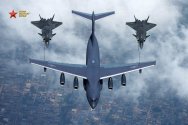
Standardization. It's easier to design the aircraft to adapt to what the grunts already do than it is to get the grunts to learn two SOPs for two aircraft.
 

ACuriousPLAFan

Lieutenant General
Registered Member
Speaking of which, does anyone here happen to have access to the latest paid Chahuahui podcast on Qingting FM?

Apparently (one of the) discussion topics by the Guancha Gang in said podcast is on the Y-20 and China's airlifter fleet, and judging by what Shilao has posted on Weibo, that podcast could also contain discussions on China's prospective very large airlifter (i.e., Sino C-5/An-124) project, IMHO.
 

vincent

Grumpy Old Man
Staff member
Moderator - World Affairs
Speaking of which, does anyone here happen to have access to the latest paid Chahuahui podcast on Qingting FM?

Apparently (one of the) discussion topics by the Guancha Gang in said podcast is on the Y-20 and China's airlifter fleet, and judging by what Shilao has posted on Weibo, that podcast could also contain discussions on China's prospective very large airlifter (i.e., Sino C-5/An-124) project, IMHO.
The Y-20 fleet is over 100 now.
 

Tomboy

Captain
Registered Member
Speaking of which, does anyone here happen to have access to the latest paid Chahuahui podcast on Qingting FM?

Apparently (one of the) discussion topics by the Guancha Gang in said podcast is on the Y-20 and China's airlifter fleet, and judging by what Shilao has posted on Weibo, that podcast could also contain discussions on China's prospective very large airlifter (i.e., Sino C-5/An-124) project, IMHO.
They mentioned Y-20 has a interior noise issue compared to C919 and it's not just a issue with using D30KP-2s as they are placed relatively far away but actually a issue with the overall noise/vibration isolation design due to lack of experience with large aircraft. It's said to be somewhat better than Il-76s but still far worse than C919 and other modern airlifter, Y-20B was originally going to include far more comprehensive upgrades to the overall structure and design to fix all the issues with Y-20A than a simple engine related system change but was cut down due to PLAAF's urgent need for transport aircraft. Though using WS-20s did alleviated some of the noise issues as they are just quieter than D30KP-2s but they did mention Y-20B "糊弄的有点过分" in this aspect.

On the very large transport, they did mention it's importance for various utility purposes like especially for aerospace industry, given the further industrialisation and militarisation of space, there will and might already be many payloads that are very large and classified hence could not use Russian An-124s that still needs transport to Hainan or otherwise. They also mentioned that both H-20 and the very large transport are bundled into the new "大飞机专项" given that they are both very large aircraft with MTOW in the "many hundreds of tons". Although they did mention that it seems strange that a transport and bomber is bundled together at the same level as a bomber may seem to be technologically more advanced but that apparently given modern design technique and very high requirement, the large transport may use similarly cutting edge technology but just in different areas. These two projects are both expected to be highly competitive and radical in design as they are required to stay relevant and competitive for many decades to come with some vague hint that both will emerge by the end of this decade.
 

Confusionism

Junior Member
Registered Member
That diagram is for a static aircraft on the ground, not applicable to inflight operation. For an aircraft in motion, you need to look at the CFD output. Example:
Please, Log in or Register to view URLs content!

Standardization. It's easier to design the aircraft to adapt to what the grunts already do than it is to get the grunts to learn two SOPs for two aircraft.
I just wanted to use a schematic diagram to illustrate the fact that there is an suction zone in front of the engine. However, I don't think the images in the link you posted could cover the flow fields of all aircraft under all flight conditions.
It is easy to imagine that the flow field around a jet engine does not undergo a sudden, discrete change the moment the aircraft takes off. During level flight, the extent of the forward danger zone for a given engine should be a function of both airspeed and engine power, since these two factors determine the engine’s air intake. Therefore, unless simulations have been conducted, the possibility of an engine ingestion hazard cannot be directly ruled out. Otherwise, there is no explanation for why we have never seen parachuting from the front door on other jet transporter.

Of course, I think it’s highly likely that the Y-20B retains this parachute-drop capability, but I’m just maintaining a degree of caution until I see concrete evidence.
 
Top