
The trend of Sindoor engagement already forced a huge Indian shift to (far enough) stand off strike. It was very successful, though clearly it was not a thing India intended (highly escalatory; very high reliance on Brahmos and to a lesser degree SCALP, which was plain expensive and unsustainable).
As India is a very big customer of Israeli strike technology/ecosystem, since early 2020s they're moving towards Israeli air launched ballistics (rampage, air LORA).
They fly quite far, they are very affordable; after Sindoor, this trend line went into the sky.
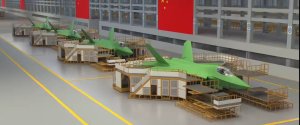
J-35 is indeed meant to be used for offensive counter air/sead/dead, i.e. counters this threat. But first priority here isn't going on offensive, first priority is protecting Pakistan from immediate consequences. Pakistan is a narrow/exposed country, it is a high priority.
Furthermore, offensive counter air/sead is also a highly risky mission, and frankly up to debate if China will be thrilled about high risk J-35 ops over Indian soil.
Finally, if we assume it comes against Su-57, it's a broken logic chain. Yes, countering Su-57 with J-35 will be necessary, as Balakot/Sindoor like exchanges are likely. But other than that... see below.
Furthermore, it isn't an offensive platform with it's perceived 0.1m class main band RCS. It is enough to be unfair for J-10 in crystal Sindoor-like 1v1 ambush, but HQ-9BE/16FE are there to ensure fairness.
Su-57s don't fly even over Ukraine, after all. They were never meant to. I.e. even without J-35, more likely than not - they won't be able to break balance beyond these inconsequential border exchanges.
Basically, until China exports new generation VLOs which aim at L band, Su-57D is more of a status quo keeper. It also comes with a significant trick; it'll have almost zero compatibility with existing and known future indian weapons ecosystem. French, Israeli and legacy Russian systems simply won't fit in.
I.e. it's going to be an expensive procurement.
As India is a very big customer of Israeli strike technology/ecosystem, since early 2020s they're moving towards Israeli air launched ballistics (rampage, air LORA).
They fly quite far, they are very affordable; after Sindoor, this trend line went into the sky.
J-35 is indeed meant to be used for offensive counter air/sead/dead, i.e. counters this threat. But first priority here isn't going on offensive, first priority is protecting Pakistan from immediate consequences. Pakistan is a narrow/exposed country, it is a high priority.
Furthermore, offensive counter air/sead is also a highly risky mission, and frankly up to debate if China will be thrilled about high risk J-35 ops over Indian soil.
Finally, if we assume it comes against Su-57, it's a broken logic chain. Yes, countering Su-57 with J-35 will be necessary, as Balakot/Sindoor like exchanges are likely. But other than that... see below.
Su-57D assumingly denies other stealth offensive ops more than the other way around. It is, after all, a flying dual band array ... unless India will break that with insisting on their own radar.Of course if and when India does get Su-57s, they will rush to acquire the Gyrafalcon, and said Su-57s would basically drop like flies were they to face off in the air.
Furthermore, it isn't an offensive platform with it's perceived 0.1m class main band RCS. It is enough to be unfair for J-10 in crystal Sindoor-like 1v1 ambush, but HQ-9BE/16FE are there to ensure fairness.
Su-57s don't fly even over Ukraine, after all. They were never meant to. I.e. even without J-35, more likely than not - they won't be able to break balance beyond these inconsequential border exchanges.
Basically, until China exports new generation VLOs which aim at L band, Su-57D is more of a status quo keeper. It also comes with a significant trick; it'll have almost zero compatibility with existing and known future indian weapons ecosystem. French, Israeli and legacy Russian systems simply won't fit in.
I.e. it's going to be an expensive procurement.
Last edited: