Pattern of continuous months of consumption and a 1% drop means everyone all the sudden is in a diet? or could be that food prices are increasing and restaurants, bars and food businesses are trying to keep their margins. You know a good percentage of the population use food services.If you further breakdown consumer demand to each segment, the result is not good at face value:
In May, among the retail sales of enterprises above the designated size, the year-on-year growth rates for grain, oil and food was 1.9% (-2.2%), beverages 6.1% (+2.5%), tobacco and alcohol 4.8% (-6.9%), and daily necessities 1.6% (-1.9%) respectively.
The most concerning part for me was grain, oil and food consumption drawback, which may indicate reduce of calories intake.

You are using an out of date browser. It may not display this or other websites correctly.
You should upgrade or use an alternative browser.
You should upgrade or use an alternative browser.
Chinese Economics Thread
- Thread starter Norfolk
- Start date

Sounds like the EU needs to read more Shakespeare.
The temptation for the EU to start a trade war to hit back at Chinese manipulation is strong, but this strikes me as an example of the politician’s syllogism. (First premise: we must do something. Second premise: this is something. Conclusion: we must do this.) I would bet a kilo of dysprosium that this week’s EU meeting will come out with something vaguely threatening but unspecific. As William Shakespeare had his tragic hero King Lear impotently rage: “I will do such things — what they are, yet I know not: but they shall be the terrors of the earth.” I’m not offering a counsel of despair nor a call for indefinite passivity. I do, however, suggest that the EU realistically assess its weaponry before charging into battle against a fearsomely well-organised opponent.

manqiangrexue
Brigadier
That is indeed a rant, using many economic principles of countries that all said China could not rise beyond X point, which gets pushed back more and more until they cannot deny their fear that China will become the world's preeminent economy even when working together to stop China. Most Chinese consumers are unbothered by macro-economics or politics; they base spending on personal reasons only.Please dont ban me for this rant.
A large part of consumer behavior depends on people’s perception of the economic outlook. In China, the government has struggled to maintain confidence and optimism among consumers and investors. When it has intervened in the economy, it has often done so to restrain the expansion of private enterprises such as Alibaba and Ant Financial. While some of the concerns behind these interventions were understandable, they also created the perception that there is a ceiling on what private companies can achieve. As a result, entrepreneurial confidence and investment enthusiasm have been dampened.
Many Chinese citizens themselves have come to believe negative narratives about the country’s future, including concerns about the property bubble, demographic decline, involution, and the perceived inferiority of Chinese products. However, one of the largest drags on confidence is the persistent undervaluation of Chinese companies. Chinese firms generally trade at much lower price-to-earnings ratios than comparable Western firms because investors remain uncertain about the security of their assets, supply chains, and market access.
Part of this problem stems from geopolitical competition. The United States has repeatedly demonstrated its willingness to protect its strategic industries and companies. By contrast, many Chinese firms face significant external constraints. TikTok, for example, has been forced to restructure its operations outside China, with substantial portions of the value it generates residing abroad. Similarly, companies such as Unitree, CXMT, and YMTC are technological leaders in their respective sectors, yet their ability to attract capital and achieve valuations comparable to Western peers remains limited.
Consequently, weak consumer confidence is not solely a domestic economic issue. It is also tied to the government’s cautious treatment of the private sector and its inability to project confidence in the face of increasing geopolitical pressure.
A second challenge is China’s overly cautious economic and geopolitical strategy. China performed exceptionally well during periods of relative geopolitical stability, but it has appeared less prepared to respond to a more adversarial environment. Huawei lost access to TSMC’s advanced manufacturing capabilities in 2019. Chinese supply chains have faced disruptions related to Russian and Iranian oil, Australian minerals, and access to strategic resources in Africa. While China has demonstrated resilience, it often appears reactive rather than proactive in addressing these challenges.
This raises the question of why China has not invested much more aggressively in strategic sectors that could drive future growth and technological leadership. Areas such as reusable rockets, commercial space launch infrastructure, advanced semiconductor manufacturing, and other frontier industries could potentially absorb hundreds of billions of dollars in investment while generating optimism and high-value employment.
Housing policy represents another missed opportunity. China has largely focused on dense urban apartment development, but many people aspire to own detached homes with private land, gardens, and greater personal space. The desire for suburban-style housing is strong in many societies because homeownership often encourages long-term spending and investment in communities. Given China’s vast land area, it may be possible to expand such development while protecting prime agricultural land. A broader range of housing options could potentially stimulate demand and support the property sector in a more sustainable way.
Demographics present another major challenge. China’s declining birth rate continues to weigh on long-term economic expectations. Immigration could help alleviate some of these pressures. Opening the country to greater immigration from neighboring countries could supplement the working-age population, fill essential labor shortages, and strengthen economic ties with neighboring states. For example, workers from countries such as Myanmar could contribute to sectors requiring labor-intensive work, while Chinese workers could increasingly move into higher-skilled occupations. Such an approach could provide both economic and strategic benefits.
Another structural issue is the concentration of decision-making authority. A highly centralized system can be effective when policies are correct, but it can make course corrections more difficult when mistakes occur. The COVID-19 response illustrates this challenge. While strict restrictions likely prevented many deaths, they also reduced economic activity, disrupted business confidence, and may have reduced incentives for vaccination uptake. Once conditions changed, policy adjustments came relatively slowly.
Beyond the major cities, there are also visible opportunities for infrastructure and urban renewal. Many suburban and smaller urban areas contain deteriorating housing, roads requiring repair, insufficient pedestrian infrastructure, and underdeveloped public spaces. Large-scale urban and suburban renovation projects could have provided a substantial source of economic activity while improving living standards. Yet the government has struggled to generate optimism around such initiatives.
Taken together, these issues suggest that China’s economic slowdown is not simply the result of cyclical factors. It reflects a combination of declining consumer confidence, private-sector caution, demographic pressures, geopolitical headwinds, and policy choices. While Xi Jinping’s leadership has emphasized stability, security, and long-term national objectives, critics argue that excessive caution has prevented more decisive action in several key areas.
Examples often cited include the inability to stabilize the birth rate, restore confidence in the property market, manage the fallout from the regulatory crackdown on major technology firms, and address the international backlash associated with Xinjiang policies. Critics argue that these decisions have imposed substantial economic and reputational costs without producing proportional benefits.
China remains a highly capable economy with significant strengths in manufacturing, infrastructure, and technology. However, restoring consumer confidence may require more than economic stimulus alone. It may require a renewed sense of optimism about private enterprise, greater flexibility in policymaking, stronger support for innovation, and a clearer strategy for navigating an increasingly competitive geopolitical environment.
As I wrote above yours, spending is cultural. Some peoples are known to spend every cent they have and more and some people love to accumulate wealth. Some people think it's bliss to spend thousands of dollars being pampered and fed the most expensive foods at a luxury resort while others find satisifaction and accomplishment when they see their bank accounts grow from hard work. It's a simple a question as what makes one happy: to anticipate the coming weekend on a Friday afternoon at work or to be enjoying that weekend on a serene Sunday evening.
The evidence for this is that Asians in developed countries retain their affinity for saving, through generations, even though they are of the highest income brackets in those countries. Some cultures value some things while others value other things; it's not that hard a concept to understand. Economics is a pseudoscience at best; its principles fail pretty much as often as they succeed so forcing an economic explanation by assuming that all people are mentally the same before economic principles are applied is basically a waste of time.
You make some good points.Please dont ban me for this rant.
A large part of consumer behavior depends on people’s perception of the economic outlook. In China, the government has struggled to maintain confidence and optimism among consumers and investors. When it has intervened in the economy, it has often done so to restrain the expansion of private enterprises such as Alibaba and Ant Financial. While some of the concerns behind these interventions were understandable, they also created the perception that there is a ceiling on what private companies can achieve. As a result, entrepreneurial confidence and investment enthusiasm have been dampened.
Many Chinese citizens themselves have come to believe negative narratives about the country’s future, including concerns about the property bubble, demographic decline, involution, and the perceived inferiority of Chinese products. However, one of the largest drags on confidence is the persistent undervaluation of Chinese companies. Chinese firms generally trade at much lower price-to-earnings ratios than comparable Western firms because investors remain uncertain about the security of their assets, supply chains, and market access.
Part of this problem stems from geopolitical competition. The United States has repeatedly demonstrated its willingness to protect its strategic industries and companies. By contrast, many Chinese firms face significant external constraints. TikTok, for example, has been forced to restructure its operations outside China, with substantial portions of the value it generates residing abroad. Similarly, companies such as Unitree, CXMT, and YMTC are technological leaders in their respective sectors, yet their ability to attract capital and achieve valuations comparable to Western peers remains limited.
Consequently, weak consumer confidence is not solely a domestic economic issue. It is also tied to the government’s cautious treatment of the private sector and its inability to project confidence in the face of increasing geopolitical pressure.
A second challenge is China’s overly cautious economic and geopolitical strategy. China performed exceptionally well during periods of relative geopolitical stability, but it has appeared less prepared to respond to a more adversarial environment. Huawei lost access to TSMC’s advanced manufacturing capabilities in 2019. Chinese supply chains have faced disruptions related to Russian and Iranian oil, Australian minerals, and access to strategic resources in Africa. While China has demonstrated resilience, it often appears reactive rather than proactive in addressing these challenges.
This raises the question of why China has not invested much more aggressively in strategic sectors that could drive future growth and technological leadership. Areas such as reusable rockets, commercial space launch infrastructure, advanced semiconductor manufacturing, and other frontier industries could potentially absorb hundreds of billions of dollars in investment while generating optimism and high-value employment.
Housing policy represents another missed opportunity. China has largely focused on dense urban apartment development, but many people aspire to own detached homes with private land, gardens, and greater personal space. The desire for suburban-style housing is strong in many societies because homeownership often encourages long-term spending and investment in communities. Given China’s vast land area, it may be possible to expand such development while protecting prime agricultural land. A broader range of housing options could potentially stimulate demand and support the property sector in a more sustainable way.
Demographics present another major challenge. China’s declining birth rate continues to weigh on long-term economic expectations. Immigration could help alleviate some of these pressures. Opening the country to greater immigration from neighboring countries could supplement the working-age population, fill essential labor shortages, and strengthen economic ties with neighboring states. For example, workers from countries such as Myanmar could contribute to sectors requiring labor-intensive work, while Chinese workers could increasingly move into higher-skilled occupations. Such an approach could provide both economic and strategic benefits.
Another structural issue is the concentration of decision-making authority. A highly centralized system can be effective when policies are correct, but it can make course corrections more difficult when mistakes occur. The COVID-19 response illustrates this challenge. While strict restrictions likely prevented many deaths, they also reduced economic activity, disrupted business confidence, and may have reduced incentives for vaccination uptake. Once conditions changed, policy adjustments came relatively slowly.
Beyond the major cities, there are also visible opportunities for infrastructure and urban renewal. Many suburban and smaller urban areas contain deteriorating housing, roads requiring repair, insufficient pedestrian infrastructure, and underdeveloped public spaces. Large-scale urban and suburban renovation projects could have provided a substantial source of economic activity while improving living standards. Yet the government has struggled to generate optimism around such initiatives.
Taken together, these issues suggest that China’s economic slowdown is not simply the result of cyclical factors. It reflects a combination of declining consumer confidence, private-sector caution, demographic pressures, geopolitical headwinds, and policy choices. While Xi Jinping’s leadership has emphasized stability, security, and long-term national objectives, critics argue that excessive caution has prevented more decisive action in several key areas.
Examples often cited include the inability to stabilize the birth rate, restore confidence in the property market, manage the fallout from the regulatory crackdown on major technology firms, and address the international backlash associated with Xinjiang policies. Critics argue that these decisions have imposed substantial economic and reputational costs without producing proportional benefits.
China remains a highly capable economy with significant strengths in manufacturing, infrastructure, and technology. However, restoring consumer confidence may require more than economic stimulus alone. It may require a renewed sense of optimism about private enterprise, greater flexibility in policymaking, stronger support for innovation, and a clearer strategy for navigating an increasingly competitive geopolitical environment.
However I think some of your points are out of China's control. The US/West and their allies still control and dominate the current world system we have today which was set up by them. China has used this system and diynd loopholes within it to grow wealthy and Industrialised. However, this has woken the US/West up and maje them cautious about China, hence all the measures they have been taking to curtail Chinese companies.
They have an advantage in setting ge narrative and shaping global public opinion. Since the control the media landscape. The hell, even china relies on western platforms to report about things going on in the world/other countries. So this are things China can't control or taste is unable to control for now.
As for demographic issue, china and all east Asian countries are facing same issue with the lowest birth rates on the planet(and it's getting worse with each passing year). Many other developed countries are facing something similar though not as bad yet. From all the things Japan, Taiwan, Singapore etc have all tried, nône has worked . So its not just a Chinese leadership issue. I dont think this will change for he better at all. The country like many others just have to get used to an ageing population this coming decades. Just have to manage it. You can impse measures to force people not to have chiildren but its far more difficult (if not almost impossible) to force them to have one.
As for capital markets and private industry, its normal. I dont think china or any country can have a large liquid capital markets like the US this century. Its highly unlikely barring a major catastrophic event. China's political system is completely different from the US/WEST. With the state having control and primacy over the capital markets with strict controls in place. Global investors cant even invest in some Chinese companies listed in china for example even if they wanted to. The best China can do here is use hong kong who has more links and closer system to the anglo saxon common law and a more open financial market. Thats as much as China can do in that sector. There was never a chance Chinese companies would ever be as valuable and atteactive to investors as their American peers for various reasons. As lôg as the US startef restricting Chinese private rech companies from listing and benefitting from US huge liquid capital markets.
So i dont think there's much china could have done that it hasnt. Overall , she has done quite well looking at the circumstances. Plus the current systems created by the US still works for china, reason ironically its china thats the biggest advocate today of the current multilateral system, which is quite ironically.
The most effective policy is enforcing a higher national minimum wage, even if they lose some jobs to outsourcing it would be worth it. China still has many options, they are aiming to become a developed country by 2050, Im excited to see how it turns out
Every time there's bad monthly retail print, western pundits and some posters here jump out to proclaim doom. When there are strong retail print like last year, they get ignored with pundits start dooming CPI deflation instead.
Here's some more context
1. May Retail sales is positive if goods affected by subsidies are excluded (especially vehicles). When retail sales growth bounce back in Q4 of this year due to low base effects (no more subsidy comps), watch these pundits ignore it and then try to cherry pick some other data that happened to look weak.
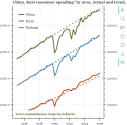
2. Retail sales is not reflective of total household consumption - it does not include service consumption and does not adjust for inflation/deflation. Real consumer spending data, from the NBS Household Survey, show consumption growth being healthy, which is a huge achievement given the housing bust and household deleveraging.
Here's some more context
1. May Retail sales is positive if goods affected by subsidies are excluded (especially vehicles). When retail sales growth bounce back in Q4 of this year due to low base effects (no more subsidy comps), watch these pundits ignore it and then try to cherry pick some other data that happened to look weak.
2. Retail sales is not reflective of total household consumption - it does not include service consumption and does not adjust for inflation/deflation. Real consumer spending data, from the NBS Household Survey, show consumption growth being healthy, which is a huge achievement given the housing bust and household deleveraging.
Has it really tried the alternatives to see if the remedies worked or not? It feels the policymakers find themselves stuck between rock and hard place with very little wiggle room. Does anyone really understand why they have not already tried increasing minimum wages and transferring SOE income to households? It would be absolutely nice to be not dependent on outsiders for maintaining a good economy. Same for child births, has there really been a good enough incentive structure for those who have more than one children? Instead the attempt to keep the low value manufacturing competitive, people are having to work hard without pay raise. The very least that they can do is to liberalize further. Private properties and ownership and having larger say of those enterprises in the nation building. I mean I would absolutely love to see Landspace or Space Pioneer grab a large piece of land in Hainan and criticize the government for being incompetent. I would also love to see policy changes more frequently to address changing scenarios. But efficiency driven mindset will ultimately reduce economic dynamism. Housing is for living and not for speculation sounds nice but it did made large section of middle class less wealthier. And now you see persistent attempt to prop up the housing price with no avail, when they were the one one to go overboard to tank it at the first place. Liberalizing property ownership and detached single family housing would create another demand from the wealthier section. More liberalization, less of central command, having more say of private enterprises, more capitalism, and more immigration. China is huge to amalgamate the immigrants but would get young blood that will be sorely needed in coming future.You make some good points.
However I think some of your points are out of China's control. The US/West and their allies still control and dominate the current world system we have today which was set up by them. China has used this system and diynd loopholes within it to grow wealthy and Industrialised. However, this has woken the US/West up and maje them cautious about China, hence all the measures they have been taking to curtail Chinese companies.
They have an advantage in setting ge narrative and shaping global public opinion. Since the control the media landscape. The hell, even china relies on western platforms to report about things going on in the world/other countries. So this are things China can't control or taste is unable to control for now.
As for demographic issue, china and all east Asian countries are facing same issue with the lowest birth rates on the planet(and it's getting worse with each passing year). Many other developed countries are facing something similar though not as bad yet. From all the things Japan, Taiwan, Singapore etc have all tried, nône has worked . So its not just a Chinese leadership issue. I dont think this will change for he better at all. The country like many others just have to get used to an ageing population this coming decades. Just have to manage it. You can impse measures to force people not to have chiildren but its far more difficult (if not almost impossible) to force them to have one.
As for capital markets and private industry, its normal. I dont think china or any country can have a large liquid capital markets like the US this century. Its highly unlikely barring a major catastrophic event. China's political system is completely different from the US/WEST. With the state having control and primacy over the capital markets with strict controls in place. Global investors cant even invest in some Chinese companies listed in china for example even if they wanted to. The best China can do here is use hong kong who has more links and closer system to the anglo saxon common law and a more open financial market. Thats as much as China can do in that sector. There was never a chance Chinese companies would ever be as valuable and atteactive to investors as their American peers for various reasons. As lôg as the US startef restricting Chinese private rech companies from listing and benefitting from US huge liquid capital markets.
So i dont think there's much china could have done that it hasnt. Overall , she has done quite well looking at the circumstances. Plus the current systems created by the US still works for china, reason ironically its china thats the biggest advocate today of the current multilateral system, which is quite ironically.

Thats looking more and more like US kind of healthcare where people are creating gofundme campaigns to cover medical bills. Hope china will do better for their own people in the future. Subsidize domestic healthcare with healthcare service, medicine etc export or something like that.Yeah, they're pathological savers because people who experienced extreme famine are still very much alive, not to mention those who lived through less severe poverty. And even all that saving won't save them from shit like this.
They really need to do something about their stock market or they will (or may be planning to?) forgo any viable wealth building in the country. Bonds suck because the currency is kept low and even if they let it appreciate, it won't give as good returns. Real estate is off the list. There's two choices left: Invest in the Chinese stock market which sucks and is super risky, or funnel your money out of China to invest in the West. China keeps putting more and more capital controls so it seems like they're looking to force people to invest in the Chinese stock market. But they're doing this without making the stock market investible before hand. So really there is nothing. If China does not figure out a reliable and efficient way to build wealth then people will only continue to funnel there money out no matter what. It is simply much better to grow your money outside of China than inside and people will ALWAYS find a way. Hard decisions will have to be made like relaxing government interference.As for capital markets and private industry, its normal. I dont think china or any country can have a large liquid capital markets like the US this century. Its highly unlikely barring a major catastrophic event. China's political system is completely different from the US/WEST. With the state having control and primacy over the capital markets with strict controls in place. Global investors cant even invest in some Chinese companies listed in china for example even if they wanted to. The best China can do here is use hong kong who has more links and closer system to the anglo saxon common law and a more open financial market. Thats as much as China can do in that sector. There was never a chance Chinese companies would ever be as valuable and atteactive to investors as their American peers for various reasons. As lôg as the US startef restricting Chinese private rech companies from listing and benefitting from US huge liquid capital markets.
Last edited:
Dude before writing crap you should put some facts in your words.Has it really tried the alternatives to see if the remedies worked or not? It feels the policymakers find themselves stuck between rock and hard place with very little wiggle room. Does anyone really understand why they have not already tried increasing minimum wages and transferring SOE income to households? It would be absolutely nice to be not dependent on outsiders for maintaining a good economy. Same for child births, has there really been a good enough incentive structure for those who have more than one children? Instead the attempt to keep the low value manufacturing competitive, people are having to work hard without pay raise. The very least that they can do is to liberalize further. Private properties and ownership and having larger say of those enterprises in the nation building. I mean I would absolutely love to see Landspace or Space Pioneer grab a large piece of land in Hainan and criticize the government for being incompetent. I would also love to see policy changes more frequently to address changing scenarios. But efficiency driven mindset will ultimately reduce economic dynamism. Housing is for living and not for speculation sounds nice but it did made large section of middle class less wealthier. And now you see persistent attempt to prop up the housing price with no avail, when they were the one one to go overboard to tank it at the first place. Liberalizing property ownership and detached single family housing would create another demand from the wealthier section. More liberalization, less of central command, having more say of private enterprises, more capitalism, and more immigration. China is huge to amalgamate the immigrants but would get young blood that will be sorely needed in coming future.
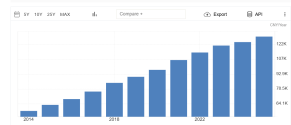
China wages has increased steadily year by year much much higher than India or even Mexico that is why Western media believed that China manufacturing was not going to survive because manufacturing wages has risen constantly.
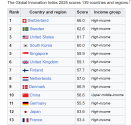
China did the largest manufacturing upgrade ever from clean tech to semiconductors to high tech services, China has consistently risen in the innovation index that no only measure academic output but also high tech high quality industrial output. Why you think the Europeans feel so threaten by China. For toys? is cars, ICs, bio tech, high end chemicals made in China.
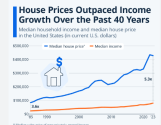
Housing prices in the US have to fall 40% just to be affordable again, the US have two options, they can continue with the bubble injecting money into a money pit and seeing the US cities becoming Fabelas OR they can take the economic hit now. There are no good options because the problem has continue for too long. The Chinese government decided that the bubble was too dangerous and was better to take the hit when their economic grow is higher than later.
You cant price out and ruin future generations <if you want women to have more kids> just to keep some old people rich. House prices should be determined by market demand and no Central Bank money.
Landspace and other space companies in China have platforms assigned their platforms in regions to make sure that their endeavors is done safety and without polluting people lands. Chinese government doesn´t