Chinese semiconductor thread II

tokenanalyst

Lieutenant General
Registered Member

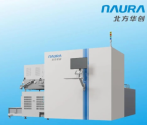
NAURA's first panel-level packaging Descum equipment rolls off the production line, enabling the upgrading of the advanced packaging industry.​

Recently, Naura Technology Group successfully rolled out its first 600mm×600mm panel-level packaging descum machine. This marks a significant milestone for Naura Technology Group in its foray into the panel-level packaging field and will inject strong new momentum into the upgrading of my country's panel-level packaging industry.​

1780085881908.png

In semiconductor manufacturing, the descum process is a crucial step affecting product yield and production efficiency. Faced with the diverse descumming requirements arising from different materials, film layers, and pattern structures, Naura Technology Group adheres to a "one-customer-one-solution" approach, making solving customers' actual needs the core guiding principle of product development. This first piece of equipment shipped represents a significant achievement of Naura Technology Group's collaborative technological efforts with its customer, marking substantial breakthroughs in core technologies such as low-temperature descumming of substrates with high warpage and large-area etching uniformity. Leveraging its technological expertise in wafer-level packaging and combining it with the characteristics of large-size substrate materials, Naura Technology Group quickly launched customized panel-level packaging solutions to meet customers' requirements for high etching uniformity and low-temperature process control. For 600mm×600mm large-size substrates, etching uniformity and substrate surface temperature uniformity both meet mainstream industry requirements.

The successful application of Naura Technology Group's customized solutions has not only helped customers continuously improve in the R&D and production of panel-level packaging, but also laid a solid technological foundation for subsequent large-scale mass production. Looking to the future, Naura Technology Group is committed to becoming a trusted leader in the field of basic semiconductor products. The company will adhere to a customer-centric approach, prioritize quality, continuously innovate in line with the development direction of panel-level packaging, focus on tackling core technologies and improving production capacity, and work hand in hand with industry peers to jointly write a new chapter in the high-quality development of the industry.

Please, Log in or Register to view URLs content!
 

iewgnem

Captain
Registered Member
It must also be mentioned that Huawei can only survive in a large market like China. After being banned, only China's large market could sustain Huawei because there were enough patriotic people to accept inferior compute tech for indigenous products. And it was only China's scale and depth, that Huawei could justify creating a brand new OS for 20% market share in China. China would be wise to preserve this scale and depth of market that no country has right now.
Nobody's going to put up with inferior compute, but Huawei has consistently superior end user performance than rivals because it has superior tech stack from chip all the way to OS. Huawei was banned because it has superior tech, and it sells well because it has superior tech.

Not to say US didn't help, there is high correlation between patriotic people and successful people (literally demonstrated from studies), so US hostility allowed Huawei to focus on high end, high margin products like Mate X and Matebook Fold and still sell in large numbers, something no other competitors can do.
 

tphuang

General
Staff member
Super Moderator
VIP Professional
Registered Member
But it looks like Bytedance (parterning with Shanghai InnoStar) is attempting to use RRAM instead of SRAM like Groq/Cerebras

RRAM is only in R&D right now and hasn't been used in mass produced AI chips yet. Could be a big game changer if Bytedance can get RRAM to work. Doubao UX is much better than competitors due to its speed; if they can get RRAM chips to work, it would allow them to keep a huge UX moat by making the response of even thinking models much faster..

Please, Log in or Register to view URLs content!
that's cool, but please replace x.com with twitter.com so that X post shows up correctly here.

My latest on China's ADAS chip industry


tokenanalyst

Lieutenant General
Registered Member
Huawei’s rotating chairman and Deputy Chairman Xu Zhijun said.

US restrictions on American chip sales to China have allowed Huawei to get better “We are also grateful to the US for enabling our country’s semiconductor industry chain to truly grow,”

Please, Log in or Register to view URLs content!
There is nothing that can unify a country faster than an outside threat.

It must also be mentioned that Huawei can only survive in a large market like China. After being banned, only China's large market could sustain Huawei because there were enough patriotic people to accept inferior compute tech for indigenous products. And it was only China's scale and depth, that Huawei could justify creating a brand new OS for 20% market share in China. China would be wise to preserve this scale and depth of market that no country has right now.
Not necessary. To start there were other options apart from them and their market share in the smartphone business dropped like stone. What they did is that they innovated fast, to survive they moved to other business ventures like software, mining and automation. Then they started to go in guerrilla war against the US to get their supply chain in check were they injected Huawei style management to a lot of Chinese companies. Then they focused on innovation rather than raw power to get smartphone users back and now the are focusing on innovating in semiconductors redesigning decades of standard practices to get that performance they need.
 

tokenanalyst

Lieutenant General
Registered Member

Study on the imaging of bright-field and dark-field for contact holes in extreme ultraviolet lithography considering stage vibration effects.​

rcuit manufacturing continue to shrink, the impact of wafer and reticle stage vibrations on lithographic imaging quality has become increasingly pronounced. Focusing on extreme ultraviolet lithography for contact hole patterns, this work systematically investigates the influence of stage vibrations on imaging performance with a rigorous lithographic imaging model and numerical simulations. Dynamic stage vibrations are incorporated into a conventional static imaging model to establish a more realistic dynamic imaging framework, and optical proximity correction (OPC) is used to emulate advanced-node process characteristics across different patterns. Results indicate that, as the target feature size decreases, the sensitivity of imaging to vibration increases significantly, and larger vibration amplitudes lead to a clearly nonlinear degradation of imaging quality. A comparative analysis of imaging performance and vibration robustness for different critical dimensions shows that bright-field masks exhibit slightly inferior vibration tolerance, whereas dark-field masks provide superior robustness for dense patterns. Building on these findings, an OPC optimization strategy incorporating moving standard deviation is proposed, offering a feasible approach to mitigating the adverse effects of stage vibrations on lithographic imaging.​

Please, Log in or Register to view URLs content!
 

tokenanalyst

Lieutenant General
Registered Member

Saiteng Technology: The Nanxun high-end semiconductor equipment project is expected to gradually commence production this year.​

Saiteng Co., Ltd. confirmed on the investor interaction platform that the main infrastructure of the company's high-end semiconductor, new energy and consumer electronics intelligent equipment production base located in Nanxun, Huzhou, Zhejiang has been completed. After the completion of decoration and acceptance, it will be put into production in stages within 2026 .

The project, with a total investment of approximately RMB 2.5 billion , is implemented by the wholly-owned subsidiary, Saiteng Precision Electronics (Huzhou) Co., Ltd., and covers an area of approximately 380 mu. Its core focus is on HBM (High Bandwidth Memory) full-process testing equipment . Upon completion, the annual production capacity of HBM equipment will reach 300 sets, doubling the existing capacity. Simultaneously, it will produce over 10,000 sets of various semiconductor and electronic devices annually, with an estimated annual revenue of approximately RMB 4.4 billion.

As the core production capacity carrier for the company's "second curve" in semiconductor business, the Nanxun base will focus on ensuring orders from leading customers such as Samsung, SK Hynix, and Changxin Memory after it goes into operation. At the same time, it will shorten the delivery cycle of HBM equipment by about 20% and strengthen the supply capacity of domestic high-end semiconductor testing equipment.​

1780095967684.png

Please, Log in or Register to view URLs content!
 

tokenanalyst

Lieutenant General
Registered Member

Jiangsu plans to build a high-purity quartz sand production project with an annual output of 10,000 tons, with a total investment of 650 million yuan​


Jiangsu Heyang New Materials Co., Ltd. has officially secured approval to expand its production of high-purity quartz sand, marking a strategic move into the upstream supply chain of solar-grade silicon materials. With an annual output capacity of 10,000 tons and a total investment of 650 million yuan (including 4 million yuan allocated specifically for environmental protection), the company will construct a new 5,000-square-meter production workshop within its existing facility in Taizhou's Gaogang District. This expansion involves leasing adjacent raw material warehouses to ensure operational continuity while strictly adhering to green and compliant production standards set by local regulatory bodies.

The newly produced high-purity quartz sand, featuring a silica content of at least 99.997% and particle sizes ranging from 40 to 150 mesh, will be manufactured under rigorous quality controls that align with multiple industry standards, including those specifically for photovoltaic applications. By integrating this new upstream capability with Heyang's existing mature infrastructure for silicon carbide processing and solar-grade silicon wafer manufacturing, the company aims to create a fully integrated industrial system. This vertical integration not only enriches their product portfolio but also significantly enhances their ability to control costs and secure critical materials for downstream production.

This project underscores Heyang New Materials' commitment to developing strategic emerging industries such as renewable energy and next-generation information technology by securing commanding positions in the material supply chain. As a regional leader with over two decades of experience in solar-grade silicon, the company's addition of high-purity quartz sand production complements its current output of 260 million annual silicon wafers, creating a robust internal support network. This holistic approach is designed to improve overall market competitiveness and ensure stable operations across the entire lifecycle of silicon-based materials from raw ore to finished photovoltaic components.

Please, Log in or Register to view URLs content!
 
Top