16 V-22s have been written off due to accidents since 1991, according to Wikipedia. In the same period, the substantially smaller number of CH-53s flying around the world registered
68 aircraft written off due to damage (
). Granted, a lot of those were due to worn-down older airframes and more challenging missions, the same way that many of the accidents with the V-22 were from pilots not being properly retrained for the completely new style of flying, or just because Boeing engineering cut one too many corners. But the V-22's loss rate is not representative of an inherent flaw of all tiltrotors, it's just the reality of operating a mechanically complex rotary wing aircraft.
Not sure if I understand what you want to express. I will give a try.
If we look at two archetectures, CH-53 is one of a huge number of airframes, this particular type having high write-off means nothing when talking about "flaw" of archetecture. It can well be explained by "older airframes and more challenging missions" as you have put forward.
CH-47 belongs to the same catagory as single rotor helicopter, V-22/V-75 is the only one in its catagory. Looking at the diagram below, you should get the why easily.
CH-47, when one engine fails, power to BOTH rotors reduce because they are driven by the same shaft. Since rotors power equally drop, the mass center and lift center remain the same point.
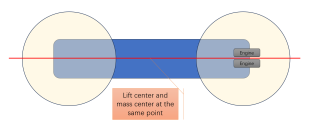
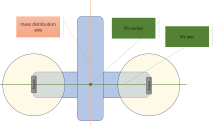
V-22 and V-75, engines located at two ends. They drive one rotor and connects to a center gearbox for redundance. Only when one engine fails, center gearbox will pass the power from another engine to the rotor of failing side.
More impartantly the mass is distributed in 90 degrees to the axis of lift. Imagine when one engine fails, how would the load and lift look like and how responsive it needs to be compared to CH-47.
Or to put it another way: are you going to use this same flaw to justify why the CH-47 fleet should all be retired at once, despite their comparatively glowing safety record?
I prefer a straight question like this. The answer is I won't because CH-47 does not have the "flaw" that V-22/V-75 have.
US choose V-22/V-75 for the speed advantage not because the welknown risk is reduced to the same level as conventional helicoptor.