PLA Strategy in a Taiwan Contingency

lcloo

Major
Respectfully, this isn't remotely surprising at all. If anything it's the DPP/Separtists being honest for the first time in 30 years.

The entire "Taiwanese Independence" identity was created by Lee Teng-hui, who grew up in Japanese-occupied Taiwan. As a politician he exploited anti-communist sentiments to use "China" as a proxy for criticizing Jiang Jieshi (Chang-Kai Shek).

What's especially import about Teng-hui is went to his grave an Imperial Japanese apologist. It was also under Teng-hui's leadership that Taiwan essentially weebified as a culture in the 90s. His last public interview was with a Japanese magazine claiming Taiwan's people were all ethnic Japanese.

Please, Log in or Register to view URLs content!

This slipped under the radar because the KMT was the incumbent party under Ma Ying-jeou, who had abysmal approval ratings from dealing with residual 2008 Financial Crisis problems, combined with a string of party scandals under his watch.

Thing is, far as I could tell Lee Teng-hui's parents are from Fujian. He's also avoided talking about the Japanese genocide of Indigenous Taiwanese and Dutch-Formosans. Which, from my view, has some pretty clear implications for a Japanese apologies. At least Korea's Park Chung-hee had the balls to be honest about it.

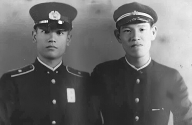
Lee Teng Hui served in the Imperial Japanese army during WW2 using Japanese name Iwasato Masao, with a rank of second lieutenant.

Lee Teng Hui's brother, Lee Teng Chin with Japanese name Iwasato Takenori fought for the Japanese imperial navy in WW2 and was killed in Philippines.

Lee brothers in Imperial Japanese army and navy uniforms in WW2.
1773679719707.png
 

Matcher6130

New Member
Registered Member
Lee Teng Hui served in the Imperial Japanese army during WW2 using Japanese name Iwasato Masao, with a rank of second lieutenant.

Lee Teng Hui's brother, Lee Teng Chin with Japanese name Iwasato Takenori fought for the Japanese imperial navy in WW2 and was killed in Philippines.

Lee brothers in Imperial Japanese army and navy uniforms in WW2.
View attachment 171705
Excuse my language but god damn. This is terribly enlightening, thank you.
 

Temstar

Brigadier
Registered Member
Please, Log in or Register to view URLs content!
One of the interesting effect of war in Iran is it's framing US bases in a new light. Since GCC states are not responding militarily to Iran hitting US bases in their territory, it's creating a mental reference that this is the expected outcome everywhere. This is quite different from the previous thought that if China hit US bases in Japan/Philippine/South Korea/Singapore etc it will draw those countries into the war directly.

Since US bases isn't doing much to protect GCC countries hosting them that might also provoke some introspection for other countries on the value of hosting such bases.
 

mister unknown

New Member
Registered Member
I'm wondering about the people aspect of the armed reunification op - what's actually the best way to dispose of separatist traitors?

Decapitation - literally & figuratively - would obviously be emotionally satisfying to us, but is it really the best way politically? Do we want to turn a worm like Lai into a Khamanei-like martyr, or would it actually be beneficial to have him exiled & living in comfort like a coward who won't suffer the consequences of his separatist ideology? I'm not sure, but I think the latter scenario might be useful for a while at least.

It seems to me that it would be more important to actually decapitate or turn the senior military leadership than to prioritize political leaders who aren't qualified to hold operational command over the armed forces in any case.

BTW, I'm not suggesting that we go out of our way to avoid targeting separatist political leaders, I'm just suggesting that maybe it'd be operationally beneficial to deprioritize them in the initial phases of the campaign.

Once armed resistance is gone, those separatist traitors are ours to dispose of as we please, or they can flee & be symbols of vassaldom & cowardice.
 

Moonscape

Junior Member
Registered Member
I'm wondering about the people aspect of the armed reunification op - what's actually the best way to dispose of separatist traitors?

Decapitation - literally & figuratively - would obviously be emotionally satisfying to us, but is it really the best way politically? Do we want to turn a worm like Lai into a Khamanei-like martyr, or would it actually be beneficial to have him exiled & living in comfort like a coward who won't suffer the consequences of his separatist ideology? I'm not sure, but I think the latter scenario might be useful for a while at least.

It seems to me that it would be more important to actually decapitate or turn the senior military leadership than to prioritize political leaders who aren't qualified to hold operational command over the armed forces in any case.

BTW, I'm not suggesting that we go out of our way to avoid targeting separatist political leaders, I'm just suggesting that maybe it'd be operationally beneficial to deprioritize them in the initial phases of the campaign.

Once armed resistance is gone, those separatist traitors are ours to dispose of as we please, or they can flee & be symbols of vassaldom & cowardice.
The Puyi approach is the best.

Reform Lai through labor until he's rehabilitated, and then give him a menial job in a third tier city somewhere
 

Temstar

Brigadier
Registered Member
Please, Log in or Register to view URLs content!
One of the interesting effect of war in Iran is it's framing US bases in a new light. Since GCC states are not responding militarily to Iran hitting US bases in their territory, it's creating a mental reference that this is the expected outcome everywhere. This is quite different from the previous thought that if China hit US bases in Japan/Philippine/South Korea/Singapore etc it will draw those countries into the war directly.

Since US bases isn't doing much to protect GCC countries hosting them that might also provoke some introspection for other countries on the value of hosting such bases.
Funnily enough in today's Guancha stream Ayi and Yankee talked about this very topic too. They said indeed even internally within PLA Trump's actions in the last few weeks have changed people's thinking. Yankee said he sat in a meeting where this topic came up and some people were still holding the opinion that US bases along the 1st Island Chain should not be attacked unless they attack first because of international law. Yankee said someone then stood up at the meeting and said:

"International Law? Go ask Trump how to write the word 'international law', see if he knows if it starts with a vertical or horizontal stroke!"

Yankee said previously when this topic came up with Japanese or Korean people on exchange they would immediately blurt out "of course you won't attack us, because we know you follow international law." But the events of last few weeks have made them realize that assumption is not safe and being host to US bases on the front line is a dangerous properstiton.
 
Top