Industry First – Raycon (RuiHong) releases 70dB+ high-suppression, high-power SAW filter for low-Earth orbit satellite communication
Raycon has officially unveiled an industry-first SAW (Surface Acoustic Wave) filter designed specifically for the demanding requirements of Raycon's low-Earth orbit satellite communication systems. This new component delivers critical performance metrics including a suppression level exceeding 70dB, high power tolerance suitable for S-band applications, and ultra-low insertion loss. By meeting these stringent standards, the filter enables direct mobile phone-to-satellite connectivity without requiring additional user equipment like receiving dishes, marking a significant advancement in aerospace-grade semiconductor technology.
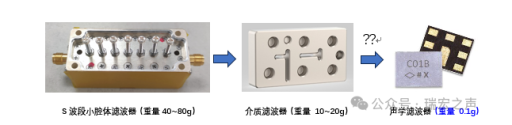
The development of this solution is closely tied to the strategic goals of AST SpaceMobile, which aims to revolutionize global broadband access by leveraging S-band (2-4 GHz) frequencies instead of the more common Ku/Ka bands used by competitors like Starlink. Unlike traditional base stations that rely on heavy cavity filters accounting for over 20% of their weight, AST's "base station in the sky" architecture utilizes ultra-large-scale phased array antennas to compensate for signal loss. This approach necessitates lightweight RF components to keep satellite launch costs manageable; as a single traditional filter could weigh up to 400kg on a Block 1 satellite, Raycon's new filters measure merely 20x16mm and weigh less than 0.1g, offering an unprecedented weight-to-performance ratio essential for scalability.
To achieve the necessary high-suppression and low-loss characteristics traditionally found in cavity filters but with acoustic efficiency, Raycon's R&D team spent over a year optimizing materials, electrode processes, circuit models, and electromagnetic leakage cancellation techniques. The resulting B65 TX filter features a passband of 2120-2200MHz with a suppression greater than 70dB and power tolerance for 39dBm signals, while its matching RX counterpart ensures near-end suppression requirements are met. Additionally, the company has extended this technology to the B3 band, launching high-performance filters that maintain sub-0.1g weights and superior attenuation levels, providing a complete RF front-end solution for next-generation S-band satellites.
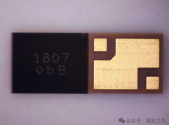
Ensuring operational reliability in the harsh environment of space is paramount, and Raycon's aerospace-grade devices have undergone rigorous validation protocols including thermal vacuum power testing and specialized radiation resistance assessments. The B65 TX filter specifically participated in total dose effect tests adhering to industry standards QJ10004A-2018 and GB/T 4937.6-2018, where irradiation by a cobalt source confirmed that key parameters remained stable with no adverse drift. These rigorous trials validate the device's robustness against cumulative radiation effects, ensuring consistent performance throughout the satellite's operational lifespan.
Looking at the broader landscape of low-Earth orbit satellite communications, this innovation positions Raycon ahead of major industry players like SpaceX. While competitors have recently moved toward S-band mobile connectivity—such as SpaceX's acquisition of Echostar's spectrum and its subsidiary Tune Holdings' purchase of Akoustis for acoustic filter assets—Raycon has already demonstrated a complete end-to-end solution. By solving the critical challenge of integrating high-power, low-weight filters into large phased arrays, Raycon not only supports AST SpaceMobile's Block 2 satellite deployment but also sets a new benchmark for future multi-channel architectures where minimizing mass is as crucial as maximizing data throughput.