Chinese semiconductor thread II

PopularScience

Senior Member
Registered Member
A collective post by leading figures in China's semiconductor industry has sparked heated discussion: Mobilizing the entire nation's resources to build our own ASML.

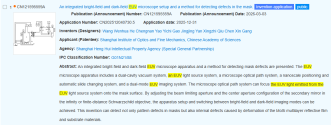
The article states that China has made breakthroughs in key areas of EUV, such as laser sources, mobile platforms, and optical systems. However, how to integrate these technologies into a complete industrial system with the full support of the nation is a problem that must be solved during the 15th Five-Year Plan period.

Please, Log in or Register to view URLs content!
 

tokenanalyst

Lieutenant General
Registered Member

The world's first 35-micron power semiconductor ultra-thin wafer process, packaging, and testing line has been completed in Shanghai.​

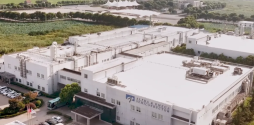
Nisi Semiconductor Technology (Shanghai) Co., Ltd. , located in the Songjiang Comprehensive Bonded Zone , has built the world's first 35-micron power semiconductor ultra-thin wafer process and packaging testing production line . This breakthrough in thickness significantly reduces the on-resistance and thermal resistance of power chips, substantially improving the energy efficiency and heat dissipation performance of devices. This provides core support for high-power-density applications such as new energy vehicles and 5G base stations, and provides a mass production foundation for domestically produced devices to enter the high-voltage platform and fast charging markets.​

1772723320292.png
The thinner the wafer, the better the performance, but the manufacturing difficulty also increases dramatically. Because when the wafer is thinner than 50 micrometers, it becomes as brittle as a potato chip and can crack with the slightest force.

According to reports, in terms of processing technology, Nissin Semiconductor controls wafer processing precision to 35±1.5 micrometers and eliminates 92% of grinding stress damage through chemical etching technology, reducing the fragmentation rate of ultra-thin wafers to less than 0.1%. The dicing process uses customized laser technology to replace traditional blades, significantly reducing the heat-affected zone and achieving a dicing yield of 98.5%.

Equipment parameters show that the production line grinding machine has a processing accuracy of 0.1 micrometers and an in-wafer thickness deviation of less than 2 micrometers; the laser cutting machine has a kerf width of only 11 micrometers, which can improve the effective chip area utilization rate by about 10% compared with traditional processes.

Currently, the production line's testing phase has a daily capacity of 120,000 finished products, while the bonding machine has a daily capacity of approximately 400 wafers. The core equipment in the production line, such as bonding, grinding, cutting, and debonding, was jointly developed by Nisi Semiconductor and domestic equipment manufacturers. Through collaborative innovation, key equipment has achieved independent control, filling application gaps in related manufacturing fields in China.


Please, Log in or Register to view URLs content!
 

tokenanalyst

Lieutenant General
Registered Member

World's first 170GHz optical modulator released.​

The National Information Optoelectronics Innovation Center officially released the world's first 170GHz lithium niobate thin-film optoelectronic modulator in Wuhan Optics Valley. This device serves as a core component in ultra-high-speed optical communication and is referred to as the "signal conversion heart" of these systems. Developed using an independently controllable lithium niobate thin film platform, the product relies on proprietary processes such as joint simulation optimization, high-precision packaging, and flip-chip bonding to achieve its performance. It demonstrates an ultra-high bandwidth of 170GHz with a measured return loss consistently below -10dB across the entire frequency band and signal transmission efficiency exceeding 90%.

This release marks a significant leap for China in the field, transitioning from catching up to leading the world and breaking foreign technology monopolies that previously limited domestic bandwidth to within 40GHz. As the first of its kind globally, it represents an independent chain spanning materials, design, packaging, and processes. The modulator supports single-channel transmission rates over 1.6Tbps and can be directly adapted for future 3.2T ultra-high-speed systems. Its applications include high-end test instruments, microwave photonic systems, next-generation optical networks, and key infrastructure support for 6G communication and computing power interconnection, thereby enhancing the independent controllability and international competitiveness of China's optoelectronic industry.

Please, Log in or Register to view URLs content!
 

tokenanalyst

Lieutenant General
Registered Member

Guangdong Xinlianxin completes Pre-A round financing, focusing on 3D advanced packaging equipment.​


Recently, Guangdong Xinlianxin Intelligent Technology Co., Ltd. (hereinafter referred to as "Guangdong Xinlianxin"), which focuses on the research and development and production of advanced semiconductor packaging process equipment, officially announced the completion of its Pre-A round of financing, which was strategically invested by Zhuhai High-tech Investment Group.

The funds raised in this round will be primarily used for core technology research and development, mass production expansion of high-precision motion control platforms and high-speed linear motor modules, as well as for improving the delivery capabilities of mass transfer and laser welding equipment, and expanding the high-end technology team.

Guangdong Xinlianxin was established on August 29, 2022. Formerly known as Shenzhen Xinlianxin Intelligent Technology Co., Ltd., it changed its name to Guangdong Xinlianxin in January 2024 and settled in Zhuhai in December 2023. The company focuses on the research and development and production of advanced semiconductor packaging process equipment, relying on two core underlying technologies: a self-developed high-precision motion control platform and a high-speed linear motor module.

Please, Log in or Register to view URLs content!
 

tamsen_ikard

Captain
Registered Member
"Domestic 28nm lithography machine enters process testing phase" Is that consistent with earlier commentary that YMTC was starting pilot production of an all domestic line at the beginning of the year? What is the typical timeline from process testing to HVM usage?
That 28nm was supposed to be under production in 2023. They are now entering testing phase? Progress is too slow in the lithography catchup technology
 

tokenanalyst

Lieutenant General
Registered Member
That 28nm was supposed to be under production in 2023. They are now entering testing phase? Progress is too slow in the lithography catchup technology
That post is from money guys, they don't usually look too deep, they don't looks for "Ultrapure water filtering for 14nm process". From government information, if you can called, that the immersion machine is going for 14nm this year and that is basically a step for 7nm.
Basically my problem with think tankers.
 

tokenanalyst

Lieutenant General
Registered Member

Tert-Butyl–Engineered Trinuclear Tin Complexes for High-Sensitivity Sub-10 Nm Patterning​

ABSTRACT​

As nano-devices approach sub-10 nm resolution, photoresists face increasing demands for both superior pattern fidelity and high sensitivity. However, achieving an optimal balance between high resolution and sensitivity remains a major challenge for existing photoresist systems. In this study, we report a novel class of trinuclear tin-based molecular photoresists that exhibit stable imaging performance in electron beam lithography (EBL) and extreme ultraviolet lithography (EUVL), as well as excellent plasma etch resistance. Notably, tert-butyl-substituted trinuclear tin complexes are developed for the first time. These materials achieve high sensitivity (D0 as low as 33 µC/cm2) and high-resolution patterning (linewidth down to 10 nm) under EBL. In EUVL, well-defined 30 nm lines are obtained at a dose of 25 mJ/cm2, highlighting the potential of tert-butyl substitution in the design of high-performance photoresist. Density functional theory calculations indicate that tert-butyl substitution elevates the highest occupied molecular orbital energy level and reduces the vertical ionization potential, facilitating photoelectron generation. Mechanistic studies further reveal that high-energy irradiation induces the formation of relatively stable tert-butyl radicals, which promote Sn-alkylene-Sn cross-linking networks. This synergistic effect significantly enhances patterning performance. Overall, this work deepens the structure–property understanding of metal-based photoresists and guides the design of high-sensitivity materials.

Please, Log in or Register to view URLs content!
 

Kalum Pupeter

Junior Member
Registered Member
Written by Mademoiselle Coco Feng, quite a name. Coco, Beautiful, Tyranny, Cock, Orange. Regardless, I am not in favor of name regulation a la Hongwu. A slippery slope. She appears to be referencing the Reuters article from December, which was widely accepted by Madameoiselle as truth despite knowledgeable writers already pointing out that it contained a lot of nonsense (wholesale consummated by her liberal bubble). I have copied the relevant parts of the article while omitting the misleading content. I was under the impression that this national program had already been launched? I’m also quite disappointed with their rambling about the market economy. To hell with the market economy. This is fundamental for the future of the country.

Top chip leaders urge national drive to ‘build China’s ASML’ amid US curbs​

Financial and human resources must be pooled and authorities should start drawing up plans immediately, top executives say in an article​

China’s top semiconductor executives have called for a nationwide push to build a domestic alternative to Dutch chip-equipment giant ASML, urging the industry to “abandon illusions and prepare for struggle” amid US sanctions. The current industry was too “small, fragmented and weak”, which was “dispersing numerous public resources”, according to an article co-authored by the co-founder of Semiconductor Manufacturing International Corporation (SMIC) and leaders of Empyrean, Yangtze Memory Technologies (YMTC), Naura Technology, and academics.

SMIC is the country’s top chip foundry, Empyrean is a leading integrated circuit design software developer, YMTC is a memory giant and Naura is China’s top semiconductor-equipment maker. The article said that the US had contained China’s rise in three main areas: electronic design automation (EDA) used for chip design; silicon wafers, a key chip material; and manufacturing equipment, especially extreme ultraviolet (EUV) lithography technology, which is dominated by ASML.

“An ASML EUV machine contains over 100,000 components sourced from 5,000 suppliers [while] ASML serves merely as the integrator,” according to the article by SMIC co-founder Wang Yangyuan, Empyrean chairman Liu Weiping, YMTC chairman Chen Nanxiang and Naura chairman Zhao Jinrong and professors from Tsinghua University and Peking University. The article, “Building an independent and controllable integrated circuit industry system”, appeared in the February issue of the Chinese journal Science and Technology Review. The online version was published on Wednesday.

EUV is used to print nanoscale patterns onto silicon wafers for cutting-edge chips. ASML has been barred from exporting EUV machines to China. While the article noted that China had made “breakthroughs” in EUV laser, dual-stage platform and optical systems, “integrating them with national efforts is a problem that must be solved during the 15th five-year plan period”, which runs up to 2030.

The article said that “building China’s ASML” would require a unified national effort, which meant pooling financial and human resources. As the task was urgent, authorities should start drawing up plans immediately, it added. The efforts on EDA and silicon wafers “must also be coordinated and guided at the national level, creating a new win-win mechanism through enterprise collaboration”, it said.

The article noted that China’s chip industry was fragmented and had too many small players – over 100 EDA developers, 3,600 chip designers and over 180 firms that focused on wafer-fabrication equipment. “Of course, in a market economy, it is difficult to push through mergers and acquisitions [M&A] by force,” the article said.

Please, Log in or Register to view URLs content!
 
Last edited:

meedicx

Junior Member
Registered Member
Written by Mademoiselle Coco Feng, quite a name. Coco, Beautiful, Tyranny, Cock, Orange. Regardless, I am not in favor of name regulation a la Hongwu. A slippery slope. She appears to be referencing the Reuters article from December, which was widely accepted by Madameoiselle as truth despite knowledgeable writers already pointing out that it contained a lot of nonsense (wholesale consummated by her liberal bubble). I have copied the relevant parts of the article while omitting the misleading content. I was under the impression that this national program had already been launched? I’m also quite disappointed with their rambling about the market economy. To hell with the market economy. This is fundamental for the future of the country.

You need to put the article in context; it was published before the two sessions and advocates for specific policy. If you read the original article in Chinese, it reads like one of those political articles from Qiushi that states a problem with the proposed solution being already decided before publication. The article is a post-hoc public justification.

From the article, it seems all the core EUV components have made breakthroughs and there will probably be a merger to create a national lithography champion to integrate the component and mass produce scanner. There will probably be other mergers to create a big national champion for EDA.
 
Top