On that day, there was an earthquake of magnitude 4.4 in Xinjiang, but it was about 700km far from Lop Nur Test site and it had a focal depth of 10 kilometresPosting this for the update:
In light of today’s remarks from Under Secretary DiNanno, the Comprehensive Nuclear-Test-Ban Treaty Organization’s (CTBTO) Executive Secretary Robert Floyd has issued a statement.
”The CTBTO’s International Monitoring System (IMS) is capable of detecting nuclear test explosions with a yield equivalent to or greater than approximately 500 tonnes of TNT, including detecting all six tests conducted and declared by the DPRK [North Korea]. Below 500 tonnes is roughly 3 percent of the yield of the explosion that devastated Hiroshima,” Floyd says. “Mechanisms which could address smaller explosions are provided by the Treaty but can only be used once the Comprehensive Nuclear-Test-Ban Treaty enters into force. That is why it is important that the nuclear arms control framework includes the entry into force of the CTBT. The need is more urgent now than ever.”
“Regarding reports of possible nuclear tests with yields in the hundreds of tonnes, on 22 June 2020, the CTBTO’s IMS did not detect any event consistent with the characteristics of a nuclear weapon test explosion at that time. Subsequent, more detailed analyses have not altered that determination,” he adds. “Any nuclear test explosion, by any state, is of deepest concern.”
So the US accusation was, quelle surprise, BS.

You are using an out of date browser. It may not display this or other websites correctly.
You should upgrade or use an alternative browser.
You should upgrade or use an alternative browser.
China ICBM/SLBM, nuclear arms thread
- Thread starter Blitzo
- Start date
Deep in China’s Mountains, a Nuclear Revival Takes Shape
Satellite imagery of secretive nuclear facilities reveals Beijing’s efforts to expand its arsenal, just as the last global guardrails on nuclear weapons vanish.By and
Feb. 14, 2026

antiterror13
Brigadier
can you please summarise it in a few sentences, not everbody have access to NYtimes

Let me gift the full article for anyone interested.
VVVV
And a fast, Gemini3 summary.
VVVV
And a fast, Gemini3 summary.
This New York Times interactive report, published on February 15, 2026, details a significant expansion of China’s nuclear infrastructure and a fundamental shift in its strategic posture.
Based on the article's findings, here is a summary of the key developments:
1. Expansion of Secretive "Third Front" Sites
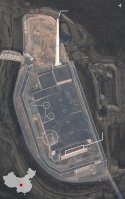
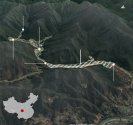
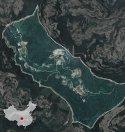
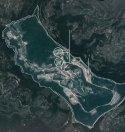
The report uses satellite imagery to reveal extensive upgrades to nuclear-related research and production sites hidden in the valleys of Sichuan Province. These facilities—specifically Zitong and Pingtong—were originally built decades ago as part of Mao Zedong’s "Third Front" initiative to protect sensitive military work from foreign attack.
- Physical Upgrades: Imagery shows new bunkers, ramparts, and a 360-foot-high ventilation stack at Pingtong.
- Increased Activity: Investment in these sites reportedly accelerated around 2019, suggesting a long-term plan to modernize the core of China's nuclear weapons research.
2. Shift in Nuclear Strategy
The article argues that China is moving away from its traditional "minimum deterrence" policy—a strategy of maintaining only enough weapons to survive a first strike and retaliate.
- Beyond Deterrence: The title "It’s Not Just About Deterrence Anymore" reflects expert assessments that China is building a "world-class" nuclear force capable of more complex operations.
- Strategic Flexibility: Analysts believe the expansion is designed to give Beijing "escalation dominance," potentially to deter U.S. intervention in a regional conflict, such as over Taiwan.
3. Rapid Growth of the Arsenal
China is on track to significantly increase its warhead count.
- Scale: The arsenal is projected to grow from an estimated 600 warheads today to 1,500 by 2035, approaching the levels deployed by the United States and Russia.
- The Nuclear Triad: Following a massive military parade in September 2025, China has demonstrated a complete "triad" of delivery systems: land-based ICBMs (including hundreds of new silos), submarine-launched missiles, and strategic bombers.
4. Geopolitical Context
The report highlights that this buildup is occurring during a period of extreme global instability for arms control:
Bottom Line: The article concludes that China's nuclear program has entered a new phase of maturity. By modernizing its secret research sites and rapidly expanding its stockpile, Beijing is signaling that it intends to meet or challenge the strategic capabilities of the United States.
- New START Expiration: The expansion comes as the New START treaty between the U.S. and Russia expired (February 5, 2026) without a clear successor, removing the last major guardrail on global nuclear competition.
- Three-Way Arms Race: Experts warn the world is entering a new, more dangerous era of a three-way nuclear race between the U.S., Russia, and China, where traditional deterrence models may no longer hold.

can you please summarise it in a few sentences, not everbody have access to NYtimes
its revival of two main facilities.
Zitong - bunkers and ramparts to test “high explosives,” chemical compounds that detonate to create the conditions for a chain reaction
Pingtong complex to make the pits of warheads - the metal core - containing plutonium

One major concern for Washington is how this larger, more modern arsenal might change China’s behavior in a crisis, particularly over Taiwan.
China wants to be “in the position where they believe they’re largely immune from nuclear coercion by the United States,” said , a former U.S. deputy assistant secretary of defense for China who is now a senior political scientist at RAND. “I think they probably judge that could come into play in a conventional conflict over Taiwan.”
This is, of course, of great concern to those who are intent on nuclear coercion. Says it all, really.
The NYT article without a paywall.can you please summarise it in a few sentences, not everbody have access to NYtimes
comes back as server error