
Chinese Soft Power and Media Discussion and Updates

Wrought

Captain
Registered Member
Shanghai has become a popular destination for Korean tourists in recent years.

The number of South Korean visitors to Shanghai rose from around 570,000 in 2023 to 1.1 million in 2024, before climbing in 2025 by a further 23.6 per cent, year on year, according to data from the country’s aviation information portal. Short flight times, along with affordable food and attractions, helped draw a total of 1.37 million South Korean visitors to the city last year – roughly 43 per cent of all South Korean visits to mainland China, up from 35 per cent in 2024, data showed.

And Shanghai’s popularity has shown no sign of cooling in 2026. Mode Tour International, one of South Korea’s major travel agencies, said the city has led all January bookings to mainland China, with reservations jumping 260 per cent from a year earlier, based on data received as of January 15. Travel during Seollal – Korea’s traditional Lunar New Year celebration, which will run from February 14 to 18 this year – is poised to outpace the 2025 Seollal holiday week, with bookings up 270 per cent.

The number of South Korean tourists visiting China is projected to rise by 24.2 per cent in 2026, to 3.94 million, according to a January 13 report by Yanolja Research. This expected growth rate is the fastest among South Korea’s top four outbound travel destinations in 2025 – Japan, Vietnam, China and Thailand, said the Seoul-based private research institute dedicated to the travel and tourism industry.
Please, Log in or Register to view URLs content!
 

fishrubber99

Junior Member
Registered Member
He himself said that that month was unusual as due to some promotions he got extra money. Usual money is closer to usd 1000, and he's unable to save anything from that amount. (of course we can consider what he sends back home as his savings)
This ultimately just means that he's able to spend 20% of his income on housing on a normal month, which is still a substantially low rent burden in a city like Shenzhen.

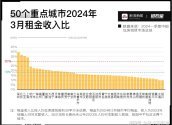
Regardless this isn't relevant or generalizable for a majority of the urban population, China's rent-to-income ratio is not excessively high in general, the average rent burden in 50 of some of China's most important cities averages out to 18% in 2024. Note that this is based on a per capita living space of 30m^2, so if you want to expand this to the average living space in Europe (around 40m^2) you would multiply this percentage by 4/3. So a more realistic rental burden can be considered to be 24% of income. This data is from CIH which is a real estate data firm in China, but 24% adjusted figure is more consistent with the NBS accounting for per capita expenditure on housing, which is 23% of total final consumption.

G_AI922XgAA5vWP (1).jpg

For reference, the rent-to-income ratio across the US is around 28% from Moody's:
Please, Log in or Register to view URLs content!
.
So it's most likely the case that renting for the average couple is cheaper in China than in the US as it's lower as a proportion of income.

Valid point, however I didn't derive my statement based simply on car ownership. These people also live in quite small spaces. Even accounting for PPP differences, their salaries isn't more than 25-30k USD.

On car ownership, car ownership has become much more ubiquitous in China over the course of the last 18 years, basically within a generation. A mid-sized sedan would've taken the average manufacturing worker 120 months to purchase in 2008, but in 2024 it's roughly less than a year's worth of wages at around 10 months:


In contrast, the average US manufacturing worker works around 2100 hours a year, earning a wage of 70k USD. Picking a comparable vehicle in the US, a new Toyota Camry would be around 30k MSRP. That means the average manufacturing worker can afford a car (discounting any other expenses) in 5 months. This is still significantly better than China, but the trend in China is lower and lower prices for cars relative to average wages while in the US it is the opposite as the total number of cheaper models is dropping over time and car price growth is equivalent or exceeding wage increases in recent years. A BYD EV would also have much lower costs over time for maintenance and has cheaper refueling costs. Of course this is the kind of "deflation" that a lot of commentators decry, discounting the fact that it has basically resulted in a massive amount of consumer surplus and more affordable cars. If they were transported to the 1910s-20s I wonder if they would have the same complaints when Ford revolutionized the assembly line and Model T prices dropped substantially as a result.
 
Last edited:

BlackWindMnt

Major
Registered Member
All i got from the Epstein files, is that the bar for being "genius" in the western elite eyes is just be white(ashkenazi jews included), have the correct bloodline and be able to do advance high school math. That explains when the "court jews" like Kissinger and Epstein died(?) it went all downhill. No intellectual constraints on the wild imaginations of the likes of Steve Bannon, Trump, Bessent, Hegseth etc.
 

GulfLander

Brigadier
Registered Member
google translated
A coffee shop in Akihabara, Japan, has closed down, posting thank-you notes in multiple languages, but one in Chinese reads "Do Not Enter".

A chain coffee shop in Akihabara, Tokyo, that had been operating for about 20 years recently closed down, and the multilingual notice posted at the entrance unexpectedly sparked controversy. The shop thanked customers in Japanese for their support over the past 20 years since its opening in 2006, and stated that it officially closed on January 23rd. Next to it were handwritten notices in English, Korean, and a mix of Chinese, English, and Korean. The English and Korean versions also stated that the shop closed on January 23rd and thanked its long-time customers with a warm tone, accompanied by smiley face emojis.

However, netizens noticed that the Chinese version was significantly different. Both the traditional and simplified Chinese versions only stated "Closed, please do not enter," without any words of thanks or illustrations. Many netizens described it as "particularly cold" and questioned whether the store treated Chinese-speaking customers differently from customers speaking other languages. Some Japanese netizens commented on social media that these words looked like "years of accumulated dissatisfaction written on a notice."

In response to the controversy, the branch in question has since removed all notices in Chinese, English, and Korean, retaining only the original Japanese closure notice, and has not yet offered a public explanation
Please, Log in or Register to view URLs content!
 
Top