Chinese semiconductor thread II

tokenanalyst

Lieutenant General
Registered Member

The Oulai Mingyue Lake Semiconductor High-Purity Materials Project Commences Construction​


On January 28, 2026, the Oulai Mingyue Lake Semiconductor High-Purity Materials Project officially commenced construction. Led by Shaoguan Oulai High-Purity Materials Technology Co., Ltd. a wholly-owned subsidiary of Guangdong Oulai High-Tech Materials Co., Ltd. (Oulai New Materials) the project marks a strategic move to expand into the upstream segment of the semiconductor materials supply chain.

The initiative aims to achieve self-sufficiency in high-purity raw materials, particularly ultra-high purity oxygen-free copper and high-purity cobalt, critical for integrated circuits, semiconductors, and advanced technologies like nuclear fusion, superconductivity, and data center cooling systems. This will enhance supply stability, improve product quality consistency, and strengthen Oulai New Materials’ industry leadership.

Beyond internal needs, the project will pursue market-oriented operations, unlocking new growth potential and establishing a second revenue stream.

Local officials, including Xiao Zhiyong and Wen Hongfu, praised the project as a model of government-enterprise collaboration. They emphasized support from the municipal government and Shaoguan High-tech Zone, committed to being proactive "service providers" to foster industrial clustering. The project is expected to boost Shaoguan’s development of strategic emerging industries, positioning Mingyue Lake Industrial Park as a key hub for advanced materials in northern Guangdong.
Please, Log in or Register to view URLs content!
 

tokenanalyst

Lieutenant General
Registered Member

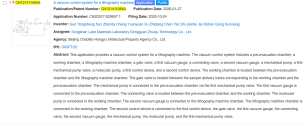
Hengyunchang, a core component manufacturer of semiconductor equipment, went public on the Science and Technology Innovation Board.​


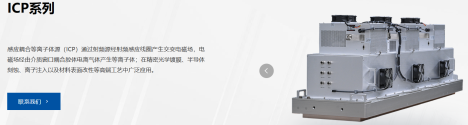
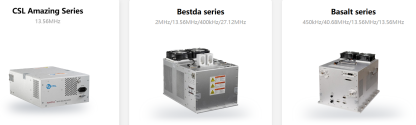
Hengyunchang, a leading domestic manufacturer of core semiconductor equipment components, successfully listed on the Science and Technology Innovation Board (STAR Market) of the Shanghai Stock Exchange on January 28, 2026—marking the first IPO on the board for the year. The company specializes in plasma radio frequency (RF) power supply systems, often dubbed the "nanosurgical knife" of semiconductor manufacturing due to their critical role in precise chip etching and thin-film deposition processes.
1769691928304.png
1769691989348.png
From 2022 to 2024, Hengyunchang's revenue surged from RMB 158 million to RMB 541 million, reflecting an average annual compound growth rate exceeding 80%. Net profit (excluding one-time items) climbed from RMB 20 million to RMB 129 million, underscoring strong profitability and market momentum.

Proceeds from the IPO will be allocated to five key initiatives:​
  • Shenyang Semiconductor RF Power Supply Industrialization Project
  • Intelligent Production Base for Semiconductor & Vacuum Equipment Components
  • R&D and Cutting-Edge Technology Innovation Center
  • Marketing and Technical Support Center Development
  • Working capital supplementation
These investments aim to enhance the company’s technological leadership, production capacity, and customer service, further solidifying its position within China’s growing semiconductor ecosystem.

Please, Log in or Register to view URLs content!
 

huemens

Junior Member
Registered Member
Please, Log in or Register to view URLs content!

Didn’t Reuter claim that China already unbanned it? This is why you need to be careful when capitalist interest is at stake.
They are still playing with the words. The license he was implying was the export license for it from the US side. Even though Trump gave green light, they still has to get an official export license from US commerce department. Commerce department initially declared a 30 day review period. So that license is still being finalized.

What he said about China side is that "he believes they are still deciding and he hopes China will allow them to sell", which implies that licensing is still not in play at the China side, rather they are still at the stage of deciding whether to allow or not and if they are going to allow then how many.
 

jnd85

Junior Member
Registered Member
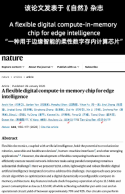
Beijing researchers have published research in Nature wherein they describe their newly developed flexible AI chip that can bend and stretch, possibly leading to a new generation of wearable tech,
Please, Log in or Register to view URLs content!
Xinhua.
1769733935020.png
From the article: "Researchers from Tsinghua University, Peking University, and other institutions have successfully developed the FLEXI series of fully flexible digital in-memory computing chips based on domestically produced technology, breaking through the inherent bottleneck of applying flexible electronics to edge high-performance artificial intelligence computing. This chip, based on low-temperature polycrystalline silicon thin-film transistors, is as thin as a cicada's wing, can be bent at will, and possesses advantages such as ultra-low power consumption, high energy efficiency, high robustness, and low cost.

"The chip also employs a 'memory-computing' architecture centered on a fully digital static random access memory (SRAM), effectively combining the "memory unit" and the "computing unit" into one, eliminating the time and energy consumed in transferring data back and forth, thus achieving greater efficiency. The smallest version, the FLEXI-1 chip, has an area of only 31.12 square millimeters, integrates 10,628 transistors, and can operate in an ultra-low power mode of only 55.94 microwatts.

"Yan Bonan, one of the researchers and assistant professor at the Institute for Artificial Intelligence at Peking University, told reporters that the chip can withstand more than 40,000 180-degree bends without performance degradation and maintained stable operation during a long-term test lasting up to six months. It also supports neural network compression and one-click deployment, enhancing the chip's intelligent processing efficiency. A single flexible chip with a capacity of only 1 kilobitometer can achieve an accuracy rate of up to 99.2% in detecting arrhythmias, providing an indispensable core computing engine for next-generation wearable medical devices, flexible brain-computer interfaces, and intelligent robots".
 

jli88

Junior Member
Registered Member
Please, Log in or Register to view URLs content!

Some highlights:

  1. YMTC- Construction on the Wuhan Plant 3, which began in September of last year, was initially expected to begin full-scale production next year. However, local officials predict that YMTC will adjust its schedule and begin mass production in the second half of this year.
  2. YMTC's market share, based on NAND shipments, reached 10% for the first time ever in the first quarter of last year, and rose 4 percentage points year-on-year to 13% in the third quarter.
 
Top