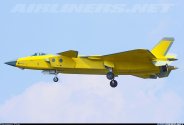
J-20 5th Gen Fighter Thread VIII

siegecrossbow

Field Marshall
Staff member
Super Moderator
Those airframes are old though, at least twice as old as the oldest non-prototype J-20 airframe.

And besides, its the US that still holds quantitative advantage in stealth fighters (overall, as logistics constrains them for a localised Pacific conflict, but this is a malleable number). F-22 airframes would therefore have lower priority than J-20 airframes, not to mention its not even the main fighter the US expects to rely on for a Pacific conflict anymore due to its lack of modern 5th-gen capabilities (e.g., sensor fusion). The J-20 is still very much expected to be the main fighter for a Pacific conflict.


I had the same thoughts, and its not that I disagree. The real question is the magnitude of the difference. Is it worth sacrificing a few of the oldest and weakest airframes of the far-and-away superior generation of fighters (that are still useful in peer conflicts and likely dominant in all other conflicts) to be full-time trainers? And how many airframes?

I don't know if we'll ever get enough details to make that decision, but that's fine since its not our decision to make. But this is a good opportunity to get insight into PLA's thoughts on J-20. If we do see some combat-capable J-20s be relegated to full training even while total J-20 family numbers are 300-400 while F-35 is >1000, that suggests they feel confident enough in reducing some overall fleet capability today to train for greater capability a little later.

There's also the question of if the gap between AL-31 J-20 and WS-10C2/WS-15 J-20A is so great that habits learned on the former would be a detriment to just having a clean learning approach to the latter.
The gap between J-20 AL-31 and WS-10C is qualitative but not of a generation leaping variety. It is more of a case of I have AESA, but you have better one and I have stealth, but your RCS is even lower and over wider radar band. It is much easier to teach a Toyota driver to drive a BYD than it is to teach a cyclist to do the same.
 

sunnymaxi

Colonel
Registered Member
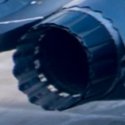
Ah, it just occured to me that this is for sure not a WS-10C2. C2s have the convergent-divergent overlaps highlighted in silver:
View attachment 168593

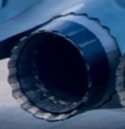
Just like WS-10Cs:
View attachment 168594


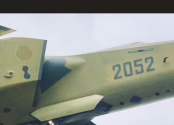
While this one is just pure black, which is indeed a WS-15-exclusive trait.
View attachment 168595
yeah. more and more WS-15 powered J-20 starting to appear. so Engine production is going smooth. now it will be interesting to see how much they scale up the Engine production this year. with WS-15 many new suppliers joined AECC Shenyang supply chain for the first time.
 

AndrewS

Brigadier
Registered Member
I had the same thoughts, and its not that I disagree. The real question is the magnitude of the difference. Is it worth sacrificing a few of the oldest and weakest airframes of the far-and-away superior generation of fighters (that are still useful in peer conflicts and likely dominant in all other conflicts) to be full-time trainers? And how many airframes?

There are now 100-120 J-20s being produced every year, which implies 120-150 pilots need to be trained.

It's worth taking the very oldest airframes (even if it is just 10 airframes), and use them as full-time training aircraft, which will accelerate the combat introduction of those 100-120 new J-20s every year.


I don't know if we'll ever get enough details to make that decision, but that's fine since its not our decision to make. But this is a good opportunity to get insight into PLA's thoughts on J-20. If we do see some combat-capable J-20s be relegated to full training even while total J-20 family numbers are 300-400 while F-35 is >1000, that suggests they feel confident enough in reducing some overall fleet capability today to train for greater capability a little later.

Let's say they only take 10 old airframes out of service and it accelerates training/proficiency by just 1 month.
That means 10 new airframes become combat ready 1 month earlier.

So you can see it results in an increase in J-20 capability very quickly.

Plus we're now at the point where China has run out of obsolete aircraft for retirement and replacement by stealth fighters.
Future fighter retirements/replacements will have to come from the 4th gen fighter fleet, which still do have usefulness.

---

Looking at the F-35, it's 80 hours of flight time for the training course over 9 months.
If you have 150 pilots per year, that implies a requirement for 16000 training hours on J-20s.

If only ten J-20s are dedicated to training, that works out as about 5 hours (4 sorties?) daily flight time per J-20, which is really pushing those airframes.

 
Last edited:

Andy1974

Senior Member
Registered Member
There are now 100-120 J-20s being produced every year, which implies 120-150 pilots need to be trained.

It's worth taking the very oldest airframes (even if it is just 10 airframes), and use them as full-time training aircraft, which will accelerate the combat introduction of those 100-120 new J-20s every year.


Let's say they only take 10 old airframes out of service and it accelerates training/proficiency by just 1 month.
That means 10 new airframes become combat ready 1 month earlier.

So you can see it results in an increase in J-20 capability very quickly.

Plus we're now at the point where China has run out of obsolete aircraft for retirement and replacement by stealth fighters.
Future fighter retirements/replacements will have to come from the 4th gen fighter fleet, which still do have usefulness.

---

Looking at the F-35, it's 80 hours of flight time for the training course over 9 months.
If you have 150 pilots per year, that implies a requirement for 16000 training hours on J-20s.

If only ten J-20s are dedicated to training, that works out as about 5 hours (4 sorties?) daily flight time per J-20, which is really pushing those airframes.
I know is this goes against accepted wisdom, but if you want to have the most effective training you should use the latest version hot off the production line.

If they are making 120 WS-15 J-20’s a year soon, then taking 1 months production for a training brigade is 10 airframes.
 

siegecrossbow

Field Marshall
Staff member
Super Moderator
I know is this goes against accepted wisdom, but if you want to have the most effective training you should use the latest version hot off the production line.

If they are making 120 WS-15 J-20’s a year soon, then taking 1 months production for a training brigade is 10 airframes.
There are different tiers to training — you have stages where you gain basic competency flying aircraft, stages where you practice basic maneuvers and strategies, and stages where you tie everything together and simulate “the real thing”. It is wasteful dedicating J-20A to anything less than highest fidelity training.
 
Top