09III/09IV (093/094) Nuclear Submarine Thread

AndrewS

Brigadier
Registered Member
On the contrary the gravity of the outcome should absolutely influence the weighting of the evidence and underlying assumptions.

Things like aero-engine progress, carrier construction count, nuclear submarine construction count, are strategically important in a manner that is greater than say, the production rate difference of a AFV or an assault rifle with greater implications for underlying technological capabilities and significance in a conflict, which should absolutely mandate greater caution around the inputs put in.

There is a difference between past nuclear submarine construction and that for future carrier construction and future aero-engines.

We already have observed data (outcomes) on nuclear submarine construction, and this is being used to analyse the past.
These conclusions should take precedence in importance.

In comparison, for future carrier construction and aero-engine progress, we don't have enough hard data points or outcomes yet. So the gravity/implications of the outcomes should take precedence on an analysis.
 

TopolMSS27

New Member
Registered Member
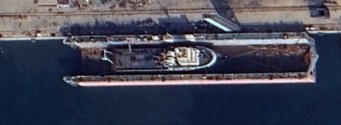
As everyone seems to be ignoring my link, what do we think this is coming out of or going into the old Western hall?

View attachment 167618

You go away for a week or so - and return to 10 pages :D

It could be a 094 - hard to tell in low res and there's no high res available. There's only 80 metres visible unfortunately.

It's potentially a 093B over the other side in the graving dock, but again, no high res to confirm. Caution required as to whether this is a new launch or not.

I have looked at the tugs though and there's no activity that points to a new launch - though we know for sure there's something in there. I would've expected it to have been dragged over by now if it was a newbie, but that doesn't show as happening.

BT1H did take something out though on the 5th as can be seen below in the images. Likely the 094 that's been on the pier for a while. Apart from that, it's just carried out the graving dock gate management tasks and loitered in the basin.

Huludao_260109_AIS_001.jpgHuludao_260109_AIS_003.jpg

The BCCY has been the same.
Huludao_260109_AIS_002.jpg

The only thing of real interest is the loitering mid basin for both tugs. This took place on 8/1/26 at around 0005 UTC for 10 to 15 minutes.
 

TopolMSS27

New Member
Registered Member
The UK trying to keep up just looks embarrassing now.
Not enough halls and not enough talent - thanks to shit governments not thinking ahead about anything except giving more to money to a failed health service and benefits system so that they can stay in power.

You can practically "earn" the same income on benefits, sitting at home playing on your Playstation than be a submariner in the Royal Navy. :mad:
 

AndrewS

Brigadier
Registered Member
Not enough halls and not enough talent - thanks to shit governments not thinking ahead about anything except giving more to money to a failed health service and benefits system so that they can stay in power.

You can practically "earn" the same income on benefits, sitting at home playing on your Playstation than be a submariner in the Royal Navy. :mad:

If I look at the internal NHS price list, what I've seen of the costs are pretty reasonable.
And they're a downright bargain compared to the healthcare costs in the US.

But there are huge waiting times and wait lists.

So I don't think that the NHS is a failed health service. The problem is that there isn't the money to expand NHS capacity to bring down wait times.

---

The lack of money is the same problem afflicting the British military.

The fundamental problem is that the UK is a medium-sized country, but trying to keep up with countries which have far larger resources.

---

If the UK was twice the size, and had a requirement for twice as many nuclear submarines, and could devote twice as much money, there wouldn't be any need to stretch out submarine construction times.

At the moment, it's 1 submarine every 2 years, which is the bare minimum to maintain the industrial base and supply chain.
 

AndrewS

Brigadier
Registered Member
I've just been thinking about what happens in the dedicated paint and tiling hall at Bohai.
As far as I'm aware, it's the only such facility for submarines in the world.

---

There's an interesting timelapse video of an A380 being repainted below, where the painting platforms descend from the ceilings.


TopolMSS27

New Member
Registered Member
If I look at the internal NHS price list, what I've seen of the costs are pretty reasonable.
And they're a downright bargain compared to the healthcare costs in the US.

But there are huge waiting times and wait lists.

So I don't think that the NHS is a failed health service. The problem is that there isn't the money to expand NHS capacity to bring down wait times.

---

The lack of money is the same problem afflicting the British military.

The fundamental problem is that the UK is a medium-sized country, but trying to keep up with countries which have far larger resources.

---

If the UK was twice the size, and had a requirement for twice as many nuclear submarines, and could devote twice as much money, there wouldn't be any need to stretch out submarine construction times.

At the moment, it's 1 submarine every 2 years, which is the bare minimum to maintain the industrial base and supply chain.
Bit off the subject but the NHS takes a lot of the funding from all other areas of the UK spending.

Whilst the Doctors and nurses etc are well worth the money, it's all the other parts where it goes wrong.

2025 saw over 200 Billion pounds spent on the NHS, with just 62 Billion on Defence

Anyway. I'll leave it at that.
 

AndrewS

Brigadier
Registered Member
Not enough halls and not enough talent - thanks to shit governments not thinking ahead about anything except giving more to money to a failed health service and benefits system so that they can stay in power.

You can practically "earn" the same income on benefits, sitting at home playing on your Playstation than be a submariner in the Royal Navy. :mad:

Also, the Barrow submarine assembly hall at covers 17550 m2.
That is comparable to the area to the new hall at Groton in the US.

So for British nuclear submarine construction, the issue is not the hall size or number of halls.

Bit off the subject but the NHS takes a lot of the funding from all other areas of the UK spending.

Whilst the Doctors and nurses etc are well worth the money, it's all the other parts where it goes wrong.

2025 saw over 200 Billion pounds spent on the NHS, with just 62 Billion on Defence

Anyway. I'll leave it at that.

As I said, the internal NHS price list covers literally everything and from what I've seen, it looks reasonable. So in other words, the other parts of the NHS (beyond doctors and nursers) aren't actually an issue.

Remember that Elon Musk went in with DOGE, expecting to find massive amounts of fraud, waste and abuse in the government. But they didn't actually find that much, and didn't look at the military.

---

It's really in the military where there is the greatest opportunity for fraud, waste and abuse - because military capabilities don't get used that often and everything is classified, so nobody notices or is aware.

So if you really want to target fraud, waste and abuse - military procurement should be the top priority.

Anyway, I think we've gone off-topic enough

If I look at the internal NHS price list, what I've seen of the costs are pretty reasonable.
And they're a downright bargain compared to the healthcare costs in the US.

But there are huge waiting times and wait lists.

So I don't think that the NHS is a failed health service. The problem is that there isn't the money to expand NHS capacity to bring down wait times.

---

The lack of money is the same problem afflicting the British military.

The fundamental problem is that the UK is a medium-sized country, but trying to keep up with countries which have far larger resources.

---

If the UK was twice the size, and had a requirement for twice as many nuclear submarines, and could devote twice as much money, there wouldn't be any need to stretch out submarine construction times.

At the moment, it's 1 submarine every 2 years, which is the bare minimum to maintain the industrial base and supply chain.

Slight error. The Astute build rate is 1 every 3 years, not 2
 
Last edited:

AndrewS

Brigadier
Registered Member
@Blitzo

On whether the 7.5m wide trackway on Bohai can support a future large SSBN, I think the answer is almost certainly a yes.

Look at Barrow's submersible barge at 54°06'34.7"N 3°14'06.9"W , which has a 7m wide trackway, and has launched the 16000 ton Vanguard SSBNs previously.

---

We can also see that the Barrow assembly hall is 65m wide, and we have photos showing 3 Astute SSNs side-by-side in various stages of assembly, but this does look very crowded. That means Barrow has the internal volume for 6 Astute SSNs but my guess is that it would be very inefficient because of the crowding and Barrow only has 1 trackway for exit/entrance.

---

Looking at the 1st Bohai assembly hall, each section (with 2 trackways) is 45m wide.
But the 2nd Bohai assembly hall, each each section (with 2 trackways) is 65m wide.

Given that SSBNs can be accommodated on 7.5m trackways, why would they increase the size of each section (from 45m to 65m wide)?

So in the 1st assembly hall, a width of ~20-22m per submarine would look crowded if there are 2 submarines side-by-side, given what we see at Barrow

But in the 2nd assembly hall, they would have more space. I would expect there to be a "middle lane" inside the building, like we see at Barrow. So theoretically the 2nd assembly hall also has enough internal slots for 12 submarines. If they did this, I think it would be highly inefficient and unlikely to happen, given the amount of spare assembly hall space they have to work with.

---

It also brings up another point. The ideal construction methodology is probably to have a spare lane on one side of a submarine for movement of materials/modules, which implies the 1st Assembly hall only has half of the slots being used. But in an emergency, getting more submarines built is more important than raw efficiency, so they could use all the slots if required.

---

So overall, peacetime production would be most efficient with leaving a spare lane next to each submarine, which means:

1st Hall: 6 used out of 12 slots
2nd Hall: 8 used out of 8 slots
 
Last edited:

Blitzo

General
Staff member
Super Moderator
Registered Member
@Blitzo

On whether the 7.5m wide trackway on Bohai can support a future large SSBN, I think the answer is almost certainly a yes.

Look at Barrow's submersible barge at 54°06'34.7"N 3°14'06.9"W , which has a 7m wide trackway, and has launched the 16000 ton Vanguard SSBNs previously.

Well yes, that is what I wrote in my previous recent posts on the matter, that they should theoretically be able to accommodate SSBNs without having to use the 13m rail gauges.


We can also see that the Barrow assembly hall is 65m wide, and we have photos showing 3 Astute SSNs side-by-side in various stages of assembly, but this does look very crowded. That means Barrow has the internal volume for 6 Astute SSNs but my guess is that it would be very inefficient because of the crowding and Barrow only has 1 trackway for exit/entrance.

---

Looking at the 1st Bohai assembly hall, each section (with 2 trackways) is 45m wide.
But the 2nd Bohai assembly hall, each each section (with 2 trackways) is 65m wide.

Given that SSBNs can be accommodated on 7.5m trackways, why would they increase the size of each section (from 45m to 65m wide)?

So in the 1st assembly hall, a width of ~20-22m per submarine would look crowded if there are 2 submarines side-by-side, given what we see at Barrow

But in the 2nd assembly hall, they would have more space. I would expect there to be a "middle lane" inside the building, like we see at Barrow. So theoretically the 2nd assembly hall also has enough internal slots for 12 submarines. If they did this, I think it would be highly inefficient and unlikely to happen, given the amount of spare assembly hall space they have to work with.

---

It also brings up another point. The ideal construction methodology is probably to have a spare lane on one side of a submarine or movement for materials/modules, which implies the 1st Assembly hall only has half of the slots being used. But in an emergency, getting more submarines built is more important than raw efficiency, so they could use all the slots if required.

---

So overall, peacetime production would be most efficient with leaving a spare lane next to each submarine, which means:

1st Hall: 6 used out of 12 slots
2nd Hall: 8 used out of 8 slots

I don't think there's a need to try and justify and project numbers down to such detail. There are so many permutations like what their actual desired/funded output is, whether any slots would be used for maintenance, teething of new submarine classes and so on.

At a certain level, the discussion becomes less credible the more one gets into the minutiae.


Just acknowledging "they have capability to launch multiple nuclear submarines per year" is probably enough at this stage.
 
Top