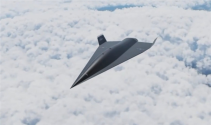
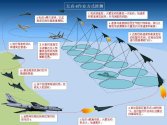
Chinese UCAV/CCA/flying wing drones (ISR, A2A, A2G)

AndrewS

Brigadier
Registered Member
They definitely should.

In fact, I'd go further and say that they should also consider having more than one site for their production work, whether that means having sites in the same city (but in different locations with some distance between the two) or within a metropolitan region, or even in different cities elsewhere. Having too much production capacity bundled at just one location could introduce serious vulnerabilities, especially during wartime.

This similarly applies to the other ACs under the AVIC umbrella. Maybe we're seeing this starting to happen with Shenyang, though I'm not exactly sure whether this is actually true.

Previously, it made sense to disperse production capacity because bombs were unguided.
If you concentrated production facilities, you created a larger area target which was easier to hit.

---

But now, accurate, guided weapons are low-cost and are the norm.
Dispersing production capacity also means dispersing defensive systems like SAMs.
So instead of having 2 separate facilities, better to just have them next to each other, and where you can concentrate all the defensive systems.

Dispersing facilities will also be inefficient, increasing costs and production times. So you get less production for your money during a peacetime buildup.
 

totenchan

Junior Member
Registered Member
Previously, it made sense to disperse production capacity because bombs were unguided.
If you concentrated production facilities, you created a larger area target which was easier to hit.

---

But now, accurate, guided weapons are low-cost and are the norm.
Dispersing production capacity also means dispersing defensive systems like SAMs.
So instead of having 2 separate facilities, better to just have them next to each other, and where you can concentrate all the defensive systems.

Dispersing facilities will also be inefficient, increasing costs and production times. So you get less production for your money during a peacetime buildup.
For any economy, there are far more production facilities than there are defensive systems, and far more possible incoming weapons than any combination of defensive system is able to intercept.
 

AndrewS

Brigadier
Registered Member
For any economy, there are far more production facilities than there are defensive systems, and far more possible incoming weapons than any combination of defensive system is able to intercept.

We're talking about a single Xi'An factory complex, located 1000km+ inland from the Coast.

There are only a handful of hypersonic munitions that can realistically reach Xi'An.
Any subsonic munitions or aircraft would have to cross Chinese territory for an hour.

A modest amount of air defences, concentrated at the Xi'an, can have a significant effect.

---

And remember that that Xi'An was originally founded because Harbin was too close to the Russian border.
The same applies to Chengdu and Shenyang as well
 

Blitzo

General
Staff member
Super Moderator
Registered Member
Please, Log in or Register to view URLs content!

This is just a re-warmed article of that same SCMP article/rubbish.

I encourage people to critically view these SCMP articles which take journal papers about potential applicability of research for military uses and then exaggerates their significance to make it seem like they are a near term viable capability.
 

ACuriousPLAFan

Brigadier
Registered Member
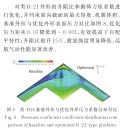
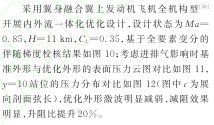
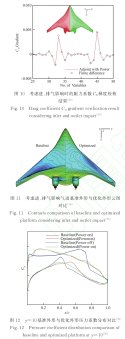
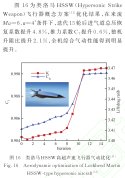
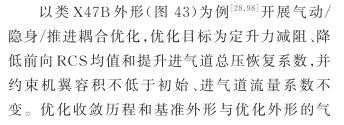
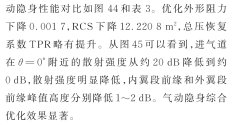
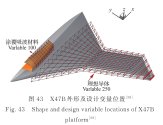
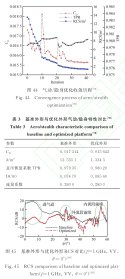
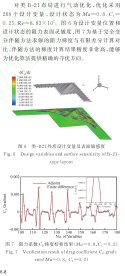
Speaking of which, here are some excerpts from the academic paper titled 《飞行器气动布局多学科伴随优化系统PADJ-X研究进展》 (Research Progress on the PADJ-X Multidisciplinary Adjoint Optimization System for Aircraft Aerodynamic Layout). Posted by @Crosshairs十字线 on Weibo.

Per the original poster on Weibo:
PADJ-X是具有完全知识产权的飞行器多学科伴随优化系统,该系统重点针对飞行器气动隐身内、外流一体化设计的需求,集成了气动、推进、电磁、红外、声爆等5个主要学科,实现了飞行器气动布局定常/非定常、单学科/多学科耦合伴随综合优化,拓展了伴随方法的学科应用范围,突破了灵敏度全过程变分求解技术,实现了空间/表面灵敏度伴随求解,以及动网格、参数化方法全过程伴随。
相对于传统的部分变分伴随优化流程,优化效率大幅提升,梯度计算效率彻底与设计变量数无关,使得PADJ-X优化平台能够高效处理超大规模设计变量的梯度优化,并具备良好的可拓展性。
PADJ-X is a multidisciplinary adjoint optimization system for aircraft, possessing full intellectual property rights. The system primarily addresses the requirements for integrated internal/external flow design of aircraft aerodynamic stealth. It integrates five major disciplines: aerodynamics, propulsion, electromagnetics, infrared, and sonic boom. PADJ-X achieves steady/unsteady, single-discipline/multidisciplinary coupled adjoint comprehensive optimization for aircraft aerodynamic configurations. It expands the disciplinary application scope of adjoint methods, breaks through the full-process variational solution technology for sensitivity analysis, realizes space/surface sensitivity adjoint solving, and implements adjoint methods throughout dynamic mesh and parametric processes.
Compared to traditional partial-variation adjoint optimization workflows, the optimization efficiency is significantly improved. The efficiency of gradient calculation is completely independent of the number of design variables. This enables the PADJ-X optimization platform to efficiently handle gradient-based optimization with extremely large-scale design variables while maintaining excellent scalability.

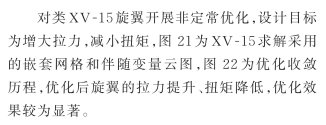
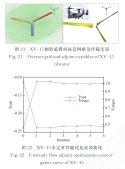
7fcd0974gy1i94h6g2mn4j213k2f9hdt.jpg 7fcd0974gy1i94h6h6b2tj213t15u7qy.jpg 7fcd0974gy1i94h6iatypj212i0mik4l.jpg
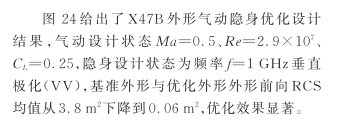
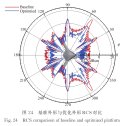
7fcd0974gy1i94h6l8zwpj215833qqv5.jpg 7fcd0974gy1i94h6l5h2aj21341jknm7.jpg 7fcd0974gy1i94h6mb2r1j21370f27a9.jpg
7fcd0974gy1i94h6onqeuj21540f37af.jpg 7fcd0974gy1i94h6ornm6j215b1jk7wh.jpg
 
Last edited:

GTI

Junior Member
Registered Member
Speaking of which, here are some excerpts from the academic paper titled 《飞行器气动布局多学科伴随优化系统PADJ-X研究进展》 (Research Progress on the PADJ-X Multidisciplinary Adjoint Optimization System for Aircraft Aerodynamic Layout). Posted by @Crosshairs十字线 on Weibo.

Per the original poster on Weibo:


View attachment 167943 View attachment 167944 View attachment 167945
View attachment 167946 View attachment 167947 View attachment 167948
View attachment 167949 View attachment 167950
Is it just me, or does the leading edge of the wing on the ‘optimised’ platform in Fig. 10 and Fig. 11, have a sort of “kink” in it?

And if I’m understanding PADJ-X correctly, you can input a number of different design requirements (across 5 disciplines), independent of each other, and it can produce a VLO design, optimised for those requirements?
 
Last edited:

PopularScience

Senior Member
Registered Member
Please, Log in or Register to view URLs content!

Recently, CCTV News made a rare public disclosure of the combat capabilities of my country's WZ-8 unmanned reconnaissance aircraft.

This national strategic asset, dubbed the "Airborne Blade," first appeared at the 2019 National Day military parade. Its unique rocket-powered design, near-space flight capabilities, and precise aircraft carrier positioning have made it a focus of global military attention.

Saf3f2bee-5e04-42b6-89fa-3a74b41c1c76.png

The WZ-8's core advantage stems from its revolutionary technological design. It employs a flying-wing aerodynamic layout and a liquid rocket engine, eliminating the need for air-assisted combustion and carrying its own oxidizer, allowing for stable operation in near-space at an altitude of 20-100 kilometers.

This altitude falls between the upper limit of traditional air defense missile launch altitude and the lower limit of anti-missile system interception, creating a natural defensive vacuum. Combined with its hypersonic speed of Mach 3-6, it makes it "visible but undetectable" to enemy interception systems.

Simultaneously, its fuselage is covered with radar-absorbing materials, and its tailless design significantly reduces its radar cross-section. This perfect blend of stealth performance and high-speed maneuverability allows it to penetrate heavily fortified air defense systems.

Please, Log in or Register to view URLs content!

In terms of combat capabilities, the WZ-8 reconnaissance aircraft is equipped with a synthetic aperture radar and electro-optical imaging system, achieving meter-level resolution. It can penetrate clouds and fog for all-weather reconnaissance, covering 200,000 square kilometers of sea area within 10 minutes, and can clearly identify the types of carrier-based aircraft on aircraft carrier decks.

It can be carried by a H-6K bomber to an altitude of 10,000 meters and launched, climbing to the predetermined altitude within 3 minutes. It then performs high-speed gliding reconnaissance and transmits target data back in real time, providing precise guidance for anti-ship missiles such as the DF-21D and DF-26. After completing its mission, it can autonomously glide back to base for reuse.

Of particular note is the WZ-8, the world's only operational near-space high-speed unmanned reconnaissance aircraft, unmatched by any other similar equipment.

Its development not only fills the gap in reconnaissance of high-value targets in the far seas but also disrupts the existing air defense landscape with its asymmetric advantages, significantly reducing the operational space of carrier battle groups.

Please, Log in or Register to view URLs content!
 

Deino

Lieutenant General
Staff member
Super Moderator
Registered Member
Please, Log in or Register to view URLs content!

Recently, CCTV News made a rare public disclosure of the combat capabilities of my country's WZ-8 unmanned reconnaissance aircraft.

This national strategic asset, dubbed the "Airborne Blade," first appeared at the 2019 National Day military parade. Its unique rocket-powered design, near-space flight capabilities, and precise aircraft carrier positioning have made it a focus of global military attention.

View attachment 168075

The WZ-8's core advantage stems from its revolutionary technological design. It employs a flying-wing aerodynamic layout and a liquid rocket engine, eliminating the need for air-assisted combustion and carrying its own oxidizer, allowing for stable operation in near-space at an altitude of 20-100 kilometers.

This altitude falls between the upper limit of traditional air defense missile launch altitude and the lower limit of anti-missile system interception, creating a natural defensive vacuum. Combined with its hypersonic speed of Mach 3-6, it makes it "visible but undetectable" to enemy interception systems.

Simultaneously, its fuselage is covered with radar-absorbing materials, and its tailless design significantly reduces its radar cross-section. This perfect blend of stealth performance and high-speed maneuverability allows it to penetrate heavily fortified air defense systems.

Please, Log in or Register to view URLs content!

In terms of combat capabilities, the WZ-8 reconnaissance aircraft is equipped with a synthetic aperture radar and electro-optical imaging system, achieving meter-level resolution. It can penetrate clouds and fog for all-weather reconnaissance, covering 200,000 square kilometers of sea area within 10 minutes, and can clearly identify the types of carrier-based aircraft on aircraft carrier decks.

It can be carried by a H-6K bomber to an altitude of 10,000 meters and launched, climbing to the predetermined altitude within 3 minutes. It then performs high-speed gliding reconnaissance and transmits target data back in real time, providing precise guidance for anti-ship missiles such as the DF-21D and DF-26. After completing its mission, it can autonomously glide back to base for reuse.

Of particular note is the WZ-8, the world's only operational near-space high-speed unmanned reconnaissance aircraft, unmatched by any other similar equipment.

Its development not only fills the gap in reconnaissance of high-value targets in the far seas but also disrupts the existing air defense landscape with its asymmetric advantages, significantly reducing the operational space of carrier battle groups.

Please, Log in or Register to view URLs content!


In fact I'm a bit sceptical if this is all valid, even more since other reports claim, the sensors are located on top and the drone would turn around during its mission:

1768304079837.jpeg
 
Top