New Energy Vehicles (NEVs) in China

Nevermore

Junior Member
Registered Member
I’m back. Over the past few months, I returned to my father’s hometown of Ganzhou to sightsee and visit relatives. I visited many local car dealerships both just before the Chinese Dragon Boat Festival and more recently, including BYD’s Dynasty, Ocean, and Denza models; Geely’s Geely Galaxy and Zeekr; and Leapmotor. This article aims to provide an evaluation of my test drive and tour of Geely’s Zeekr brand, while also interweaving my analysis of the competitive landscape for electric vehicles in the Chinese market—with a particular focus on comparisons with BYD. As a result, the article’s flow and topics may jump around quite a bit; I appreciate your understanding.

To be clear, I am a fan of BYD myself, and I currently drive a BYD Han L EV. However, based on my analysis and understanding of the Chinese automotive market, I would rank Geely Automobile second in terms of overall strength. Although Geely Automobile still lags significantly behind BYD—the market leader—in comprehensive electric vehicle technology, I would still say that no other company is currently capable of challenging Geely Automobile’s second-place position. Geely Group possesses advanced automotive technologies from Volvo and Lotus, and during the era of internal combustion engine vehicles, it firmly held the top spot among China’s domestic automakers. It can be said that in certain areas, Geely performs even better than BYD.

I’ve actually been to Zeekr for test drives twice recently.
My first test drive was when I took my dad for a leisurely drive around our hometown, and on a whim, we decided to stop by the Zeekr dealership. I drove the Han L EV to the Zeekr dealership following the GPS, and the security guard at the entrance motioned for me to park in a nearby spot. When I activated BYD’s automatic parking feature, it drew a crowd of salespeople and security guards from the dealership—haha, BYD’s automatic parking really is incredibly smooth.

After that, the sales staff at Zeekr were very welcoming. Once we’d managed to wriggle out of the typical sales pitch, my father and I began exploring the vehicles in the showroom at our own pace.
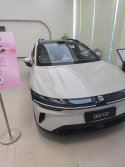
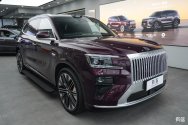
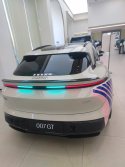
The Zeekr 001 and Zeekr 007GT feature highly distinctive exteriors that maintain their individuality while exhibiting a unique sense of cohesive harmony; Zeekr cars stand out clearly from other conventional vehicles on the road. My father, on the other hand, really likes the looks of the Zeekr 8X and 9X. He kept standing by the car, grinning and joking about the “Hangzhou Bay Cullinan” reference, which made the saleswoman standing next to him feel a bit awkward—haha.

A few years ago in the Chinese market, both the Zeekr 001 and the BYD Han were once the undisputed kings of the 250,000-class sedan segment, but their paths have taken drastically different turns: The Zeekr 001 was favored by those seeking individuality and a dynamic driving experience, but the intensely competitive Chinese market forced Zeekr to roll out new technology updates several times a year just to maintain its starting price and sales volume. This left many existing owners dissatisfied, as they felt “stabbed in the back” by the next updated model just a few months after purchasing their Zeekr 001; The BYD Han, on the other hand, has secured its position in the high-end C-segment family sedan market thanks to its sophisticated and elegant exterior—on par with the Audi A6—reliable and advanced battery, electronic control, and motor technologies, as well as its comfortable and solid chassis tuning. However, this success was short-lived. Perhaps due to a strategic misstep by BYD itself, the company opted for a strategy of minimal model updates and frequent price cuts to maintain market share, with the starting price dropping from 250,000 yuan back then to less than 150,000 yuan at its lowest point. To make matters worse, a large number of “ride-hailing” drivers chose the BYD Han as their service vehicle due to its exceptionally durable battery and motor technology and overall value for money—this is a high-end taxi profession, and the fact that it was selected for ride-hailing services should demonstrate the model’s high value, comfort, market recognition, and extreme durability. However, this also caused embarrassment for many ordinary families driving the BYD Han, They complain that they and their beloved cars are mistaken for street-side taxis trying to make a living.
In comparison, the Zeekr 001 is a much better option. It features a distinctive exterior and a firm, sporty suspension setup (taxis typically require a soft, comfortable ride), and its price has remained stable at around 250,000 yuan, which prevents it from being used as a ride-hailing vehicle.

Oh my gosh, I just started rambling and ended up talking about who knows what planet—let’s get back to the Zeekr dealership!1000019939.jpg1000019938.jpg1000019937.jpg
 
Last edited:

Nevermore

Junior Member
Registered Member
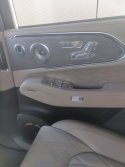
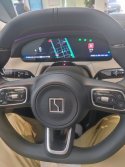
Actually, compared to their quite stylish exteriors, what really made me feel that “BYD has completely lost” when it comes to the Zeekr 001 and 007GT is the interior design of these two cars. The interior designs of the Zeekr 001 and 007GT are seamlessly integrated. The oval instrument cluster strongly resembles that of a race car, and the overall styling flows naturally. The moment you step inside, you immediately sense that this is a high-value vehicle with a sophisticated, exotic aesthetic. The interior also feels incredibly comfortable to the touch; most surfaces are soft and premium, a far cry from cheap, hard plastic.
In comparison, BYD’s interiors always give off a—well, “suburban” vibe. It’s as if the designers genuinely wanted to create a cutting-edge, avant-garde design, but lacked the skill to break free from the shadow of outdated styles, so they ended up messing everything up in the end, haha.
That’s right—BYD’s boxy dashboard display, its creaky plastic parts, and—who knows if the owner of a piano-lacquer factory once saved Wang Chuanfu’s life or not—BYD inexplicably insists on fitting your interior with a huge slab of piano lacquer, then cutting out square air vents in it. My God, what a mess, hahaha!
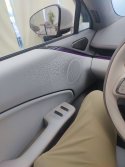
What’s more, while experiencing the interior of the Zeekr 007 GT, I noticed that it wasn’t just the design and materials that exuded a sense of luxury—when I slid the doors open and closed them or pressed the buttons, the car emitted a very faint, spaceship-like hum. My goodness, that feeling was absolutely top-notch.

Later, I test-drove the Zeekr 001. This car accelerates very, very quickly—and yes, these days there isn’t a single mid-to-high-end electric car that doesn’t accelerate quickly; horsepower has become so affordable. What really drew me in while driving the Zeekr 001 was the feel of its chassis. The combination of the chassis and acceleration gives you a sensation similar to plucking a taut guitar string—it’s incredibly crisp and responsive, and the road feedback is very clear. you can feel even the slightest bumps and undulations in the road, and you’ll feel very confident when changing lanes (it’s strange, but a firmer suspension does indeed make you feel more confident when cornering and changing lanes). When driving the Zeekr 001 to pass or change lanes, you’ll feel like a wandering swordsman riding the wind in a martial arts novel. However, when it comes to ride comfort, opinions may vary—this isn’t a car with a soft suspension, even when you’re in Comfort mode. But I can guarantee it’s far more comfortable than a Tesla. Overall, this is a driver’s car with a truly premium feel.
Let me talk about the Han L EV’s chassis. The Han L EV clearly prioritizes comfort for family use, which I know is quite at odds with its 680-pishi electric motor. The driving and riding experience is markedly different from the crisp and responsive Zeekr 001. The Han L EV’s chassis feels like piloting a speedboat racing through a thick pot of honey; even when taking wide turns or making U-turns, the ride remains soft and springy. The Yun Nian C suspension system effectively filters out much of the harsh road noise and bumps, making it ideal for families with children or elderly members who prioritize a comfortable ride.

Audio Experience: I’m not particularly sensitive to sound quality, so I can’t really judge its level, but the saleswoman said the audio system was developed in-house by Geely. As for smart driving features, it’s hard for me to assess their quality based on just a few test drives. However, judging by feedback in the Chinese market, Geely’s smart driving technology is generally considered to lag behind BYD’s. The saleswoman claimed that Zeekr’s smart hardware configuration is superior to BYD’s—I don’t deny that—but the intelligence of the infotainment system and autonomous driving capabilities depend not only on hardware but also on software technology.

As for vehicle safety—don’t worry. At this price point, Chinese cars are packed to the brim with both active and passive safety features; they’re all top-rated “road tanks.” My Han L EV’s passenger compartment safety cage is made of 100% hot-formed steel, and over 80% of the vehicle consists of high-strength steel, aluminum, and alloy materials. With the “Eye of the Gods B” system, its intelligent safety sensing capabilities are also top-notch. The Zeekr 001 is no exception—rest assured, it’s an extremely safe car.

I’ve really gone on and on, so I’ll wrap things up with one last little anecdote:
During the test drive, the saleswoman mentioned that BYD’s Dynasty series is currently positioned in the mid-to-low-end segment of the Chinese market, while Zeekr is a well-established premium brand. She asked me why I had chosen the BYD Han series at the time instead of a Zeekr model in a similar price range. I replied that I valued BYD’s battery, electronic control, and electric motor technologies. Since I was selecting a vehicle for my family, I preferred the comfortable suspension tuning of the BYD Han’s chassis. Additionally, the BYD Han L offers sufficiently powerful acceleration, and I believe BYD’s intelligent driving technology is superior. The saleswoman said, “Our Zeekr models also charge very quickly. The latest Zeekr 001 features a 900V high-voltage platform and super-fast charging capabilities that far exceed those of our competitors.” I replied, “The Han L EV has a 1,000V high-voltage platform across the entire vehicle, plus a rear-wheel-drive single motor producing 680 horsepower.” At that point, the saleswoman seemed a bit confused—she probably didn’t quite understand how a single motor could produce 680 horsepower, haha. The saleswoman actually knew a lot about cars, and we finished the test drive in a cheerful, chatty atmosphere. The entire driving experience and the service we received were both excellent.
At the end of the Zeekr test drive, there was a raffle, and I won a free magnetic power bank. A big thank you to Zeekr for this gift!

To sum up my first test drive, in my opinion, Zeekr is a luxury car brand that feels more upscale than Denza. When it comes to high-end new energy vehicles, many users are primarily seeking a high-quality, sophisticated driving experience—a form of luxury that speaks for itself. You could say that the BYD Denza boasts the world’s safest battery and the most stable E³ electronic control system, allowing the car to glide through traffic like a ghost in the night, weaving its way through the sea of vehicles in a zigzag pattern. However, the vehicle’s distinctive exterior design, the quality of the interior, and the overall style and sophistication of the driving experience are equally important in high-end cars—and Zeekr excels in all these areas. The fact that the Denza N9 has been thoroughly outclassed in the market by the more expensive Zeekr 9X is proof of this.1000019936.jpg1000019931.jpg1000019933.jpg
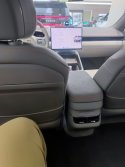
(These are photos of the Zeekr 007 GT)
I'll write up my experience report on my second test drive of the Zeekr 8X in a few days.
 
Last edited:

Proteus

New Member
Registered Member
Actually, compared to their quite stylish exteriors, what really made me feel that “BYD has completely lost” when it comes to the Zeekr 001 and 007GT is the interior design of these two cars. The interior designs of the Zeekr 001 and 007GT are seamlessly integrated. The oval instrument cluster strongly resembles that of a race car, and the overall styling flows naturally. The moment you step inside, you immediately sense that this is a high-value vehicle with a sophisticated, exotic aesthetic. The interior also feels incredibly comfortable to the touch; most surfaces are soft and premium, a far cry from cheap, hard plastic.
In comparison, BYD’s interiors always give off a—well, “suburban” vibe. It’s as if the designers genuinely wanted to create a cutting-edge, avant-garde design, but lacked the skill to break free from the shadow of outdated styles, so they ended up messing everything up in the end, haha.
That’s right—BYD’s boxy dashboard display, its creaky plastic parts, and—who knows if the owner of a piano-lacquer factory once saved Wang Chuanfu’s life or not—BYD inexplicably insists on fitting your interior with a huge slab of piano lacquer, then cutting out square air vents in it. My God, what a mess, hahaha!
What’s more, while experiencing the interior of the Zeekr 007 GT, I noticed that it wasn’t just the design and materials that exuded a sense of luxury—when I slid the doors open and closed them or pressed the buttons, the car emitted a very faint, spaceship-like hum. My goodness, that feeling was absolutely top-notch.

Later, I test-drove the Zeekr 001. This car accelerates very, very quickly—and yes, these days there isn’t a single mid-to-high-end electric car that doesn’t accelerate quickly; horsepower has become so affordable. What really drew me in while driving the Zeekr 001 was the feel of its chassis. The combination of the chassis and acceleration gives you a sensation similar to plucking a taut guitar string—it’s incredibly crisp and responsive, and the road feedback is very clear. you can feel even the slightest bumps and undulations in the road, and you’ll feel very confident when changing lanes (it’s strange, but a firmer suspension does indeed make you feel more confident when cornering and changing lanes). When driving the Zeekr 001 to pass or change lanes, you’ll feel like a wandering swordsman riding the wind in a martial arts novel. However, when it comes to ride comfort, opinions may vary—this isn’t a car with a soft suspension, even when you’re in Comfort mode. But I can guarantee it’s far more comfortable than a Tesla. Overall, this is a driver’s car with a truly premium feel.
Let me talk about the Han L EV’s chassis. The Han L EV clearly prioritizes comfort for family use, which I know is quite at odds with its 680-pishi electric motor. The driving and riding experience is markedly different from the crisp and responsive Zeekr 001. The Han L EV’s chassis feels like piloting a speedboat racing through a thick pot of honey; even when taking wide turns or making U-turns, the ride remains soft and springy. The Yun Nian C suspension system effectively filters out much of the harsh road noise and bumps, making it ideal for families with children or elderly members who prioritize a comfortable ride.

Audio Experience: I’m not particularly sensitive to sound quality, so I can’t really judge its level, but the saleswoman said the audio system was developed in-house by Geely. As for smart driving features, it’s hard for me to assess their quality based on just a few test drives. However, judging by feedback in the Chinese market, Geely’s smart driving technology is generally considered to lag behind BYD’s. The saleswoman claimed that Zeekr’s smart hardware configuration is superior to BYD’s—I don’t deny that—but the intelligence of the infotainment system and autonomous driving capabilities depend not only on hardware but also on software technology.

As for vehicle safety—don’t worry. At this price point, Chinese cars are packed to the brim with both active and passive safety features; they’re all top-rated “road tanks.” My Han L EV’s passenger compartment safety cage is made of 100% hot-formed steel, and over 80% of the vehicle consists of high-strength steel, aluminum, and alloy materials. With the “Eye of the Gods B” system, its intelligent safety sensing capabilities are also top-notch. The Zeekr 001 is no exception—rest assured, it’s an extremely safe car.

I’ve really gone on and on, so I’ll wrap things up with one last little anecdote:
During the test drive, the saleswoman mentioned that BYD’s Dynasty series is currently positioned in the mid-to-low-end segment of the Chinese market, while Zeekr is a well-established premium brand. She asked me why I had chosen the BYD Han series at the time instead of a Zeekr model in a similar price range. I replied that I valued BYD’s battery, electronic control, and electric motor technologies. Since I was selecting a vehicle for my family, I preferred the comfortable suspension tuning of the BYD Han’s chassis. Additionally, the BYD Han L offers sufficiently powerful acceleration, and I believe BYD’s intelligent driving technology is superior. The saleswoman said, “Our Zeekr models also charge very quickly. The latest Zeekr 001 features a 900V high-voltage platform and super-fast charging capabilities that far exceed those of our competitors.” I replied, “The Han L EV has a 1,000V high-voltage platform across the entire vehicle, plus a rear-wheel-drive single motor producing 680 horsepower.” At that point, the saleswoman seemed a bit confused—she probably didn’t quite understand how a single motor could produce 680 horsepower, haha. The saleswoman actually knew a lot about cars, and we finished the test drive in a cheerful, chatty atmosphere. The entire driving experience and the service we received were both excellent.
At the end of the Zeekr test drive, there was a raffle, and I won a free magnetic power bank. A big thank you to Zeekr for this gift!

To sum up my first test drive, in my opinion, Zeekr is a luxury car brand that feels more upscale than Denza. When it comes to high-end new energy vehicles, many users are primarily seeking a high-quality, sophisticated driving experience—a form of luxury that speaks for itself. You could say that the BYD Denza boasts the world’s safest battery and the most stable E³ electronic control system, allowing the car to glide through traffic like a ghost in the night, weaving its way through the sea of vehicles in a zigzag pattern. However, the vehicle’s distinctive exterior design, the quality of the interior, and the overall style and sophistication of the driving experience are equally important in high-end cars—and Zeekr excels in all these areas. The fact that the Denza N9 has been thoroughly outclassed in the market by the more expensive Zeekr 9X is proof of this.View attachment 178342View attachment 178343View attachment 178344
(These are photos of the Zeekr 007 GT)
BYD is too strong in vertical integration and technology. Geely is still strong, but it has to allocate its resources between ICE and NEV technology. It also has too many sub-brands and investments in other companies that have their own interests, so it cannot move as fast as BYD. But it he Geely has multiple partners to expand globally without triggering local resistance; BYD has a very high risk in the global market, especially in the EU market. Zeerk has many good products, especially in the high-end market, but BYD still struggles because their design and reputation.
 

Nevermore

Junior Member
Registered Member
BYD is too strong in vertical integration and technology. Geely is still strong, but it has to allocate its resources between ICE and NEV technology. It also has too many sub-brands and investments in other companies that have their own interests, so it cannot move as fast as BYD. But it he Geely has multiple partners to expand globally without triggering local resistance; BYD has a very high risk in the global market, especially in the EU market. Zeerk has many good products, especially in the high-end market, but BYD still struggles because their design and reputation.
Yes, Geely Automobile has Volvo’s global dealership network, which allows it to promote its new models more easily and naturally. Geely Automobile plans to engage in a price war with BYD overseas in the future, so overseas consumers can expect prices for Chinese electric vehicles to continue falling.

BYD's interior design is indeed pretty poor. If I were to give Zeekr's interior a score of 95, BYD's interior would probably only get a 60.
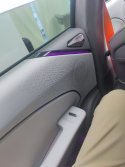
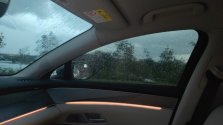
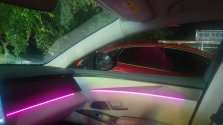
Here are some photos of the interior of my Han L EV. As you can see, the build quality is noticeably inferior to that of the previous 007GT—keep in mind that these two models are in roughly the same price range.
1000020181.jpg1000020184.jpg1000020185.jpg1000019379.jpg1000019783.jpg
 
Last edited:

Nevermore

Junior Member
Registered Member
So, let’s continue with my second test drive of the Zeekr. This time, I went to the dealership with my cousin—simply because he’d heard that test drivers get a free magnetic charging power bank. He’s a businessman who loves to “snag freebies,” so he didn’t hesitate to join me for the Zeekr test drive, haha.

My cousin runs a sign business in Ganzhou. Four years ago, he bought a BYD Song Plus DMI. He’s actually a big BYD fan—he can’t stop raving about the Song Plus’s performance and really admires BYD’s technological capabilities. However, he often complains that he shouldn’t have bought the car so early—especially not brand-new—because that Song Plus plug-in hybrid cost him over 170,000 RMB at the time, and he had to wait more than two months for delivery. Now, he can’t even sell it for 70,000 RMB on the used car market. This isn’t because the car is bad, but because BYD’s new models are simply too impressive. For 170,000 RMB today, you can buy the Song Ultra EV—a pure-electric SUV that’s a whole size larger, with a better chassis and enhanced safety features, plus 5-minute flash charging and the “Eye of the Sky B” intelligent driving system. Whenever he mentions his Song Plus, he says he’ll never buy a new BYD again in his life and will only purchase BYD-certified pre-owned cars from now on, because the first owner bears the brunt of an electric vehicle’s depreciation, making buying pre-owned a very cost-effective choice.
He’s made quite a bit of money in business over the years—to be honest, buying a Zeekr 9X wouldn’t be a problem for him. I think he figured that, since he’s getting older, it was time to upgrade to a 9-series SUV so he could travel around China with his two kids, his elderly parents, and his wife. A while back, right after BYD launched the Datang, he almost placed an order for it on the spot. However, the psychological scar left by the sharp drop in the resale value of his Song Plus made him hold off. He called me and said, “I’m not in a rush to buy a car anymore. I’ve thought it through completely—I’m going to wait three years and buy a used, top-of-the-line Datang!”

But what happens three years from now doesn’t matter—the most important thing for my cousin right now is to head to the Zeekr dealership and score a freebie! That power bank is worth hundreds of yuan!
(Of course, the purpose of this trip was also to compare the Zeekr SUV with the BYD Datang he’s been longing for; he isn’t particularly interested in the Zeekr himself, but just wanted to use it as a point of reference.)

When I stepped into the Zeekr dealership again, it seemed like the staff had changed; the saleswoman who had assisted me last time was nowhere to be found.
My cousin headed straight for the Zeekr 8X display car, and I followed him inside.
He’s a businessman living in a small town, running around all day long and not caring much about appearances; the Zeekr 8X’s front end, which closely resembles that of the Cullinan, holds no appeal for him.
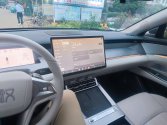
I want to show my cousin the unbeatable interior of the Zeekr 8X—those spherical speakers that feel just like golden silk! Those buttons mounted on the doors, which look just like dazzling jewels! That massive display screen and cockpit straight out of a cyberpunk spaceship! Those leather seats and interior trim so comfortable that just sitting in the car makes your life flash before your eyes! Oh, the sheer awe inspired by this stunning interior is just like walking into the resplendent Kremlin while draped in a colorful royal cloak!
It’s safe to say that after the interiors of the Zeekr 001 and 007GT completely blew me away, the Zeekr 8X’s interior has once again redefined my standards for interior craftsmanship—the Zeekr 8X’s interior is even more luxurious and refined than those of the 001 and 007GT! Comparing the interior of the BYD Denza N9 to that of the Zeekr 8X is nothing short of an insult to Zeekr! BYD’s interior is completely outclassed by Zeekr’s!
On the other hand, my cousin ran his hands all over the inside of the car, and finally blurted out a rather playful remark: “This car feels so small!”
So that explains it. For my cousin, the car’s bold exterior isn’t important, and he couldn’t care less about the exquisite quality of the interior—what matters to him is plenty of space! The Zeekr 8X is 5.1 meters long, and the standard version only seats five, which is simply too small for his family of six! Also, he didn’t even bother checking out the Zeekr 9X—he knows that car is way too expensive.
We signed up for a test drive of the Zeekr 8X. I sat in the back seat while my cousin test-drove the 8X.
5d494ee2d9985f8cfbda6b15b4c3baf7.jpg
 
Last edited:

Nevermore

Junior Member
Registered Member
The rear seats of the Zeekr 8X are comfortable, but it would be a bit boring to just talk about comfort. To describe the driving experience, I’d say this midsize-to-large SUV still has a sport-tuned chassis—just like the Zeekr 001. It takes corners very sharply and offers excellent road feel, yet the ride isn’t overly bumpy overall. The Zeekr 8X successfully blends comfort with a sporty driving style. This car also comes standard with all-wheel drive and boasts incredibly powerful performance, with a 0-100 km/h acceleration time of 3.7 seconds! Combined with its sport-tuned chassis, it perfectly embodies the image of a “suited thug” on the road.
The Zeekr 8X has sunshades on the rear side windows that can be raised and lowered automatically with buttons, but I never quite figured out the actual logic behind how those buttons work. I figured it was a rich person’s toy, so I’d better not mess with it.

There was also a rather awkward little incident during the test drive: the heat pump air conditioning in the Zeekr 8X we were test-driving was broken—it blew nothing but hot air the entire time. I was practically roasting in the back seat, and the window button on that side was way too “sophisticated”; I fiddled with it for ages but couldn’t get the window to open. The saleswoman in the car seemed pretty nervous and embarrassed, too. When we asked if the heat pump air conditioning was broken, she kept saying, “It’s not broken, it’s not broken!” No—my cousin and I both knew for sure that the air conditioning was broken! But because she was bound by her sales script, she could only say it wasn’t “broken.” Still, I wouldn’t write off this model based on such a rare incident, but I do hope they’ll make sure to thoroughly test and service the cars before test drives. Thanks to the heat pump AC malfunction, I also wasn’t able to fully evaluate the car’s audio quality and sound insulation.

Now that the test drive is over, I believe that if you’re a successful, affluent or middle-class urban professional—a middle-aged man with refined taste, a family, and a passion for sports—this car is the perfect fit for you. The Zeekr 8X offers ample space for a family of four, an ultra-luxurious interior design, a sophisticated yet stylish exterior, and incredibly powerful performance that lets you drive with passion anytime, anywhere. I honestly can’t find a single flaw with this car—except for—
Aside from price and powertrain type.
In China, this midsize-to-large SUV has a starting price of 356,800 RMB and is available only as a hybrid—there is no all-electric version. For the average family, a starting price of over 350,000 RMB is simply too expensive; it’s clear that this is a high-end SUV designed for the middle class and the wealthy. Meanwhile, the launch of BYD’s Flash Charge technology has put all hybrid models—and any vehicles without Flash Charge—in an awkward position. The Datang boasts a range of 950 km, achieves a 66.6% range retention rate at an average highway speed of 116 km/h, and can be charged to 70% in just 5 minutes and fully charged in 9 minutes with Flash Charge. Under these circumstances, why would anyone still need an expensive and outdated hybrid?
For the vast majority of ordinary Chinese families, I would recommend checking out BYD’s DaTang, as well as the soon-to-be-released Sea Lion 08 and Fangchengbao Ti 9. With starting prices ranging from 200,000 to 250,000 RMB, these vehicles offer a respectable, advanced, and exceptionally good value for the money. If you allocate your 350,000 RMB budget to BYD, you can purchase a top-of-the-line DaTang or Ti 9. For overseas consumers, I must reiterate that this is a clearly positioned, truly high-end luxury sports performance SUV. However, the starting price overseas is unlikely to be low; I estimate it will be around 80,000 USD.

So it seems that’s where the story ends. My cousin wasn’t impressed by the Zeekr 8X’s imposing exterior, exquisite interior, extensive features, or powerful performance, because he knew exactly what kind of car he needed—a D-segment vehicle with ample space, fast EV charging, and an affordable price. I asked him, “If, three years from now, a car comes out that’s even more appealing than the top-of-the-line Da Tang, would you still buy a used Da Tang?” He told me he’d choose to wait another three years to buy a used version of that more appealing car.
After the test drive, my cousin was really looking forward to seeing what valuable prize he’d win in the test drive raffle—he ended up with an eco-friendly bag featuring the Zeekr logo.

In the next episode, I might test-drive a compact car. Following my recommendation, my uncle bought a Leapmotor A10. That’s right—I’ll explain then why, as a BYD fan, I didn’t recommend that he buy a BYD model.
1000019941.jpg1000019929.jpg1000019927.jpg
 

Michael90

Senior Member
Registered Member
My cousin runs a sign business in Ganzhou. Four years ago, he bought a BYD Song Plus DMI. He’s actually a big BYD fan—he can’t stop raving about the Song Plus’s performance and really admires BYD’s technological capabilities. However, he often complains that he shouldn’t have bought the car so early—especially not brand-new—because that Song Plus plug-in hybrid cost him over 170,000 RMB at the time, and he had to wait more than two months for delivery. Now, he can’t even sell it for 70,000 RMB on the used car market. This isn’t because the car is bad, but because BYD’s new models are simply too impressive. For 170,000 RMB today, you can buy the Song Ultra EV—a pure-electric SUV that’s a whole size larger, with a better chassis and enhanced safety features, plus 5-minute flash charging and the “Eye of the Sky B” intelligent driving system. Whenever he mentions his Song Plus, he says he’ll never buy a new BYD again in his life and will only purchase BYD-certified pre-owned cars from now on, because the first owner bears the brunt of an electric vehicle’s depreciation, making buying pre-owned a very cost-effective choice.
He’s made quite a bit of money in business over the years—to be honest, buying a Zeekr 9X wouldn’t be a problem for him. I think he figured that, since he’s getting older, it was time to upgrade to a 9-series SUV so he could travel around China with his two kids, his elderly parents, and his wife. A while back, right after BYD launched the Datang, he almost placed an order for it on the spot. However, the psychological scar left by the sharp drop in the resale value of his Song Plus made him hold off. He called me and said, “I’m not in a rush to buy a car anymore. I’ve thought it through completely—I’m going to wait three years and buy a used, top-of-the-line Datang!”

But what happens three years from now doesn’t matter—the most important thing for my cousin right now is to head to the Zeekr dealership and score a freebie! That power bank is worth hundreds of yuan!
(Of course, the purpose of this trip was also to compare the Zeekr SUV with the BYD Datang he’s been longing for; he isn’t particularly interested in the Zeekr himself, but just wanted to use it as a point of reference.)
This is also one of the reasons I don’t think it’s a good idea to buy a new Chinese car so early on) the fact that the et update their models every few months with better features and sometimes at the same price or even lower than previous one means if you had bought one early you will feel a huge sense of disappointment knowing just a few months later that same company is selling an updated, larger better model of same car at the same price and sometimes even cheaper. The sense of disgust and pain this causes can’t be underestimated . lol
That’s why I said weeks/months ago on here that I’m not even sure anymore if it’s a good thing Chinese EVs companies update their models so fast and don’t charge that much for it compared to the previous model. This will crate a lot of dissatisfied customers down the line to be honest, and might reduced their sales down the line. This price wars and race to the button really needs to stop. The Chinese government has been trying to stem this phenomenon but doesn’t seem they have been able to change much unfortunately. Anyway, will be good to see if they will change this policy with time as more EV companies/startups failed and consolidation expands .
 
Top