
You are using an out of date browser. It may not display this or other websites correctly.
You should upgrade or use an alternative browser.
You should upgrade or use an alternative browser.
China's Space Program Thread II
- Thread starter Blitzo
- Start date
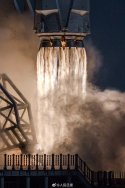

I think the lack of a recovery platform is simply a consequence of not intending to recover the rocket, not the reason for not recovering it.CZ-12B doesn't have a landing pad

Well, the theory I heard is that these two QF satellites launched are intended for a polar orbit and hence would mean the first stage overflying the Tibet plateaus. Hence even if they the rocket was ready for recovery, building a landing pad and transporting the rocket out of the plateaus is still going to present a huge challenge.I think the lack of a recovery platform is simply a consequence of not intending to recover the rocket, not the reason for not recovering it.
That and the LV is just not ready yet
Also, interestingly it seems China still has problems with mass satellite deployment. If you watch the video to the deployment part, you'll see the second stage is tumbling and basically just spinning satellites out which also causes each of the separated satellites to be tumbling. At worst this could directly damage or disable satellites, at best would be annoying due to having to use onboard reaction wheels or CMGs to reorient itself properly which indirectly waste fuel later to desaturate.
I think you are most likely mistaken. What you saw as "tumbling" is almost certainly just a very short video segment (less than one second long, maybe less than half a second long) of the upper srage repositioning itself in preparation for payload deployment; the video then cuts away to a later segment showing the actual deployment of one of the two satellites on this launch. I don't believe there was any uncontrolled "spinning out" of the payload which would have precluded any declaration of launch success (or at least would have stopped CACL from publiclly showing a video of said payload deployment). "China" is not an amateur at mass payload deployments.
I've seen messier starlink deployments tbh.
Also, interestingly it seems China still has problems with mass satellite deployment. If you watch the video to the deployment part, you'll see the second stage is tumbling and basically just spinning satellites out which also causes each of the separated satellites to be tumbling. At worst this could directly damage or disable satellites, at best would be annoying due to having to use onboard reaction wheels or CMGs to reorient itself properly which indirectly waste fuel later to desaturate.
Long March-12B is aimed for recovery, You can't be too arrogant and and think you can do everything at once then ended up blowing up the entire state of Florida and it's people like the US blue origin rocket did a few days ago.No recovery attempt ?

Some thoughts on CZ-12B, recent medium lifters, and other PRC rocket engines and the future.
CZ-12B is said to have started development in September 2024 with its design approved in March 2025, and even though it is a somewhat conservative kerolox design, the speed of its emergence, and using relatively new engines (YF-102 is somewhat recent even if it's not cutting edge SOTA), and in a relatively mature fitout including landing legs and gridfins, and all in a clean sheet rocket fuselage/diameter (different to CZ-12, CZ-12A), does point to a fair bit of design and industrial capacity that exists if other bottlenecks can be met.
With various other reusable medium lifters flying or due to fly (and if even only a fraction of them achieve high cadence launch/recovery), that will likely prove a solid foundation for the next step of progressing to proliferation of heavy and even super heavy lifters.
Needless to say methalox FFSC engines are the future, and afaik there are three major efforts ongoing at the moment, all in the 200t+ thrust class
- YF-215, by CASC, also the intended engine for CZ-9's first stage that has been seen pretty consistently for last couple of years. While CZ-9 is intended to fly post 2030, the engine itself may be a different matter. 200t+ class
- BF-20, by landspace, and landspace have indicated a desire to develop a super heavy of their own using BF-20 circa 2030, 220t
- FY-200V, by JZJY (who have developed LY-70 that is used on CZ-12A), which is a 300t class engine
Which are three methalox FFSC in the 200t+ class by pretty credible entities (not including a couple others by startups lacking in detail or record).
What this means, is that CZ-9 probably isn't the only heavy/super-heavy to expect in the next half decade or so (even if one considers its status as "not fully funded" which in PRC space parlance can mean lots of things), and we can probably expect the various 200t+ methalox FFSC engines being developed to end up having applications on other rockets that could emerge somewhat briskly without excess leadup time in the way CZ-12B did.
For example we know CASC has looked at a 7m, reusable 50t LEO rocket powered by 13x methalox FFSC engines in the 200t class (likely YF-215), in addition to a 10m, reusable 100t LEO rocket powered by 30x such engines (basically CZ-9, if not directly CZ-9) itself.
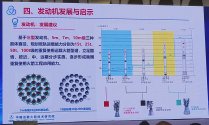
(Picture at bottom)
So overall, I wouldn't be too surprised if a handful of heavy or even super heavy rockets emerge on a faster "turn around time" than CZ-9 in future, in terms of "public being aware of its consideration/initial investigations --> first launch"... and it will be entirely depend on the "commoditization" of the upcoming generation of methalox engines.
CZ-12B is said to have started development in September 2024 with its design approved in March 2025, and even though it is a somewhat conservative kerolox design, the speed of its emergence, and using relatively new engines (YF-102 is somewhat recent even if it's not cutting edge SOTA), and in a relatively mature fitout including landing legs and gridfins, and all in a clean sheet rocket fuselage/diameter (different to CZ-12, CZ-12A), does point to a fair bit of design and industrial capacity that exists if other bottlenecks can be met.
With various other reusable medium lifters flying or due to fly (and if even only a fraction of them achieve high cadence launch/recovery), that will likely prove a solid foundation for the next step of progressing to proliferation of heavy and even super heavy lifters.
Needless to say methalox FFSC engines are the future, and afaik there are three major efforts ongoing at the moment, all in the 200t+ thrust class
- YF-215, by CASC, also the intended engine for CZ-9's first stage that has been seen pretty consistently for last couple of years. While CZ-9 is intended to fly post 2030, the engine itself may be a different matter. 200t+ class
- BF-20, by landspace, and landspace have indicated a desire to develop a super heavy of their own using BF-20 circa 2030, 220t
- FY-200V, by JZJY (who have developed LY-70 that is used on CZ-12A), which is a 300t class engine
Which are three methalox FFSC in the 200t+ class by pretty credible entities (not including a couple others by startups lacking in detail or record).
What this means, is that CZ-9 probably isn't the only heavy/super-heavy to expect in the next half decade or so (even if one considers its status as "not fully funded" which in PRC space parlance can mean lots of things), and we can probably expect the various 200t+ methalox FFSC engines being developed to end up having applications on other rockets that could emerge somewhat briskly without excess leadup time in the way CZ-12B did.
For example we know CASC has looked at a 7m, reusable 50t LEO rocket powered by 13x methalox FFSC engines in the 200t class (likely YF-215), in addition to a 10m, reusable 100t LEO rocket powered by 30x such engines (basically CZ-9, if not directly CZ-9) itself.
(Picture at bottom)
So overall, I wouldn't be too surprised if a handful of heavy or even super heavy rockets emerge on a faster "turn around time" than CZ-9 in future, in terms of "public being aware of its consideration/initial investigations --> first launch"... and it will be entirely depend on the "commoditization" of the upcoming generation of methalox engines.
Last edited:
List of recent and upcoming new Chinese launch Vehicles as of June 2026.
This list isn't 100% exhaustive, some redundant variants are excluded, as well as projects that we haven't heard news of in more than 12-18 months. But it should give an idea of the more than 80 launch vehicles projects in China.

This list isn't 100% exhaustive, some redundant variants are excluded, as well as projects that we haven't heard news of in more than 12-18 months. But it should give an idea of the more than 80 launch vehicles projects in China.
I’m curious as to why these engines aren’t using a staged combustion cycle. The yf-100 series are of that type, while the engines on the LM 12 instead operate on a less advanced gas generator cycle. Do they not think the yf-100 would be capable of relighting?
